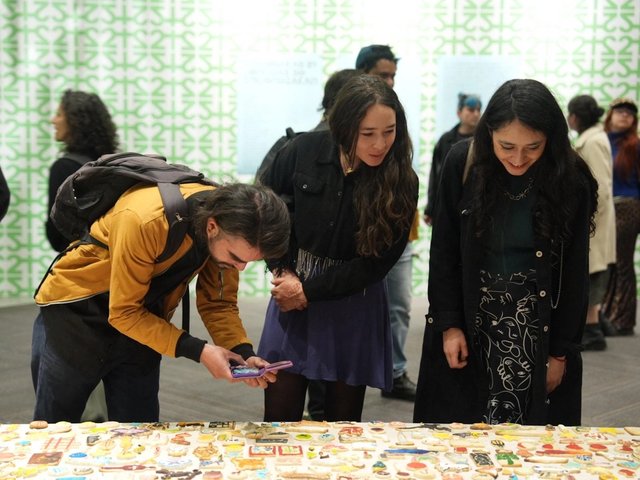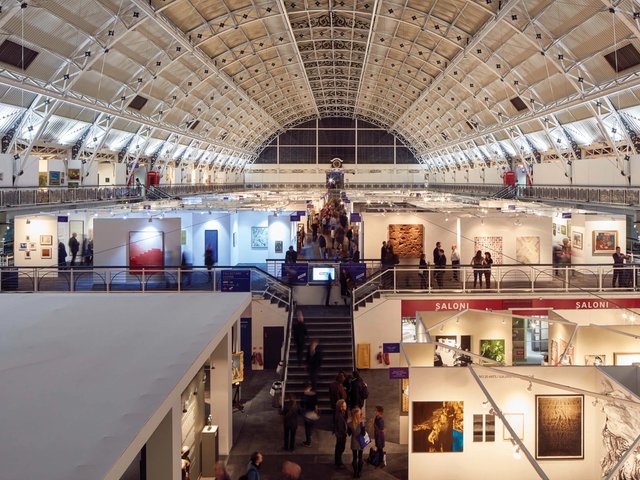
This year marks the 16th edition of Chile Arte Contemporáneo (Chaco), with more than 50 galleries under a single roof in Santiago (until 29 March). As Chile's only international contemporary art fair, Chaco’s goal is to represent the country to a global network of artists, collectors, curators and dealers. This is clearly reflected in the inclusion of a number of stands by either Chilean galleries or galleries exhibiting Chilean contemporary artists.
“When we make a fair, we make a national fair an international fair,” Nicolás Guilisasti Mitarakis, Chaco’s project coordinator, tells The Art Newspaper. “You must always represent the whole country, not only the capital. That is why we have 11 countries and six regions of Chile, from the Atacama Desert to Patagonia. It is a real representation of the Chile of today.”
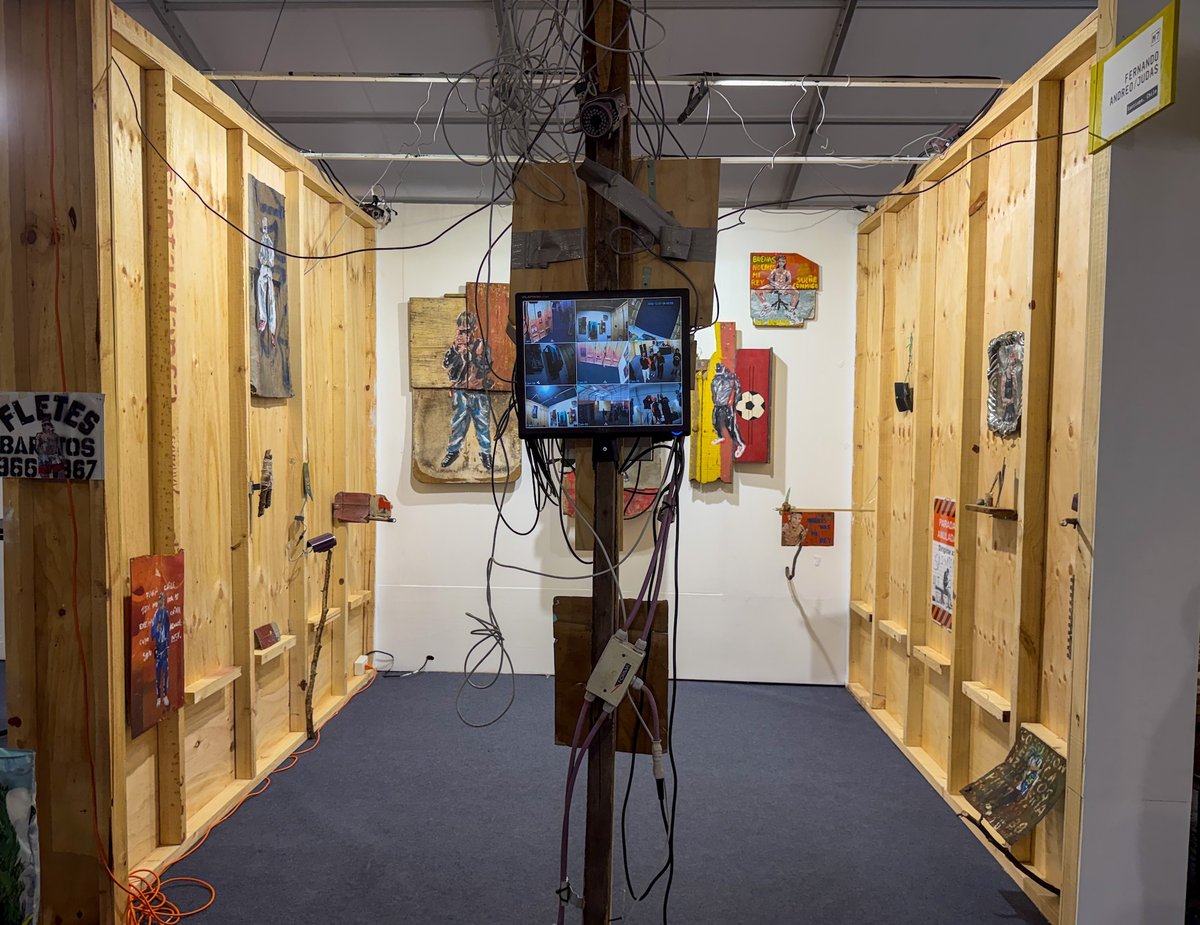
The most visually successful stands this year are those that play up to the fair's grit with edgy and alternative works. Fernando Andreo Castro, a Valparaiso-based artist represented by Judas Galería, won the 2025 Premio de Residencia Mac last year—one of the many prizes offered during Chaco. As a result, he has a solo stand near the entrance of this year’s fair.
Castro has chosen to expose his stand walls' interior structures, transforming the space into an immersive installation. Concurrently, he has a large solo exhibition at the Museo de Arte Contemporáneo (until 26 April); his Chaco stand feels like a sister exhibition to the works on view in the Universidad de Chile-affiliated museum.
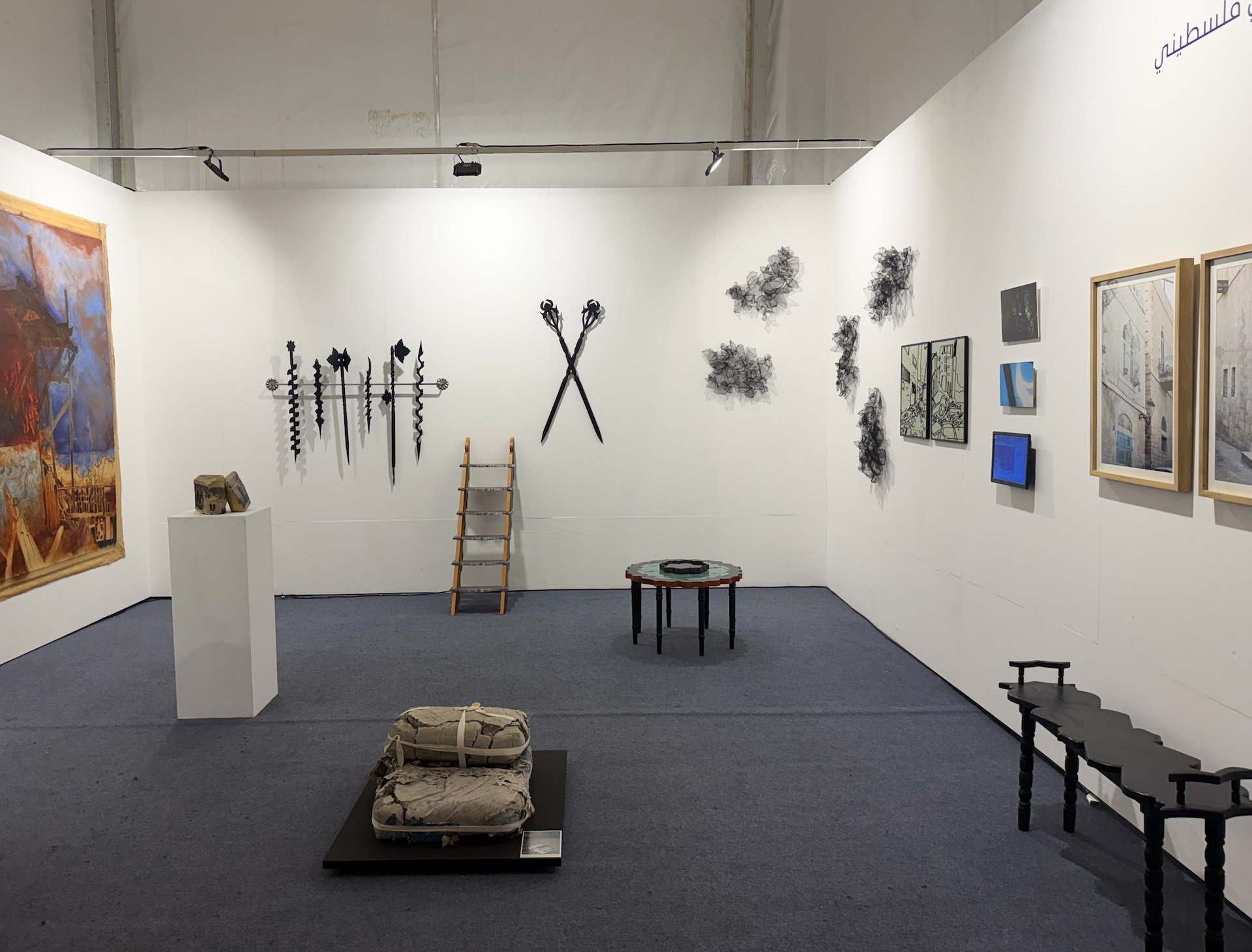
The Mnwal stand at Chaco includes works by Jorge Tacla, Mila Belén, Catalina Zarzar, María Gabler, Claudia Gutiérrez and Marian Gidi Photo: Mario Rodriguez
Some neighbouring stands take similar approaches, including the Santiago gallery Sagrada Mercancía, the Brazilian gallery Hermès and Mnwal, a local residency and space for artists from the Palestinian diaspora. Hermès, for example, has created a large composite flag using a selection of 100-by-60-cm flags made by 41 Brazilian artists and strung along two overlapping wire racks lining the entire interior of its stand. The choice to curate in this fashion is at once risky—at times it is difficult to see some of the works in the back, as visitors are not able to rifle through the fibre works themselves—and a compelling visual choice.
Other exhibitors that stand out have taken the opposite approach, presenting much more conventional art fair proposals successfully. Among these is Aninat Galería, the longest-running contemporary art gallery in Chile. Meanwhile, the Miami-based gallery Mahara + Co is featuring a selection of local and international artists such as Amanda Linares (from Cuba); Lucas Estévez, Augusta Lecaros and Samuel Dominguez (from Chile); Pablo Matute (from the US); Gonzalo Hernandez and Zonia Zena (from Peru); and Karlo Andrei Ibarra (from Puerto Rico).
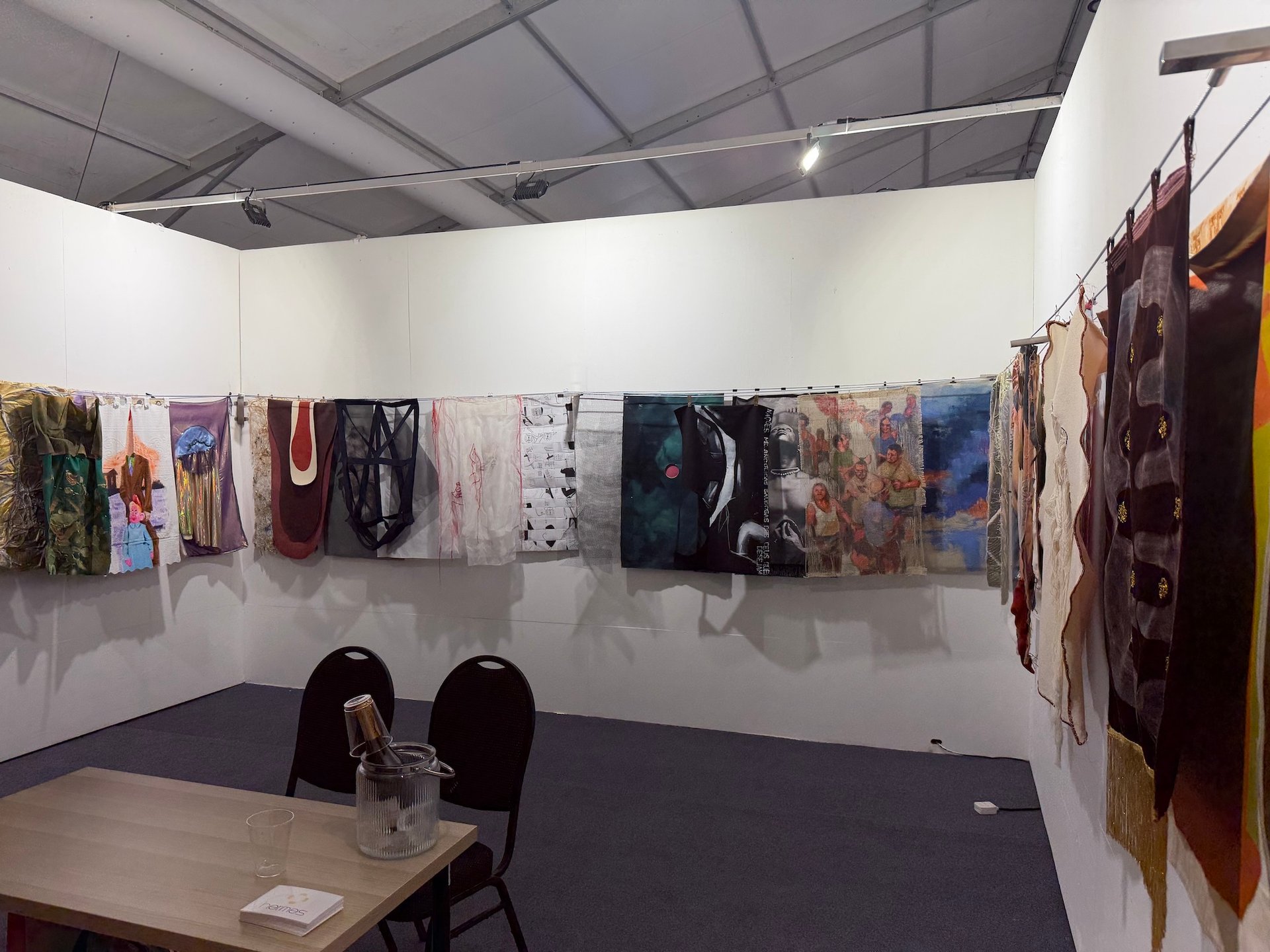
The Hermès stand at Chaco Photo: Mario Rodriguez
Prices at the fair are relatively affordable, reflecting a conscious effort by the organisers to encourage new collectors. Several galleries have made the wise decision of showing both larger works and a selection of smaller, easily portable pieces priced at less than $1,000. Larger works often cost only $5,000.
“The fair is not just for the collectors, the museums, but also for normal people, the people who come on the weekend,” Guilisasti says. “They want to know about what is happening in the country. For example, there is Aninat, the biggest gallery here in Chile. And Isabel Aninat comes here, why? Because every single year, she meets 20 new collectors she has never met before.”
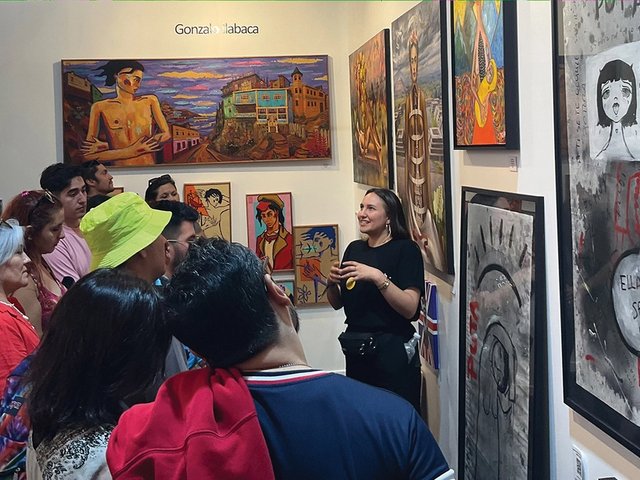
The fair is much smaller than Mexico City’s Zona Maco or Buenos Aires’s ArteBA, and it feels much more intimate. Chaco includes several art collectives and alternative spaces from throughout the region, perspectives often left out of international fairs because of high participation costs.
The fair receives funding from Chile’s cultural ministry, so it lacks the private sponsorships that often facilitate the scalability of global art fairs. Where Chaco shines is in its refreshing breadth of young artists exhibiting ambitious, diverse and politically driven work that would likely be eschewed elsewhere for fear that it would not sell.
- Chaco, until 29 March, Metropolitan Santiago, Santiago