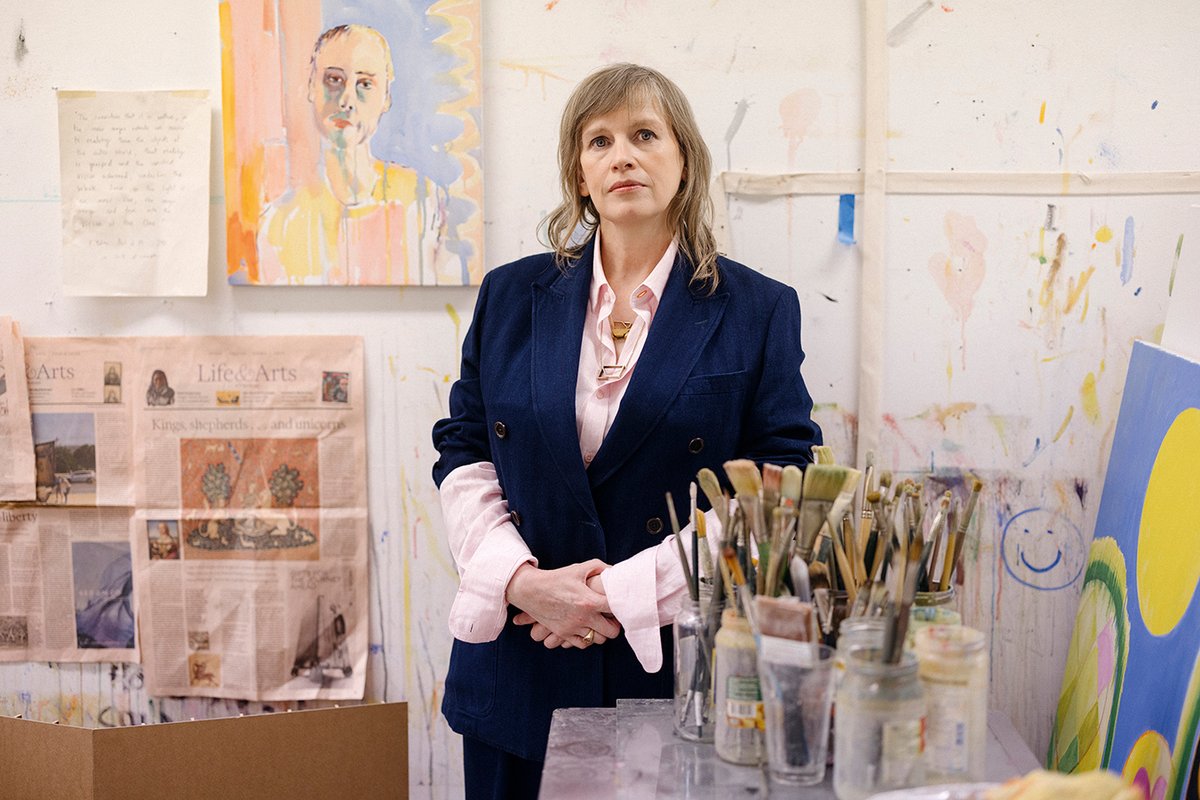
The Dublin-born artist Isabel Nolan is known for her work exploring meaning and uncertainty, taking cosmology, religion and humanism as starting points. She draws on the visual language of the late Medieval and early Renaissance periods, building pieces that are richly textured and often lush. Her Ireland pavilion, Dreamshook, developed with the curator Georgina Jackson, builds on those themes. The exhibition explores the fuzzy, in-between state we experience after waking up, when dreams seem to merge with the real world, and ties it to a fictional version of the life of Aldo Manuzio—a Renaissance humanist famous for publishing Greek classics as enchiridia, or portable books, in Venice.
You often use small, intimate forms like textiles to approach big ideas. Why is that scale important to you?
I think it’s because a lot of the time my way of accessing those ideas is probably through popular literature or introductions to things. And so my attention, then, is grabbed by something smaller or anecdotal. It’s important for me that it’s something quite bodily at times. It gives a physical and a mental relationship to these ideas. So, it might be wandering around a museum and being kind of struck by a single object, and it just stays with me.
Do you think it is a search for meaning?
I mean, the thing that interests me most about humans is that for however many hundreds of thousands of years we’ve evolved into our current condition, we have found all of these different ways to negotiate the world. Of all the awful things that we do as a species, I find that capacity that we have for curiosity and for finding a way to describe something to ourselves fascinating.
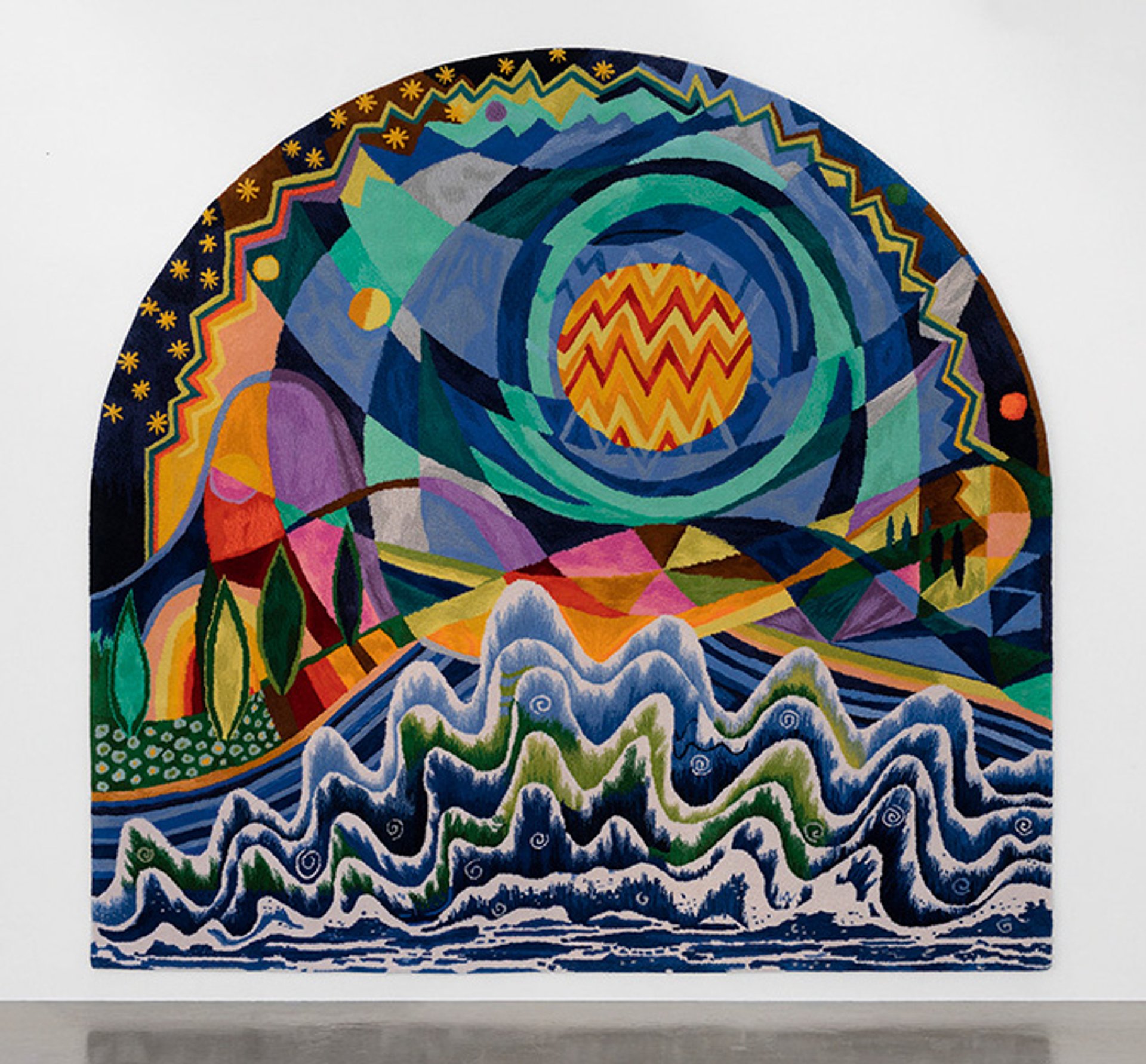
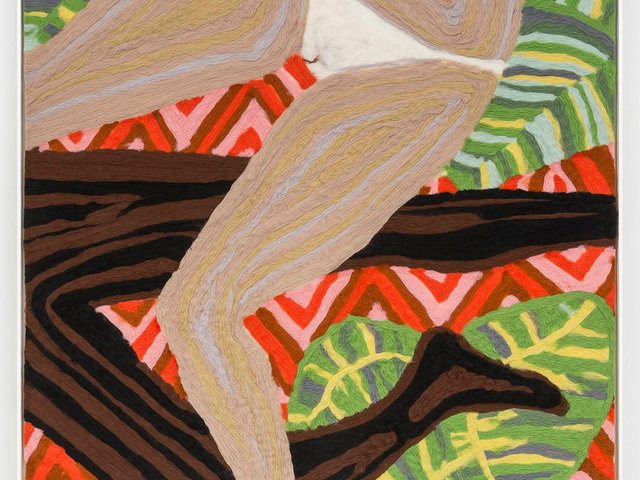
Nolan’s Deep Time Day (2024); the artist is inspired by Italian art from the 1300s and 1400s
Photo by Lee Welch, courtesy the artist and Kerlin Gallery
You seem drawn to the late Medieval and Renaissance periods. Why is that?
It is a period, particularly Italian artwork from the 1300s and 1400s, that I’ve always really loved. I started thinking about the idea of the secular and about humanism. It felt like some really crucial events or moments or ideas emerged in that period. You really see the genesis of a new way of living, ideas taking root that have really gone on to shape the world that we know. You could go to the 700s or the 800s and really feel like an alien, but I think you’d probably be able to negotiate Europe at the time of the 1400s. You’d have a shared vocabulary.
What does the title of the pavilion, Dreamshook, mean?
It’s a word that I coined, talking about that feeling of waking from an incredibly powerful dream and being kind of haunted by all of the strange events that maybe took place. It’s such a universal experience. So, I started imagining this story about Aldo Manuzio and thinking about creating an exhibition—an entirely fictive presentation of him and his dream to populate the world with relatively accessible, portable books. That’s a dream I can get behind.
There was so much hope in this idea that humans might have an inherent moral possibility outside of using God as a framework to explain everything. It’s a moment like now, where expertise is being denigrated by public figures.
Would you say you’re also a little uneasy about the cultural inheritance
of that time?
Yeah. There’s been so many artists and thinkers and philosophers who have done much work over the last few decades: rescuing stories that were lost or voices that were occluded, and building up a much bigger, fuller and more inclusive picture of both history and perspectives on the contemporary moment.
I think one of the things that I’ve always been interested in is having this really kind of ambivalent relationship to the kind of European culture that I grew up with—in terms of what I was able to see in books. My brain was shaped, probably, by reading a lot of literature by dead white men. It’s like trying to reconcile the fact that I still think that there’s a lot of amazing writing and beautiful ideas and interesting stories within that.
• Arsenale