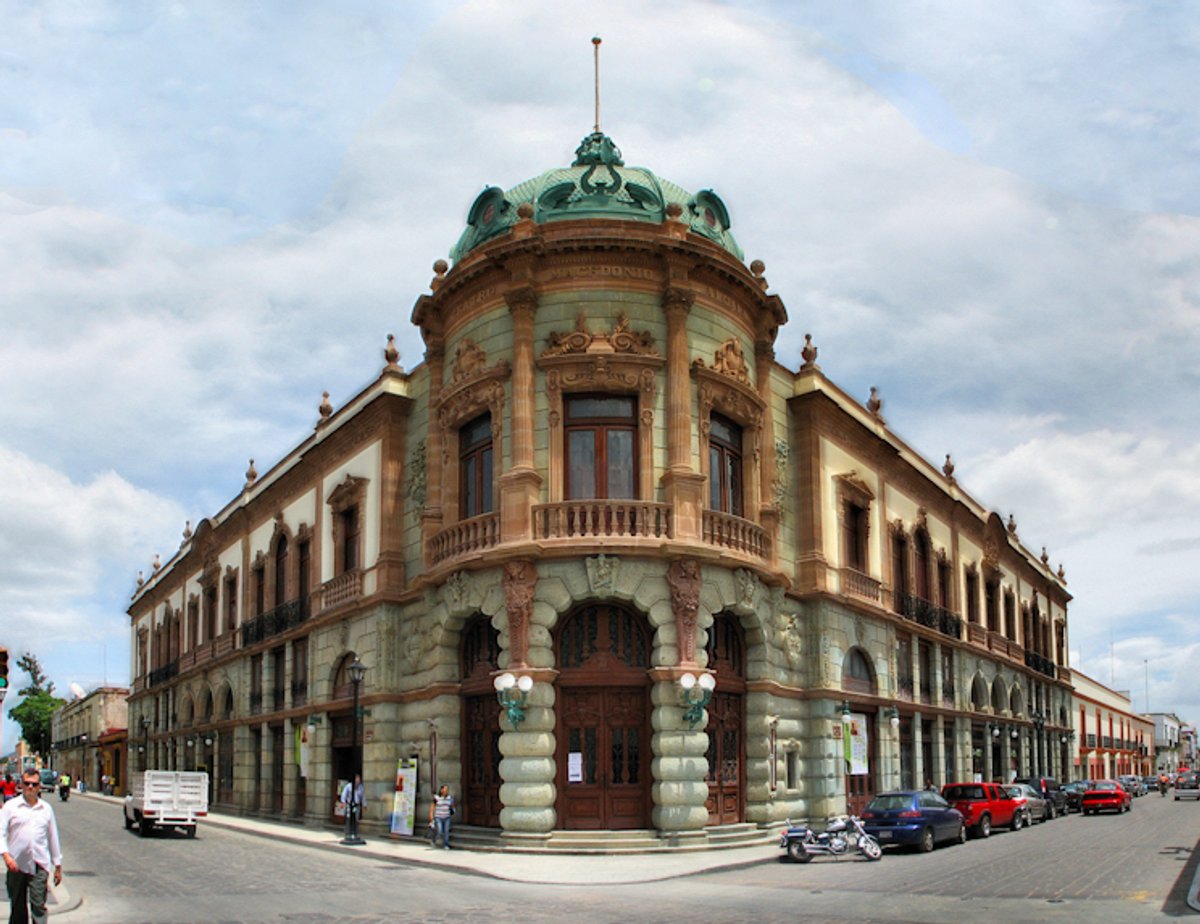
The historic centre of Oaxaca, Mexico, is coloured by the bluish-green hues of local stone that becomes even more vivid after rainfall. Oaxaca green tuff, known locally as Cantera Verde, is a stone that has shaped the region's architecture since the 16th century. As such, it was recently designated a ”geoheritage stone” by the International Union of Geological Sciences (IUGS).
Granted by the organisation’s subcommission on heritage stones (SHS), the designation adds Oaxaca Green Tuff to a global inventory of 68 stones recognised since 2016. The recognition—which promotes the use, knowledge and conservation of culturally significant natural stones—stems from a research project by Mexico's National Institute of Anthropology and History (INAH) and the National Autonomous University of Mexico (Unam).
Oaxaca’s historic centre and the archaeological site of Monte Albán have been Unesco World Heritage sites since 1987. Green tuff is a stone of volcanic origin found throughout the city’s colonial structures, revealing Oaxaca’s layered material history. Starting in the 16th century, Spaniards used the stone as a primary construction material.
“Evidence suggests it was selected due to its availability and suitable properties, making it ideal for building and carving,” Fernanda Martínez Camacho, an INAH conservator involved in the designation, tells The Art Newspaper. One of the most iconic sites covered in green tuff is the former convent of Santo Domingo de Guzmán, whose construction began in 1575 and continued well into the 18th century. Yet green tuff continues to shape the city. It is still used in paving stones, sidewalks and fountains.
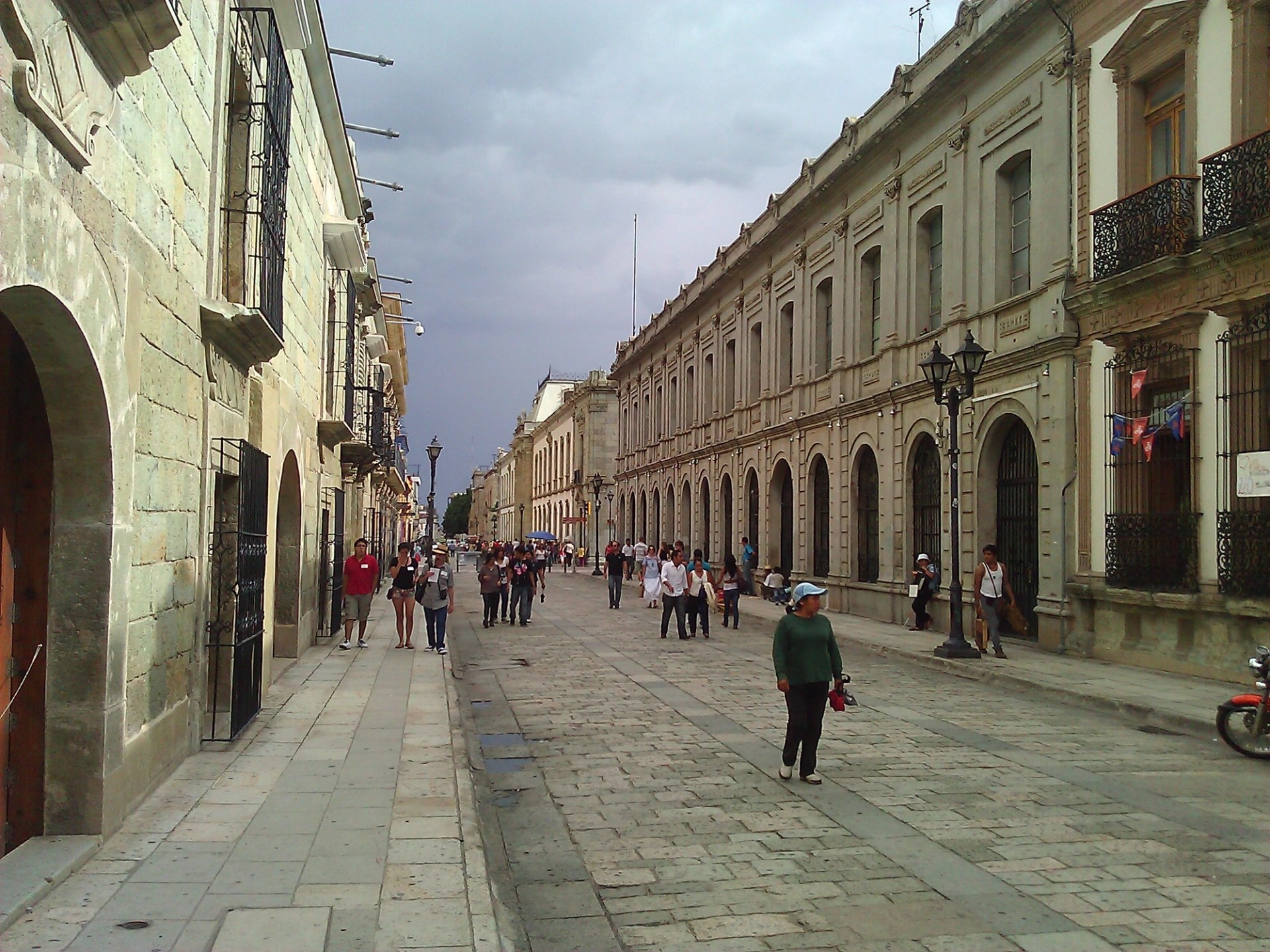
A street in Oaxaca’s historic centre via Wikimedia Commons
The original quarries that once supplied Oaxaca with green tuff are now closed. “City growth covered the areas where the old quarries stood, making it dangerous to continue extraction,” Martínez says. Deposits are found in the Etla Valley, yet extraction needs to be regulated. “This is a non-renewable resource, so moderate exploitation is essential,” Martínez says. Green tuff is also linked to a living tradition sustained by generations of stonemasons and artisans and is recognised as intangible cultural heritage.
“Oaxaca green tuff highlights how a geological material is deeply intertwined with a region's cultural and historical development,” says Gurmeet Kaur, the chair of the SHS. The stone’s recent designation underscores the need for conservation. “It promotes the preservation of historic quarries and the use of authentic materials in restoration, turning the stone into a powerful ambassador for heritage conservation,” Kaur says. Restoration has been particularly important in Oaxaca state because of seismic activity. More than 587 historic sites, including some featuring green tuff, were damaged during earthquakes in 2017.
This is the third Mexican stone to receive the IUGS designation. The other two are Tezoantla white tuff (2022), used in historic buildings in Hidalgo and Mexico City, and Tezontle volcanic scoria (2024). Used for at least 20 centuries, including in the pyramids of Teotihuacan, Tezontle is considered one of Mexico's most representative building stones.
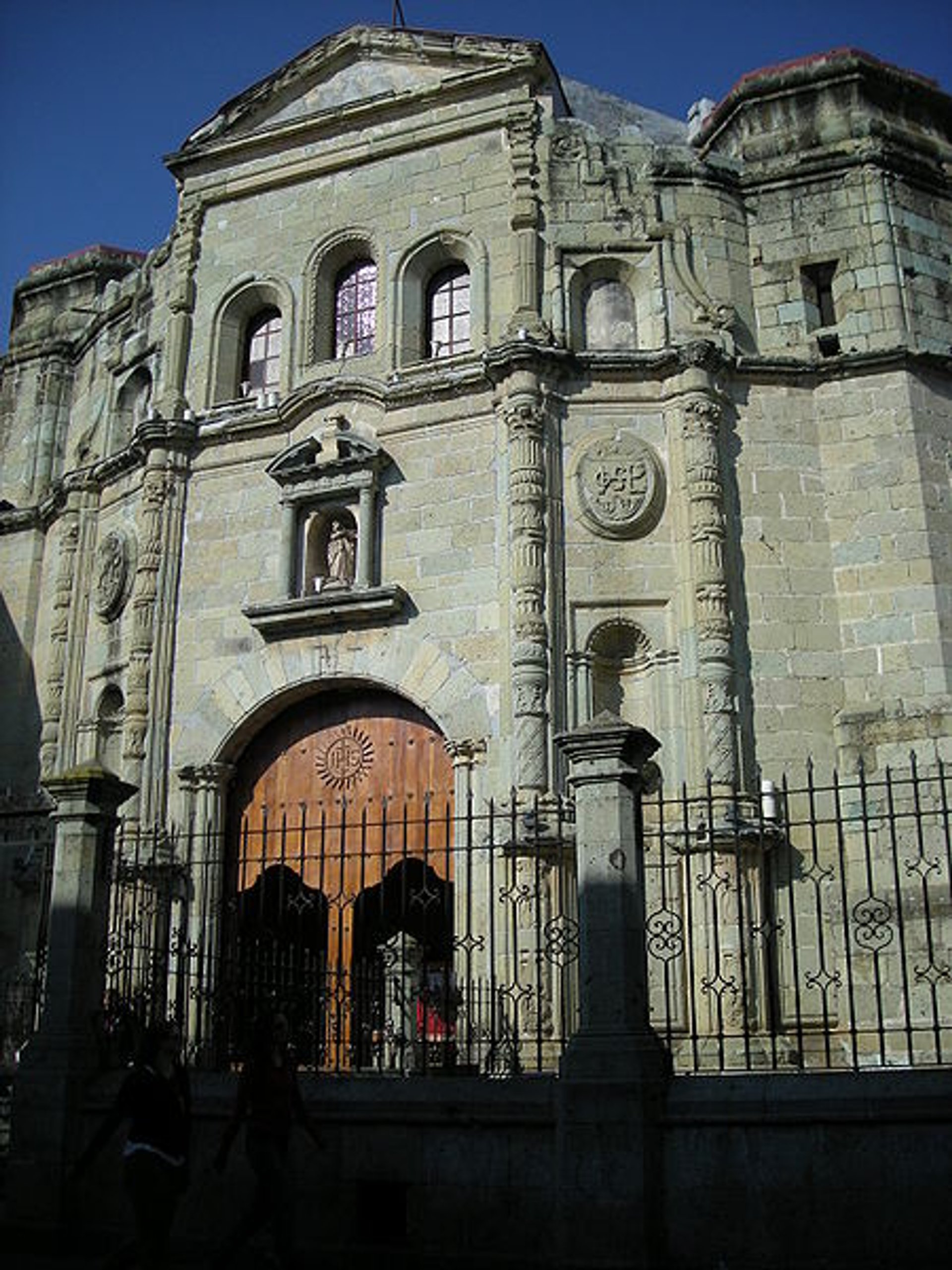
Templo de la Compañía de Jesús, Oaxaca Photo: Alejandro Linares Garcia via Wikimedia Commons
Globally, other emblematic stones recognised by IUGS include Carrara marble in Italy, Alpedrete granite in Spain and Jacobsville sandstone in the US. In 2026, 14 additional stones were incorporated into the inventory. Among them are Minas Gerais soapstone in Brazil, Ain Smara onyx in Algeria and Aurisina stone in Italy.
Building on two Unesco-backed, five-year International Geoscience Programmes, the SHS plans to continue expanding its inventory of heritage stones, particularly in under-represented countries across Asia and South America. “We advocate for stones to become a criterion in the heritage valuation of Unesco cultural heritage sites,” Kaur says.
Green tuff’s IUGS designation opens a little-explored avenue of research in Mexico. “It highlights the importance of collaboration between architecture, conservation and geology to foster long-term research,” says Nora Ariadna Pérez Castellanos, a researcher at Unam involved in the project.