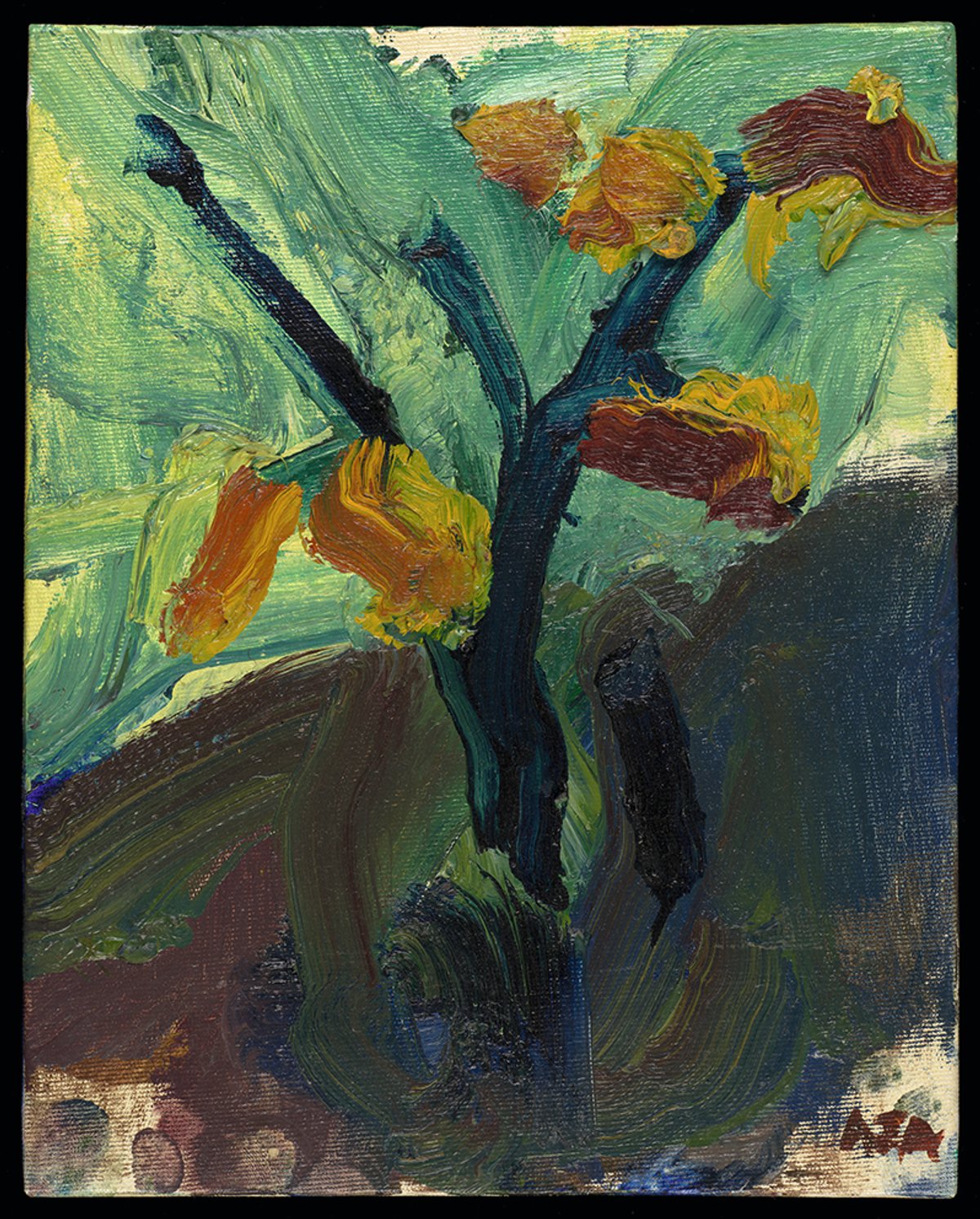
“At the end of a life, all we have is stuff,” wrote the Wellcome Collection’s archivist Elena Carter, as she sifted through the bushels of material donated by the family of Audrey Amiss after her death in 2013. This “stuff”—sketches, posters, notebooks, scrapbooks filled with food packaging—came out of the flat in Clapham, London, where Amiss lived for many years. But Amiss, a selection of whose work is going on display at the Wellcome Collection, was more than simply a hoarder, or even what we might call an “outsider artist”, secret and unheralded. She had in fact once been a promising student at the Royal Academy Schools in the late 1950s but her career was derailed by mental illness, resulting in numerous detentions in psychiatric institutions.
Audrey Amiss: The Surviving Exhibitions is selected from the 350-plus paintings, prints and drawings she left behind, as well as around 50,000 sketches and 230 scrapbooks. Referring to the process as “challenging”, the curator Madeleine Kennedy says that the focus has been “on trying to ascertain her wishes for how she would have wanted her artworks displayed, had she been here to guide that”. Amiss spent most of her life chronicling her activities in incredible detail, recording interactions, noting down food intake (and keeping the wrappings), and continually sketching the places and people she encountered.
‘Freedom for Lunatics’
Added to this, Amiss clearly resented her interactions with psychiatrists; arguably her most striking creations are the signs she made for a 2002 protest against the draft Mental Health Bill of that year, bearing slogans such as “Freedom for Lunatics” and “Psychiatry. Harming in the Name of Healthcare”. Amiss, despite her mental health crises, did regularly exhibit her work—sometimes in small solo shows, and sometimes as part of bigger artists’ society exhibitions. “This was a really important realisation,” Kennedy says, “helping us navigate a key question in the development of the exhibition: how to understand her wishes whilst respecting her privacy.”
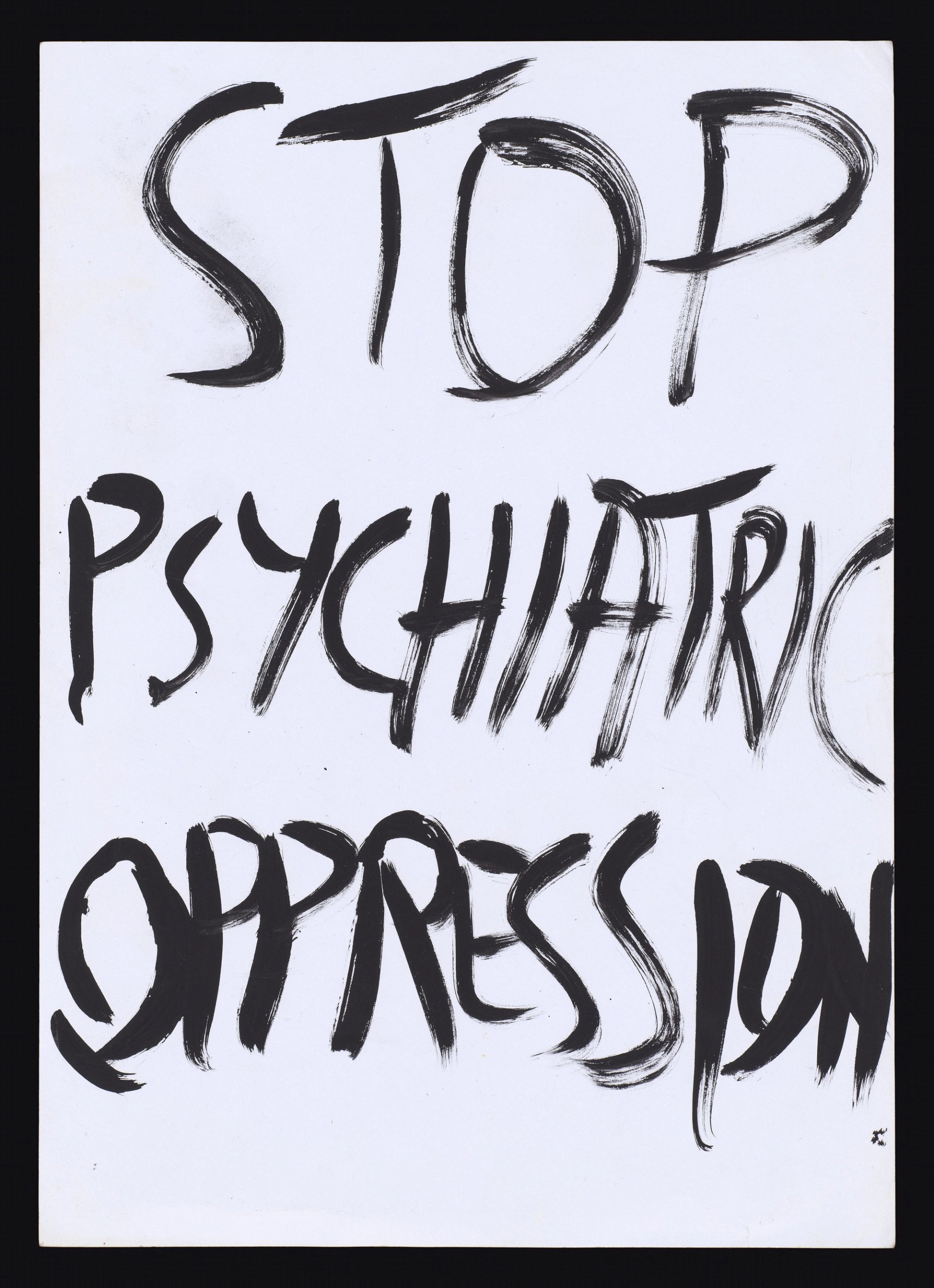
Audrey Amiss's Stop Psychiatric Oppression (2002) Courtesy Wellcome
Collection © Audrey Amiss
One of the more remarkable elements is that, while Amiss’s art remained largely unknown, her story was told in the 2022 film Typist Artist Pirate King, directed by Carol Morley. The movie title is how Amiss described her occupation in her passport. Morley discovered Amiss’s work archive after being given a Wellcome Trust Screenwriting Fellowship in 2015. She says she was immediately connected to Amiss’s work: “Audrey had a unique way of drawing our eyes to the world we inhabit. She was drawn to the everyday and brought with it an artist’s eye that for me is entirely appealing.”
Morley is so taken with Amiss’s work that she is publishing a book later this year (called Typist Artist Pirate King: The Life and Times of Audrey Amiss as Told by Those Who Knew Her and Those Who Didn’t). She is clear about the value of Amiss’s work. “I think an artist discloses something about the world, their world—and Audrey certainly did. I think she gives us all the opportunity to stop, breathe and look.”
• Audrey Amiss: The Surviving Exhibitions, Wellcome Collection, London, 10 July-7 February 2027