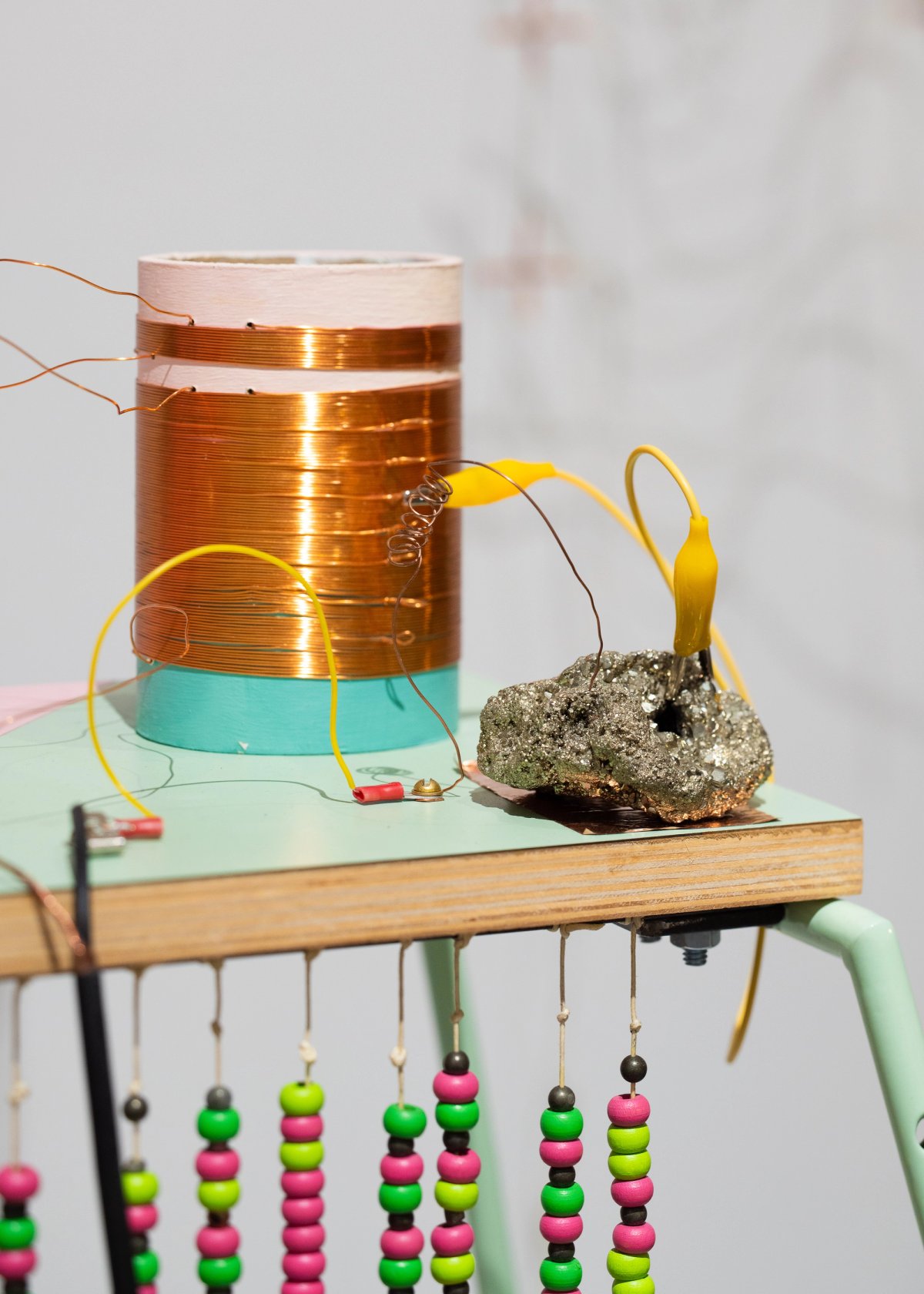
The late artist Peter Simensky (1975-2023) was fascinated by gold—not so much as a precious metal but a symbol of humanity’s ingrained sense of value and, by extension, authority. He who has the gold has the power, after all. Thumbing his nose at this notion, Simensky liked to throw fistfuls of gold dust during performances and used pyrite, also known as “fool’s gold”, in his sculptural works.
“When I first met Peter, he was releasing gold dust into the air,” says Iris Williamson, a friend of the artist who curated his exhibition Pyrite Radio (until 13 September) at the Institute of Contemporary Art (ICA) at the Maine College of Art & Design in Portland, where she serves as the director of exhibitions. Both Simensky and Williamson spent a significant amount of time living in Oregon, a state with a long history of gold mining.
“A speck of gold is nothing, and in a vial packed on top of each other at the cost of several hundred dollars, it still feels somewhat insignificant,” reads a quote from Simensky that appears on the wall of his exhibition. “But once cast off as a sea of particles moving in the air, it opens up, becomes a mass, a sculptural form, a column of light, a dancing, vibrating hive—simply to go away again.”
And if everyone is covered in tiny specks of gold, the power is thinly spread among them all.
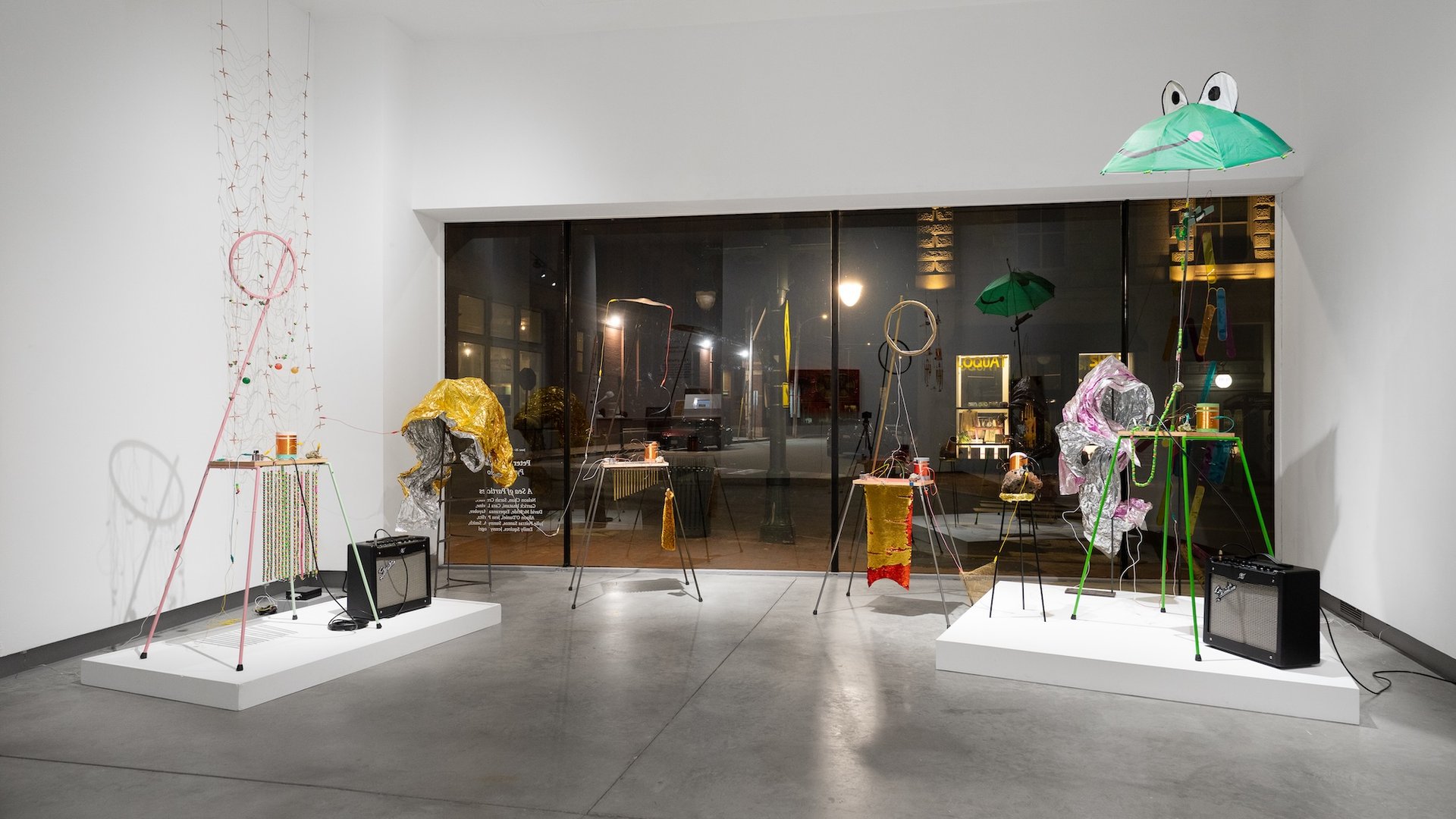
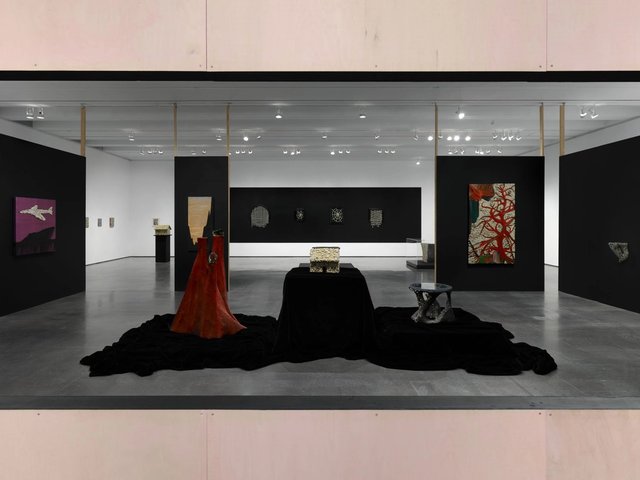
Installation view of Peter Simensky: Pyrite Radio at the Institute of Contemporary Art at Maine College of Art & Design, Portland Photo: Joel Tsui, courtesy the Institute of Contemporary Art at Maine College of Art & Design
This spirit of community and sharing permeates both Simensky’s show and the group exhibition of works made by some of his students and associates in the adjoining gallery, A Sea of Particles (until 13 September).
The titular component of Simensky’s “pyrite radios”, ten of which are on view at the ICA, serves as a conductive element for his bricolage sculptures transmitting local radio signals. The radios’ whimsical antennae vary in form from children’s umbrellas to wind chimes and gold foil, and the speakers are decorated in bright colours.
“Peter was all about the conceptual ideas behind them,” Williamson says. “How people are drawn into the radios—it’s a kind of seduction into alternate models of transmitting information.”
Pirate radio, defined as existing separate from the authorities that licence the airwaves, has existed for hundreds of years. A truly democratic form and frequently the realm of hobbyists, unregulated radio stations have a history of popping up in times of tight government control as a way of sharing information (and banned music) with local communities. “It’s a means of navigating systems and controlling the airwaves,” Williamson says.
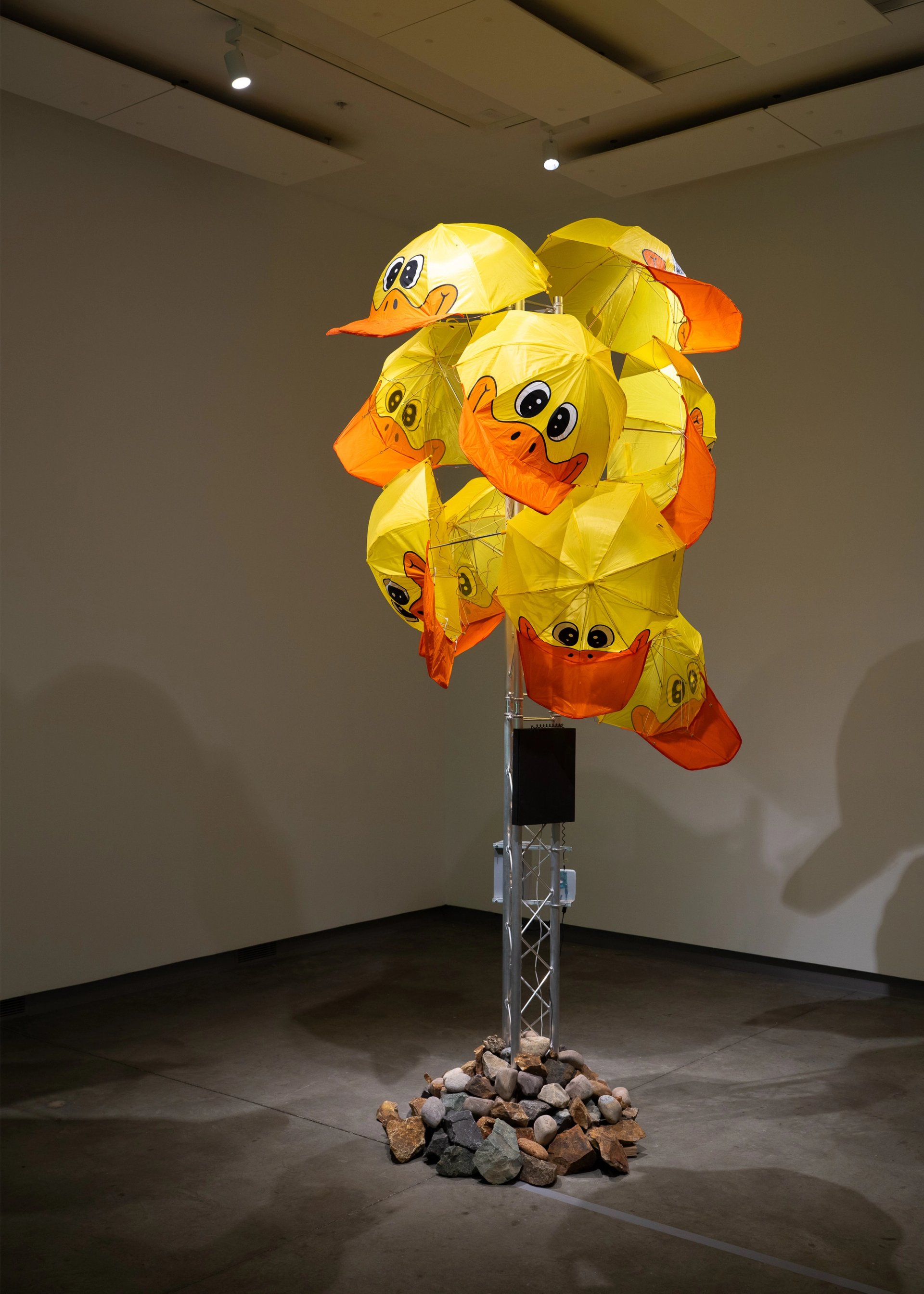
Peter Simensky’s Decoy—Radio Transmitter (2023) Photo: Joel Tsui, courtesy the Institute of Contemporary Art at Maine College of Art & Design
At the ICA, Simensky’s radios pick up local AM stations, sometimes a few at a time, creating a discordant symphony of multiple voices and sounds. The museum is also working with artists, musicians, DJs, writers and stations on broadcasts picked up by the radios. Some are Simensky’s old collaborators. At a time of deep political division in the US, Simensky’s radios take on a particular relevance beyond the philosophical exploration of value and power.
Simensky’s themes are echoed in the 12-artist group show A Sea of Particles, also curated by Williamson. She describes the exhibition as “inspired by Peter” and encompassing “impressions, communities, grief, absence and the resonating impact” of Simensky’s life and work as both an artist and a mentor. Simensky was a faculty member at several art schools throughout his life, including the Maine College of Art & Design.
Some of the most impactful pieces in the group show were created by Simensky’s friends and relate directly to his radios. The California-based artist Alison O’Daniel, for example, translates the radios’ sound component into a sculpture of hanging conjoined triangles (the musical instrument). O’Daniel is d/Deaf, and the empty space between the metal of the triangles represents both a lack of sound and the grief she experienced after Simensky’s death.
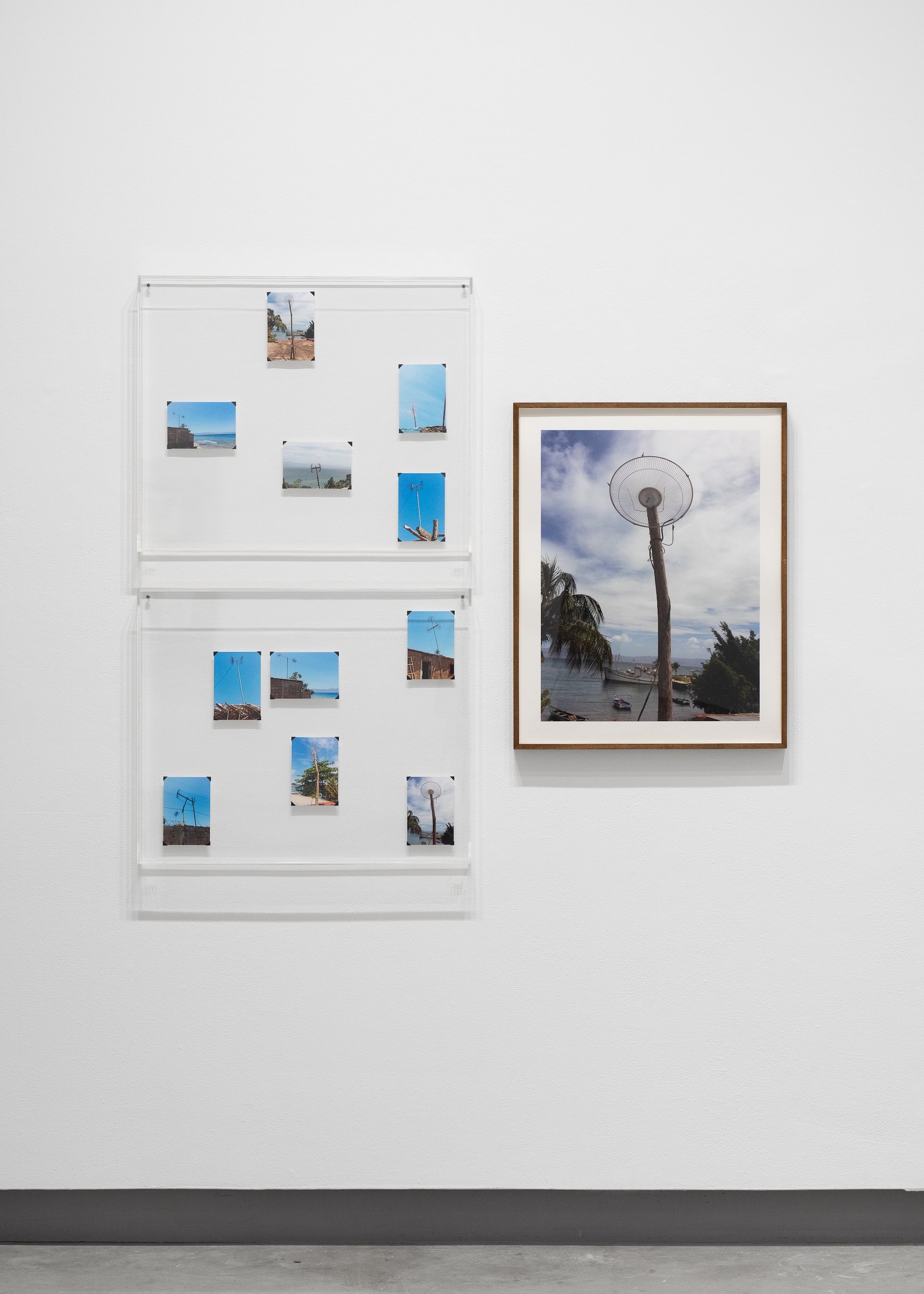
Esperanza Mayobre’s Duchamp Tropical I (2026), Duchamp Tropical II (2026) and Antena de Golindano (2018) Photo: Joel Tsui, courtesy the Institute of Contemporary Art at Maine College of Art & Design
Meanwhile, the Los Angeles-based artist Cara Levine created work using some of her friend’s own materials. For Me Catch You: Dream Catcher Replica Mobile for Peter (2024), Levine re-created a mobile Simensky had hanging over his bed and hung the replica above her own bed. Her side-by-side photographs of the two spaces create an intimate and lasting connection between her late friend and herself. “It’s a kind of transmission through their sleep,” Williamson says.
A project by the Brooklyn-based Venezuelan artist Esperanza Mayobre, another friend of Simensky’s, deftly closes the loop on his radios. Her photographic series Antenas de Golindano (2018) captures homemade “interceptors of information” in northeast Venezuela, where residents have repurposed old electric fans to use as TV antennae. Although the signals received are state-controlled, the aesthetic of the landscape represents both a revolution that never materialised and, perhaps most importantly, people's irrepressible need to connect with one another.
“The show highlights the importance of artist communities,” Williamson says. "Peter was always doing that.”
- Peter Simensky: Pyrite Radio and A Sea of Particles, until 13 September, Institute of Contemporary Art at Maine College of Art & Design, Portland