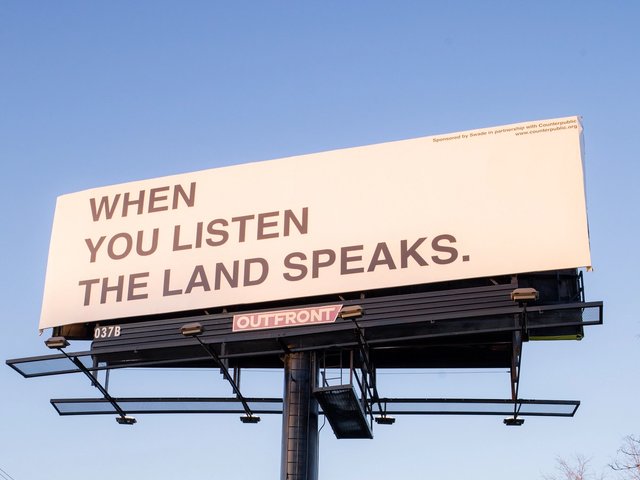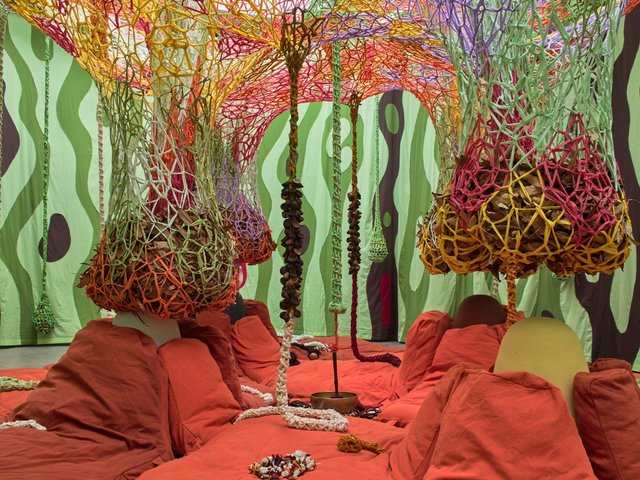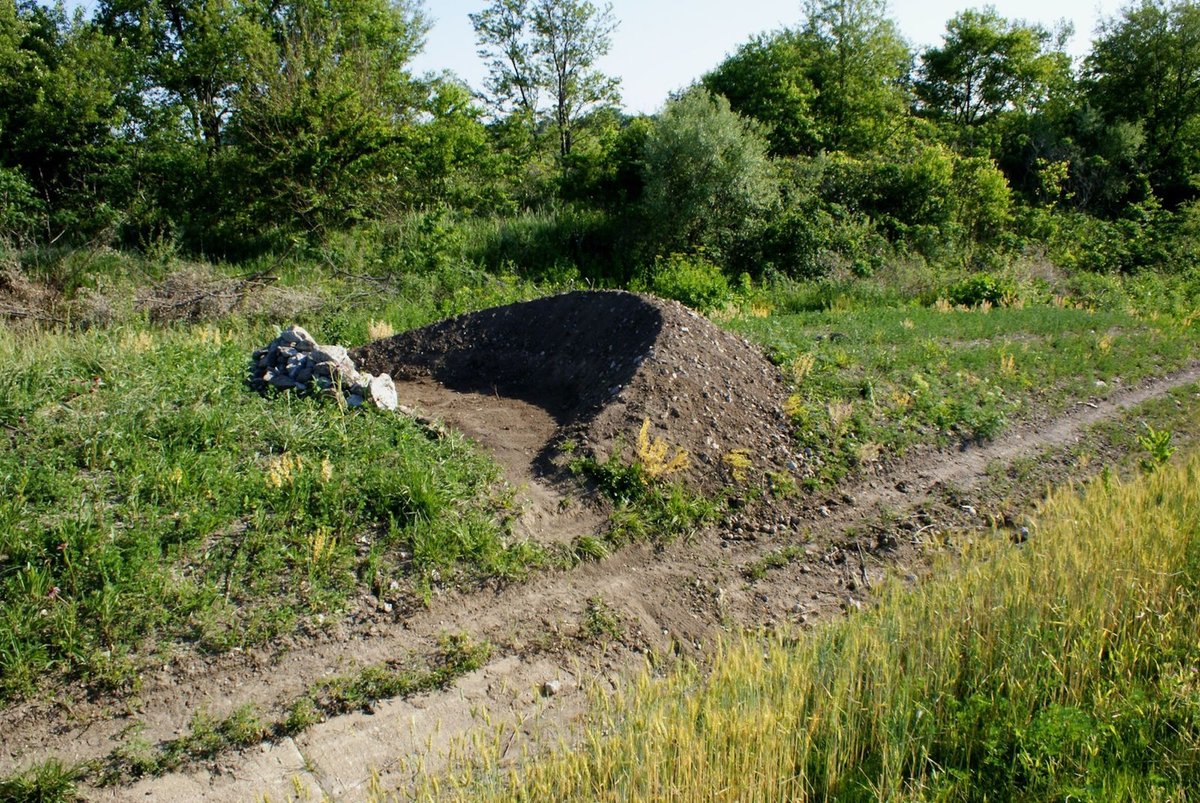
As temporary exhibitions often staged in civic spaces, biennials and triennials are tricky operations to produce at all, let alone while keeping environmental sustainability top of mind. The environmental challenges apparent in all art world activities remain: packing, shipping and energy consumption, to name a few. But with events like triennials, there are often new commissions involved and temporary infrastructure needed, amplifying the issues the industry faces more broadly. Rather than sweep these concerns under the rug, the Counterpublic triennial in St Louis is tackling sustainability head on.
“There’s an understanding that large-scale exhibitions like biennials and triennials are resource-intensive—there’s a lot of material movement, travel, artwork that is produced and destroyed, and general waste from the process,” James McAnally, the executive and artistic director of Counterpublic, tells The Art Newspaper.
Working with the consultant Laura Lupton of Field Forms to create a climate impact strategy for its latest edition, Coyote Time (10 September-13 December), Counterpublic has been assessing everything from the materials used for exhibitions to the transportation of art. Included in the initiative is the promotion of zero-carbon visitor transportation, opting for walkable exhibition sites and offering bikes and electric vehicle shuttles. Counterpublic also planned for zero- or low-waste exhibition build-outs wherever possible. This work will eventually see the creation of a report that other organisations can use to model their own sustainability efforts.
“Biennials and triennials are powerful microcosms to showcase climate decision-making in the arts,” Lupton says. “Because they happen once every few years, there’s dedicated time to plan ahead and an opportunity to set goals and track real change between editions—a cadence you don't always have for regular exhibitions. These events can also have huge platforms to engage artists, vendors and audiences in reimagining how cultural events are experienced.”
Climate action was a natural fit when it came to organising Coyote Time, which explores pressing issues including environmental crises. “The language we were using to inform the exhibition asked: ‘How do we imagine a shared near future?’ We use the word ‘agency’ often in our work to address this idea of a shared future. We have to take agency in the climate crisis,” McAnally says. “Climate action only works when collaboration is involved—it doesn’t work in a silo.”
To help support its sustainability efforts, Counterpublic received a grant from the Helen Frankenthaler Foundation. Four of the triennial’s participating organisations also received grants from the Frankenthaler Climate Initiative (the foundation’s annual programme to support energy-efficiency projects) ranging from $20,000 to $25,000. The organisations—The Luminary, the Griot Museum of Black History, the National Building Arts Center (NBAC) and the Granite City Art and Design District—will use these funds for various sustainability and resiliency endeavours. The cluster grant from the Frankenthaler Climate Initiative demonstrates how cohorts can work through climate action together and support each other along the way.
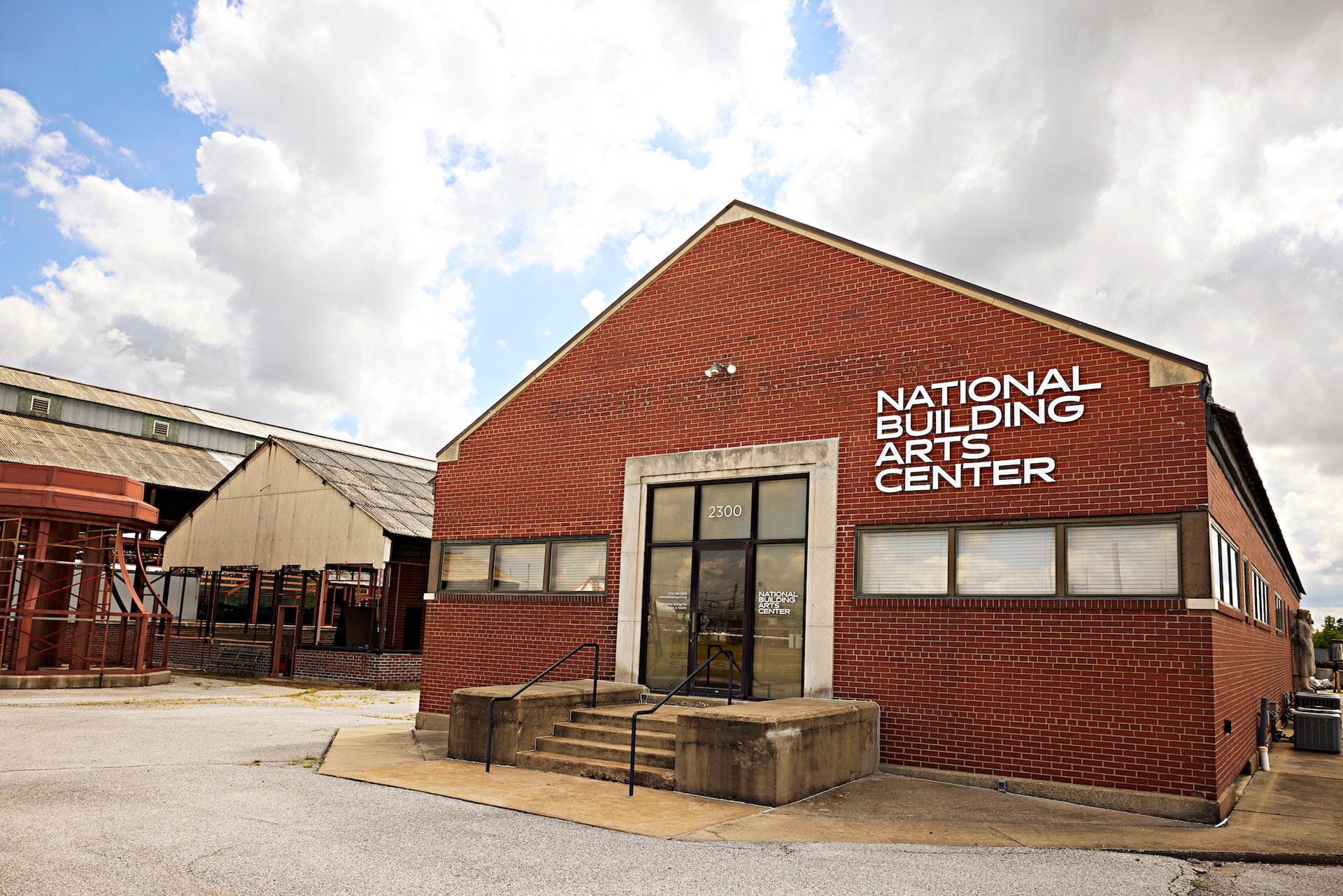
The National Building Arts Center in Sauget, Illinois, will host several site-specific projects during the 2026 edition of Counterpublic Photo by Izaiah Johnson
“NBAC is a post-industrial reality in an active industrial corridor,” says Eric Ellingsen, the executive director of the NBAC, which holds the largest collection of artefacts from the built environment in the US. The organisation also hosts artists in its exhibition space, Non Stndrd. Located in a decommissioned steel foundry, NBAC is in the former Monsanto village, which was home to the agrochemical biotech giant.
“To NBAC, site-specific sustainability means sharing atmospheric and ground water aquifer realities with over a century of industrial production in the American Bottoms floodplain,” Ellingsen says. “All of the St Louis region is surrounded by extractive landscape economies producing enormous volumes of ethylene, propylene, benzene, plastics, solvents, fuels and chemicals related to what made the nation wealthy…The Frankenthaler grant will allow us to understand what we can do now, and how what we do now changes the future.”
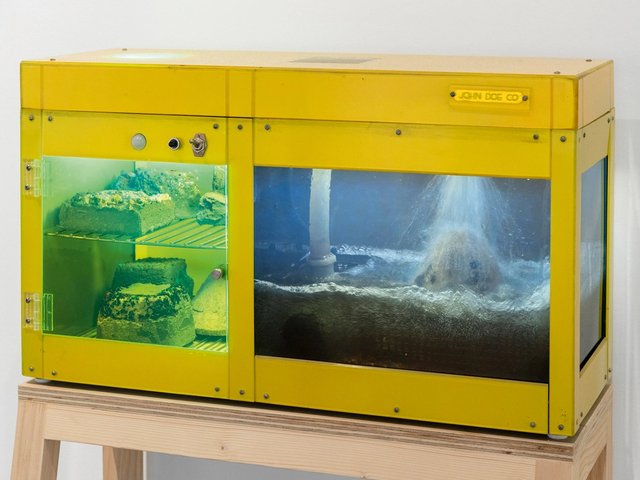
Several works in Coyote Time engage with these topics and centre remediation, including What’s at the Bottom of the Pond, an ongoing research project by Lynne Smith at the NBAC and Non Stndrd. After studying the ecology of a retention pond used for stormwater runoff by the Sterling Steel Company, Smith foraged for plants and documented animals in field recordings of the contaminated wetlands. Through this research, Smith created an aquatic habitat at an NBAC loading dock that had begun to collect rainwater, installing native plants and transmitting field recordings from the retention pond to the loading dock to link the two sites.
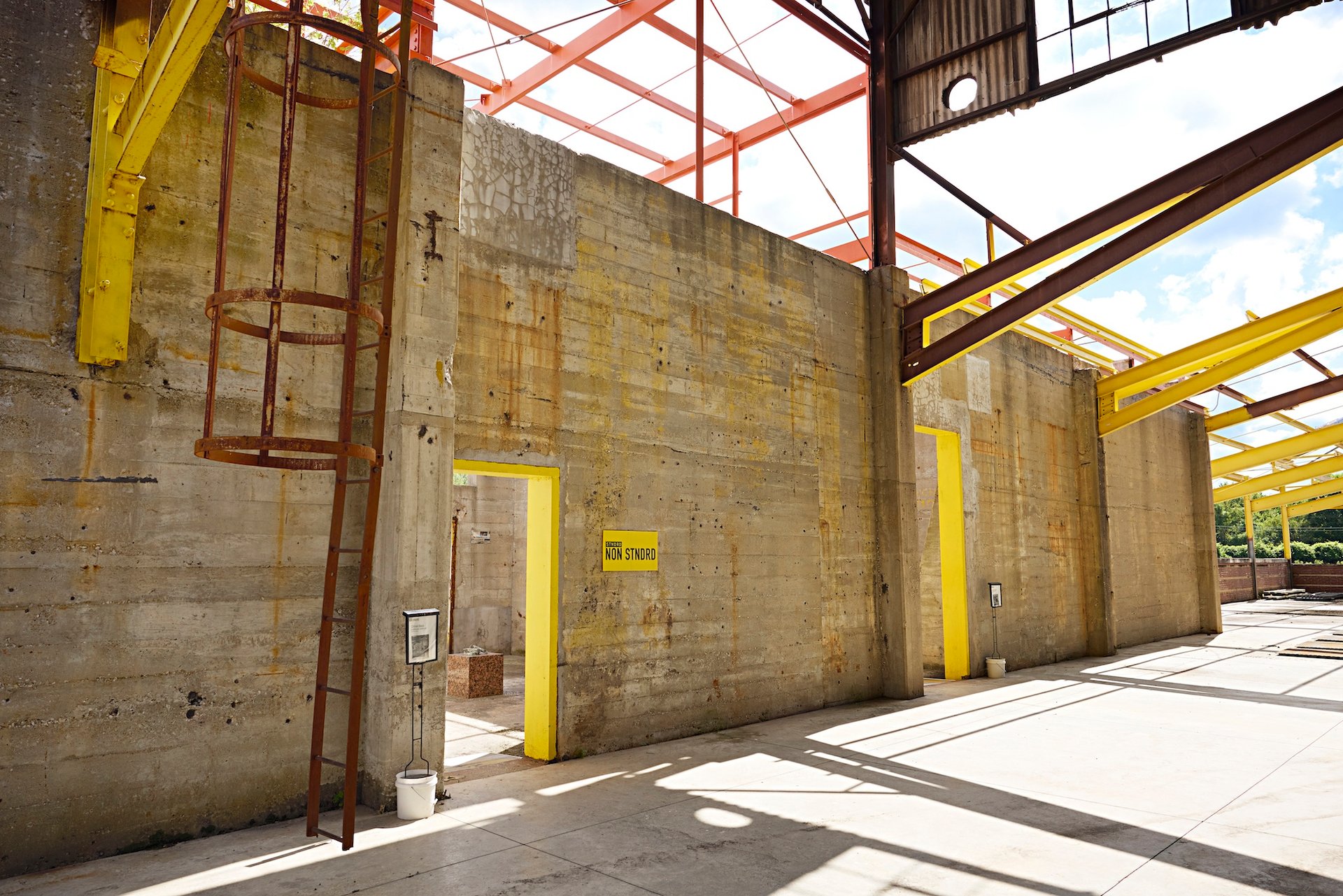
Non Stndrd, an artist-run space inside a decommissioned steel foundry located on the campus of the National Building Arts Center in Sauget, Illinois, will host several projects during Counterpublic's 2026 edition Photo by Izaiah Johnson
Extending the subject of sustainability to its programming, Counterpublic will host a public convening titled “Climate Futures and Infrastructural Imaginaries” (23-25 October) featuring artist tours, workshops, performances and other events. This will also include a closed-door workshop for arts organisations.
“The work that our partnering institutions are doing with Laura gives them practical skills, but we all recognised the need to also bring the speculative into the conversation,” says Kristin Fleischmann Brewer, Counterpublic’s deputy director. “The convening will focus more on workshops and performances that explore the artist’s role in creating new worlds and imagining new futures together. Both the public and closed-door events will bring elements of these together.”
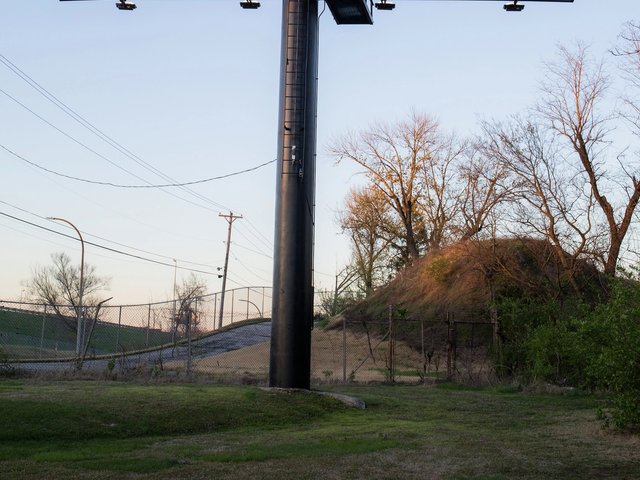
For the local community, climate conversations are rooted in St Louis itself. The city is vulnerable to tornadoes, flooding and extreme heat. Counterpublic has experienced those conditions directly: the opening weekends of its 2019 and 2023 editions were affected by tornadoes and heatwaves. The triennial subsequently moved its exhibition calendar from spring and summer to autumn.
Across the art world, there is a growing recognition that taking climate action is no longer limited to whether an institution can reduce its carbon footprint, but that it must also involve resiliency. Museums, galleries and exhibition organisers have to address how extreme heat, flooding, storms and disrupted supply chains could affect their buildings and operations. And as climate change worsens, these issues will only become more urgent.
- Counterpublic 2026: Coyote Time, various locations in and near St Louis, Missouri, 10 September-12 December