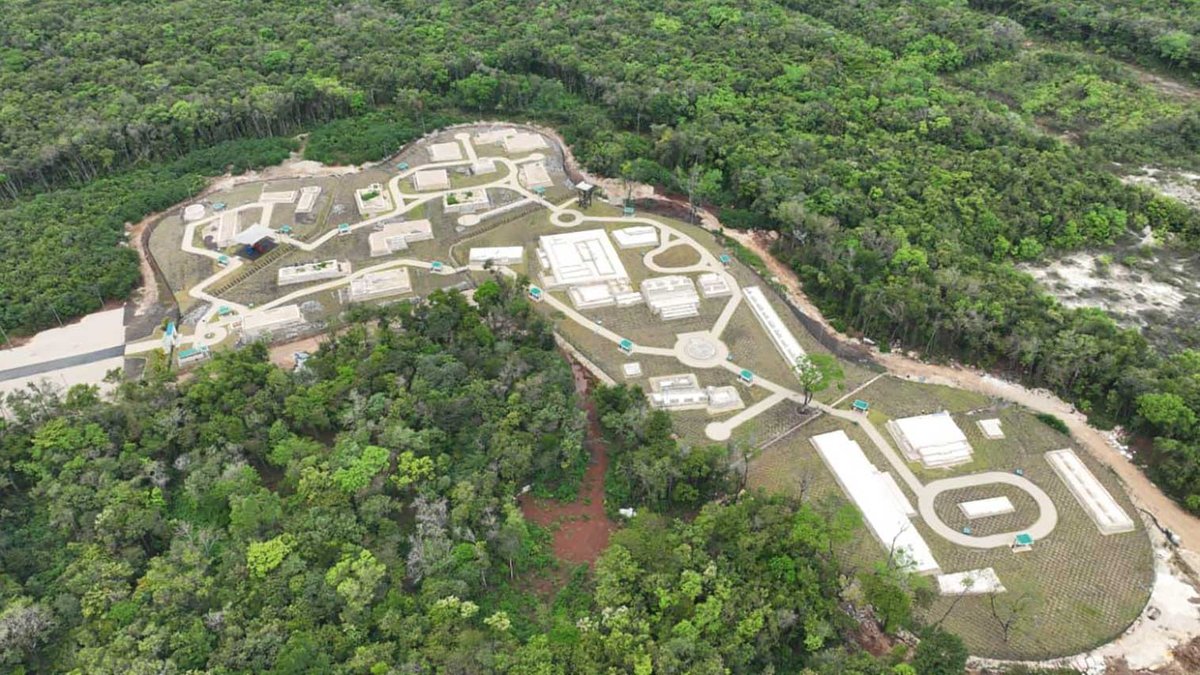
Can Maya monuments be fully relocated? Mexico’s Maya Train continues to stir controversy over its ecological and archaeological impact. Recently, archaeologists at the National Institute of Anthropology and History (INAH) initiated legal proceedings against 26 INAH officials for allegedly destroying and falsifying archaeological heritage during the construction of the Balam Tun Memory Park in Chetumal, Quintana Roo state. The four-hectare park feature 47 Maya structures that INAH says were relocated with millimetric precision from sites affected by construction of the tourist train line to guarantee their conservation. Among those named in the complaint are the former INAH director Diego Prieto and Manuel Pérez Rivas, the archaeological preservation coordinator for the Maya Train.
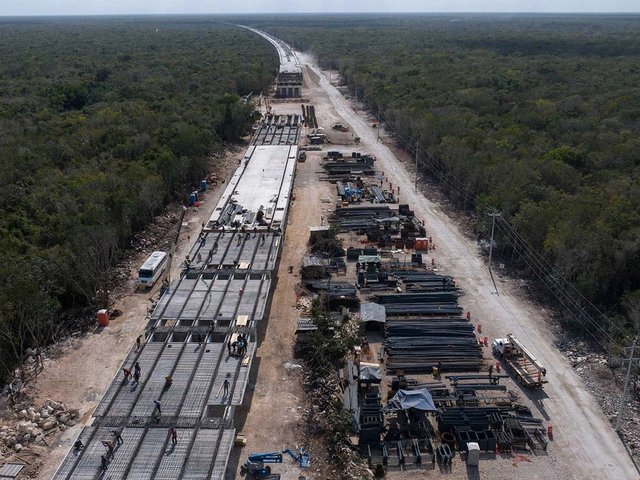
The 1,554km Maya Train began operating in December 2023, running through a dense archaeological region on the Yucatán Peninsula. The preservation project recorded 62,985 archaeological remains and 520 sites.
“Rerouting more than 100km of rails preserved over 7,000 heritage monuments intact and in their original locations,” Pérez tells The Art Newspaper. “In situ preservation was prioritised for monuments of high value, with various measures preserving 6,120 monuments.” He adds that the work aligns with Unesco’s 1969 Paris Recommendation, which states that safeguards for monuments at risk should reflect their cultural significance and can vary according to the specific circumstances.
But the preservation project faced opposition early on for prioritising infrastructure over heritage, leading to legal proceedings initiated in 2020 in which experts denounced archaeological destruction. Scrutiny increased after the 26 August 2025 announcement of the creation of two so-called “memory parks”. K’awiil Memory Park, near the Xpujil train station in Campeche state, will also feature 12 reconstructed structures. Concerns focus on the unprecedented relocation of Maya structures resulting in what some experts characterise as a “Disneyfication of heritage”.
‘Heritage falsification’
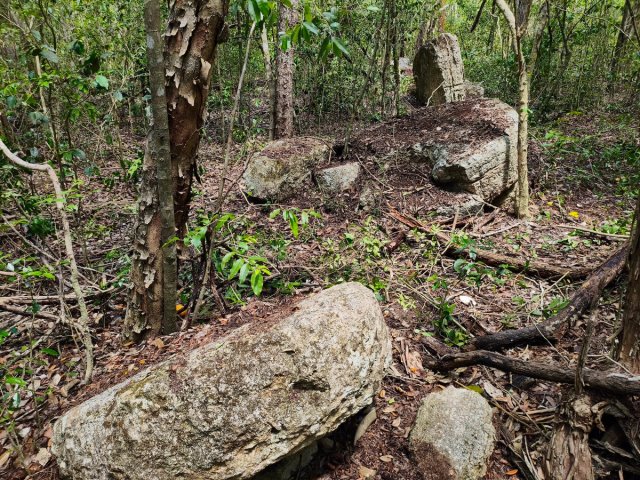
Amid the controversy, a special commission from INAH’s researchers’ union, SNPICD-INAH inspected the Balam Tun Memory Park on 18 November 2025. “We confirmed our concerns and verified that this constitutes heritage falsification,” says Jesús E. Sánchez, one of the union’s archaeologists. “The façade stones were stripped from 47 pyramidal basements and taken to Balam Tun, where only some were placed on newly built cores.”
Following INAH’s inaction on these claims, on 7 July Sánchez and another archaeologist initiated legal proceedings seeking a formal investigation. “These interventions violated national and international heritage laws and standards by removing and artificially reconstructing archaeological remains,” says Raymundo Tamay, one of the lawyers for the plaintiffs, who submitted a 700-page evidence file gathered by 20 experts. “They caused serious damage to Mexico’s archaeological heritage, which belongs to the nation, constituted ideological fraud, falsification and unlawful exercise of public office.”
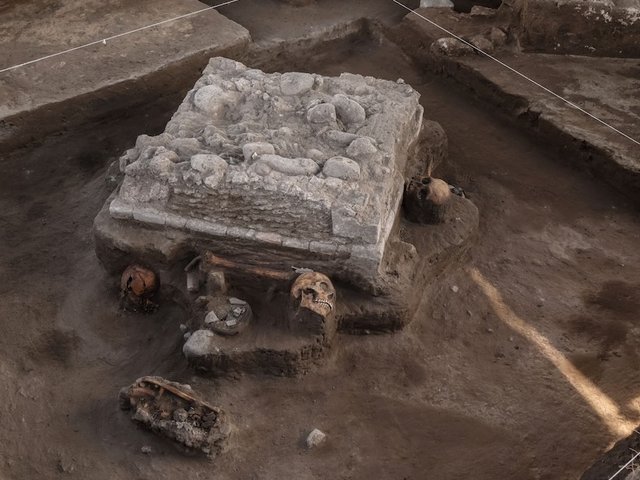
The plaintiffs question the feasibility of reconstructing Maya structures. “It is materially impossible to relocate pre-Hispanic structures due to the construction methods used,” Sánchez says. “Relocating the façades involves destroying what remains, with offerings often placed inside the core structures, especially since most were residences.”
Sánchez says the original cores were abandoned and the façades altered, making their origin unclear. INAH had identified the rural communities of Juan Sarabia, González Ortega and Francisco Villa, west of Chetumal, as their places of origin.
Pérez, however, emphasises that the relocation was a safeguarding measure grounded in Mexico’s 1972 heritage law and aligned with conservation principles promoted by Unesco and the International Council on Monuments and Sites. He stresses it was adopted because in situ preservation was not feasible. Surveys revealed such a high density of archaeological remains that rerouting the train risked affecting other sites.
Methodical documentation
“We reject claims that our work constitutes historical falsification,” Pérez says. “We carried out a rigorous process of anastylosis [reassembly] and reintegration, supported by extensive technological documentation.”
Pérez adds that before dismantling, each area was documented with Lidar and photogrammetry, while every stone was catalogued and georeferenced to enable high-fidelity reconstruction: “We are not creating stage sets, but preserving scientific evidence.” Regarding the complaint, he says INAH “will respond in accordance with the law” and provide supporting documentation if required, adding that “the technical team acted according to sound technical, legal and methodological criteria”.
INAH has repeatedly defended the memory park projects in statements and at events. It argues relocation had taken place in other cases, including the Abu Simbel temples in Egypt. The plaintiffs are not swayed by this comparison. “Abu Simbel is completely different, as there the structures were safely relocated,” Sánchez says. “There is no heritage decree that advocates for falsification.”
Opponents of the projects fear defeat could set a legal standard. “Balam Tun sets the first institutional precedent in Mexico for treating the dismantling and partial reconstruction of archaeological monuments as legally valid,” José Manuel Hermosillo, another heritage lawyer representing the plaintiffs, says. “This allows future projects to justify the removal of monuments as ‘relocation’, setting a fatal precedent for Mexico’s heritage.”
Sánchez says they will soon launch legal action related to K’awiil and another memory park in Campeche. “The proceedings face challenges,” Tamay says. “Government interference could be a factor, in addition to the need for independent assessment.”
Meanwhile, no official opening date for the Balam Tun Memory Park has been announced.