Of all the various satellite fairs within walking distance of Frieze London this year, the inaugural Fair Play has the advantage of being the closest. Located across two floors in the repurposed church One Marylebone, the new fair boasts an “artist-first” status, cutting the galleries out of the equation by only hosting individual artist stands.
Rather, the fair acts somewhat as a gallery, with the artist playing dealer. Fair Play provides the exhibition space and white walls, gets the artists’ work in front of collectors and other audiences, and, of course, takes a 50% cut (including VAT) of any sales made. The majority of the 70 artists exhibiting were chosen by a selection committee of curators and creative directors following an open call, with an £84 application fee (including two fair tickets for all applicants) but no cost for the stand itself. For each of the chosen artists, it was up to them to sort transportation, hanging, pricing and curation of their work. Most of the artists do not have gallery representation and, for many of them, this is their first fair.
A ‘heaving’ opening
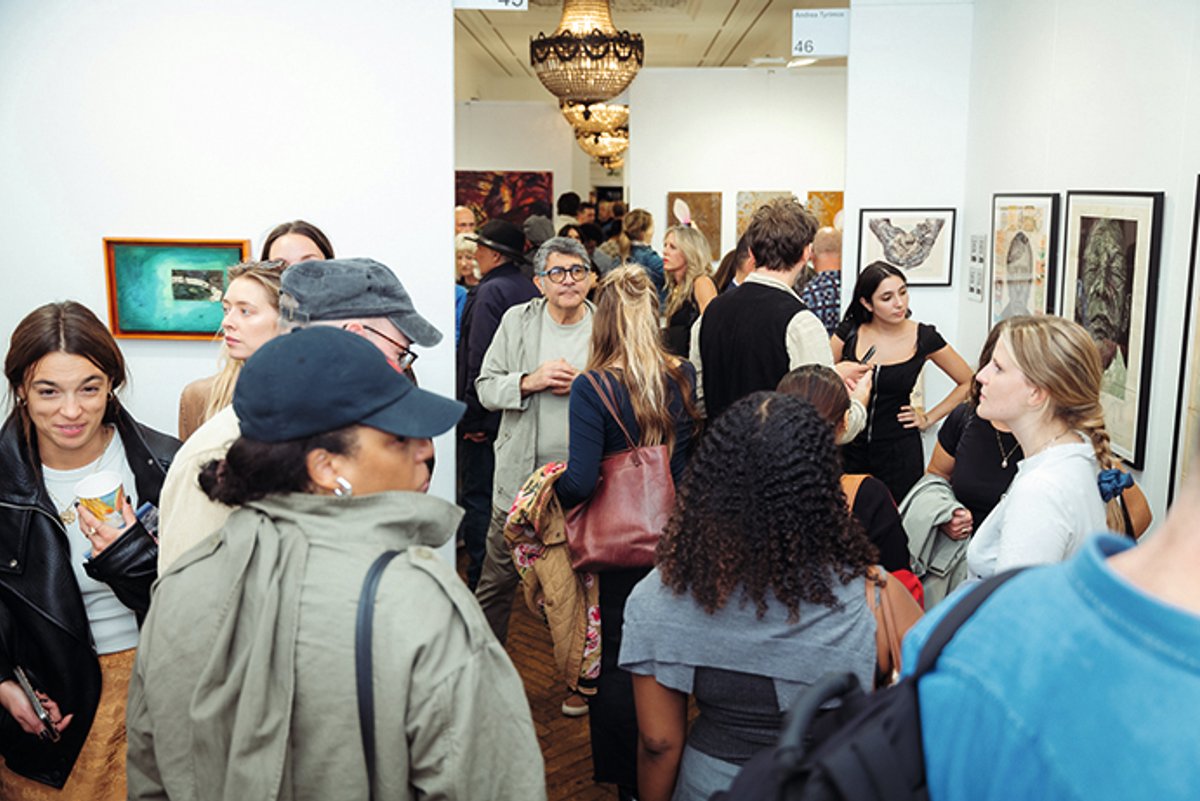
The energy on Friday morning was upbeat, and the slim corridors between the tightly placed stands were extremely busy. “Busy” was the keyword when speaking to artists at the fair so far, many of whom pointed to the apparently heaving opening the night before. According to Ryan Stanier, the fair’s founder, the private view saw more than 3,000 attendees. “It was the best opening night I’ve ever hosted,” he tells The Art Newspaper, referring to his prior role as the founder and director of The Other Art Fair.
Sales, however, seemed significantly less buzzy. Although affordable—most of the prices lie in the three- to four-figure range—red dots were scarce. The vast majority of the artists The Art Newspaper spoke to had not made any sales, although all of them were optimistic about interest and collectors returning later on. One notable exception was the London-based artist Lea Rose Kara, who sold two wall-based sculptures on the opening night: a smaller work to one of her returning collectors for £300 and a larger piece to a new collector for £3,200. Other artists were positive about alternative opportunities that may come from the fair, such as the Cornwall-based sculptor Eleanor Turnbull, who had several enquiries regarding potential commissions.
Nevertheless, staff remain steadfast about the strength of sales at the first edition. “Our ethos is to buy the piece and walk out the door with it,” said one staff member at the payment desk, with a wrapping and shipping stand located just around the corner.