“Europe—the world—has but one Canova.” So wrote Lord Byron in 1818 when the Italian sculptor’s fame was at its zenith. Antonio Canova’s (1757-1822) dexterity and bravura had ushered in a new age of art, and popes and princes vied for his attention. His Cupid and Psyche Embracing (1787-93) and The Three Graces (1812-16) were not only technical tours de force but scarcely imaginable in marble; they would become international icons like the Mona Lisa.
Canova’s fall from grace, however, came swiftly after his death in 1822. Ironically, his weakness lay in what his contemporaries like the French writer Stendhal hailed as his strength: “Canova had the courage not to copy the Greeks, and he invented a beauty as the Greeks had done.” By the mid-19th century, such an opinion would be curtly dismissed by the German scholar Gustav Waagen, who saw the Three Graces as “pretty but insipid”, with heads that “cannot gratify a taste familiar with the antique”; the limbs, he added, lacked “bony structure”.
Canova’s reputation continued to languish well into the 20th century, and even as perceptive a scholar as John Pope-Hennessy would damn him with faint praise as “fettered by the shackles of good taste”. Now, Canova’s star has risen again, thanks largely to the meticulous studies of the late Hugh Honour as well as a series of outstanding exhibitions, beginning with that at the Museo Correr in 1992 through to more recent ones in Rome, Milan and Chicago.
The sculptor’s oeuvre is ripe for a new monograph but, in its absence, Livio Pestilli’s Canova and His World is the next best thing. Beautifully illustrated and with a text steeped in scholarship, the book distils the current state of Canova studies into a series of essays addressing topics like the critical debate that raged over Canova’s work in his lifetime, the technical challenges posed by his sculptures, and his heroic role in returning looted art to the Papal States after the fall of Napoleon.
Canova certainly divided opinion in his own day, and the younger Danish sculptor Bertel Thorvaldsen (1770-1844) was viewed, chiefly by Nordic critics, as the better artist and the embodiment of a pure strain of Neo-Classicism. Nevertheless, Canova found a powerful ally in the French aesthetician Antoine Quatremère de Quincy, who moulded the sculptor’s international reputation and encouraged his growth as an artist. Yet even Quatremère shared some misgivings about Canova, perceptively observing of Cupid and Psyche Embracing that it veered into the realm of “a classical Bernini”.
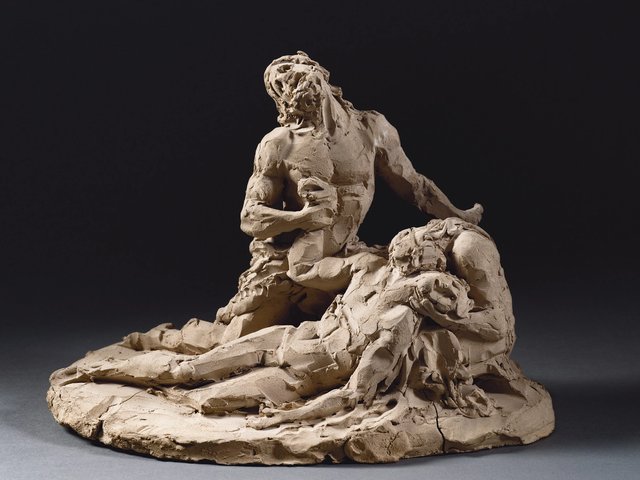
In his defence, Canova was trying to reconcile technical virtuosity with fidelity to the narrative of the two lovers. In general, the clay models of Canova do share a degree of spontaneity with those of Gian Lorenzo Bernini (1598-1680), but whereas Bernini maintained that degree of spontaneity in his finished marbles, Canova refined his finished work into a more restrained idiom.
Early success
The Veneto-born Canova achieved an early success with his tomb for Pope Clement XIV, completed in 1787 (the Church of Santi Apostoli, Rome). That monument employed many of the same tropes of earlier papal tombs—the pyramidal form, attendant virtues and a statue of the deceased—but everything was subdued, echoing the “noble simplicity and quiet grandeur” that the German art historian Johann Joachim Winckelmann—who laid the foundations for Neo-Classicism—found in the best Classical sculpture.
The virtues of Temperance and Humility are presented as mourning figures with their attributes and rhetorical gestures minimised. Canova’s friend and biographer Leopoldo Cicognara spoke for many when he hailed Canova’s achievement here as a decisive break with previous papal tombs and banished the bad taste of the Baroque era.
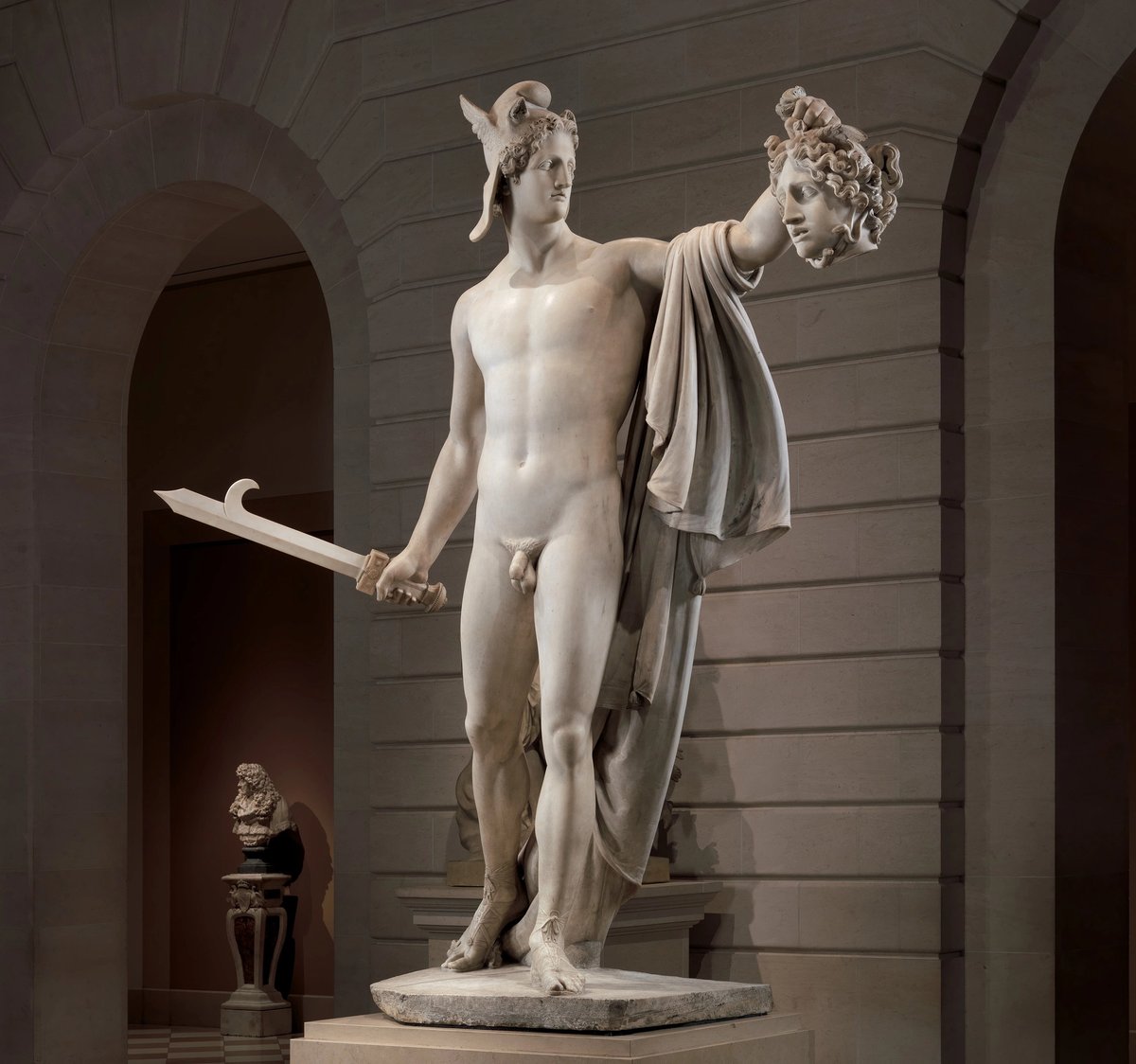
What is fascinating about Canova’s work is its glorious inconsistency: that is to say, his unabashed embrace of elements from classical, Renaissance and Baroque art. For example, the verisimilitude of Pauline Borghese’s couch (1804-08, Galleria Borghese), the sentiment of Cupid and Psyche Standing (around 1797, Louvre) or the heroic stance of his Perseus (1804-06, Metropolitan Museum of Art) hardly appear the work of the same artist; yet Canova would probably have defended himself along the lines of Anton Raphael Mengs: “he who effectively studies and observes the productions of great men with a true desire to imitate them, makes himself capable of producing works which resemble them, because he considers the reasons with which they are done…and that makes him an imitator without being a plagiarist”.
Pestilli’s final chapter focuses on Canova as a diplomat, pleading for the return of art looted by Napoleon. Even after the Battle of Waterloo in 1815, there was resistance to returning those works of art to Italy because of a tacit assumption that France should be the natural repository of the best of human creations.
Still, Canova’s patient advocacy won over the British, and this resulted in roughly half of the stolen artefacts being recovered by the papacy. It was a great achievement and of a piece with Canova’s single-minded dedication to art. Towards the end of his career, Canova could say, like Shakespeare’s Othello, “I have done the state some service.”
Livio Pestilli, Canova and His World, Lund Humphries, 240pp, 169 col. illust.,
£60 (hb), published 3 March
• Bruce Boucher is the author of John Soane’s Cabinet of Curiosities (Yale, 2024)