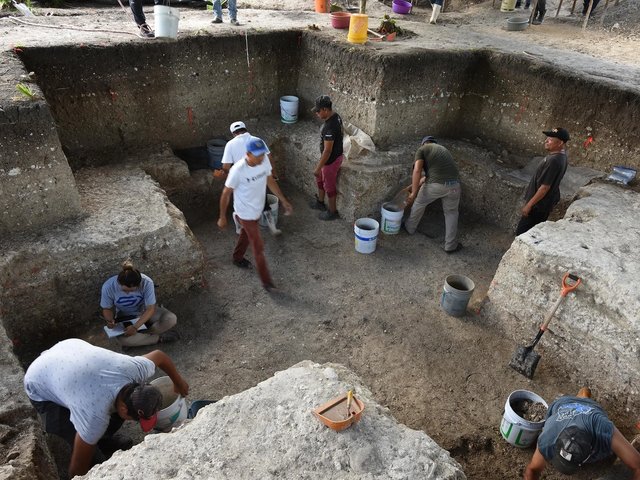
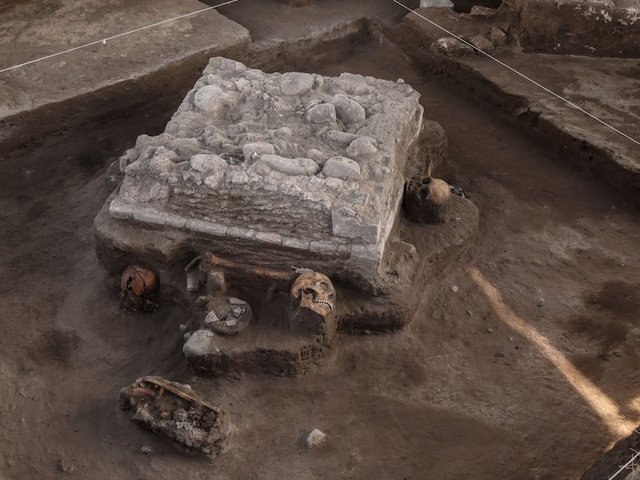
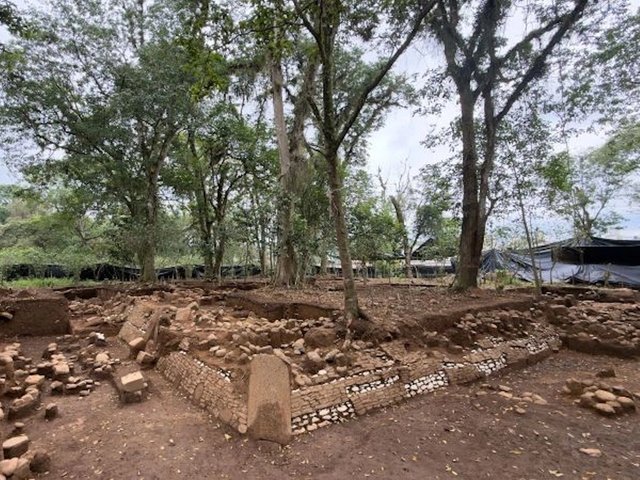
An 11-year-long archaeological project at Teteles de Ávila Castillo, in Puebla’s Sierra Norte in east-central Mexico, may shed new light on ancient cultural interactions in Mesoamerica. Mexico’s National Institute of Anthropology and History (INAH) recently announced that the research team there has identified a 2,500-year-old solar observatory. It could be the region's first of its kind. Other findings include ceramic offerings, infant remains inside a ceramic vessel and numerous obsidian objects.
Teteles reflects the challenges of protecting archaeological heritage on privately owned land. Discovered in 1939, the nine-hectare site remained in private hands for decades, during which time it was looted and damaged. In 2007, its owner donated 3.5 hectares to INAH. Research began in 2015 with support from the civil association Tzoncóyotl, but the remaining land is still private property, limiting excavation there.
The site’s 16 pre-Hispanic pyramidal structures show several phases of occupation. “Teteles flourished during the Middle Preclassic period (900BC-600BC) but declined around AD100, possibly because nearby Cantona expanded,” Alberto Diez Barroso Repizo, Teteles’s archaeological project director, tells The Art Newspaper.
“Green obsidian beads found in offerings containing infant remains suggest connections with Teotihuacan,” Diez adds, “which controlled the Hidalgo quarry where the obsidian originated.” He says other human remains may have decayed because of harsh weather conditions, and the variety of obsidian objects could indicate that Teteles’s inhabitants produced and sold obsidian utensils. “Teteles lay along an active trade route, facilitating cultural exchange,” Diez says.
Even after the area was largely abandoned, ritual offerings continued to be placed at the site, suggesting that it may have become a pilgrimage destination. Diez links the offerings to the Totonac culture, which flourished in Mexico’s Sierra Norte region and along the northern Gulf Coast. “Totonac ceramic offerings and a sculpture fragment dating from AD600 to AD900 suggest that later groups may have regarded Teteles's former inhabitants as their ancestors,” he says, pointing to the possible origins of Totonac culture.
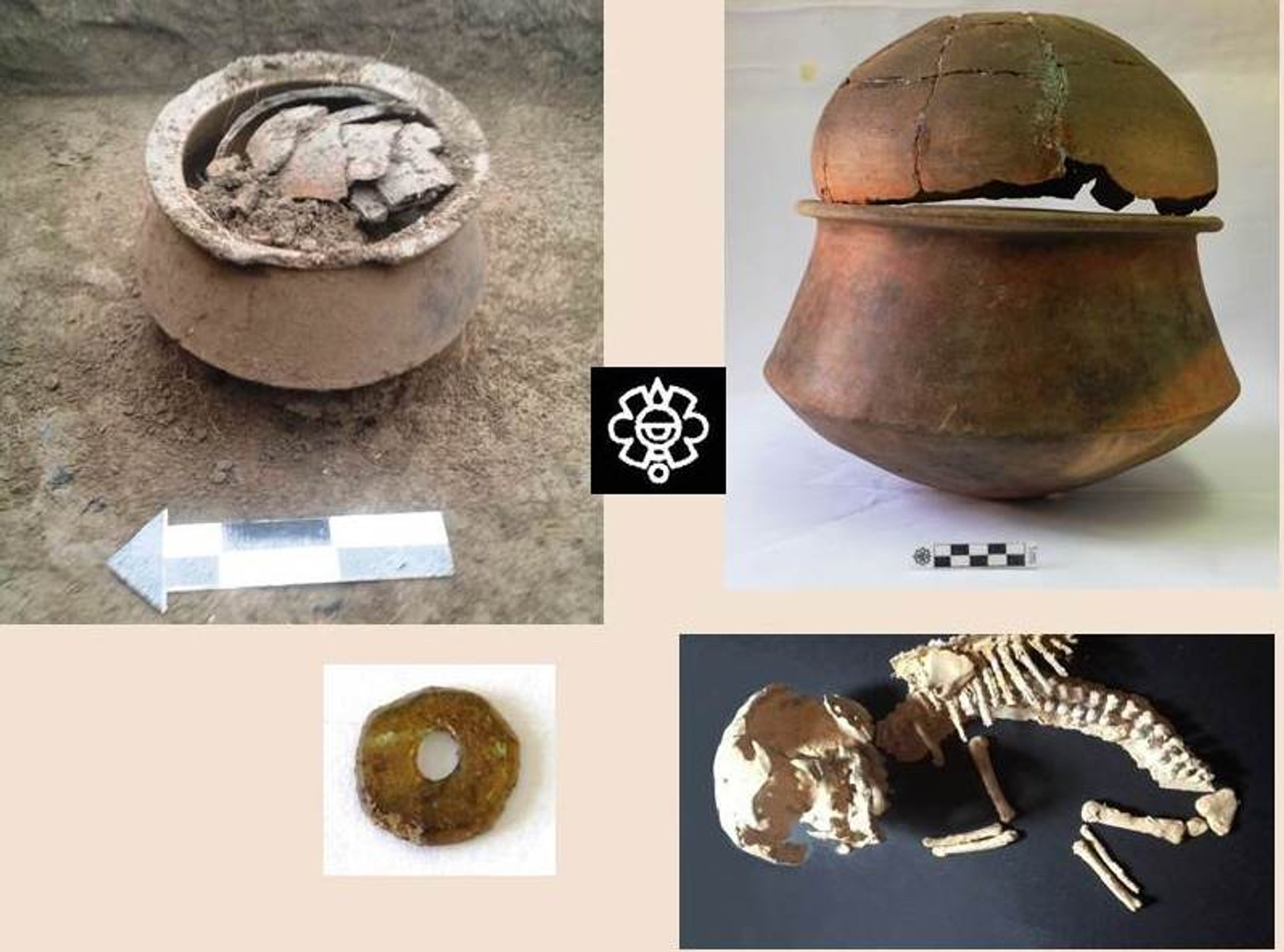
Some of the artefacts found at the site Courtesy the Archaeological Project of Teteles de Ávila Castillo, INAH
The structure identified as a solar observatory could point to early Maya-Huastec connections previously suggested by linguistic studies. “The observatory resembles E-Group complexes (structures associated with solar observations) at Maya sites like Uaxactún in Guatemala,” Diez says. “It is the first of its kind identified in northern Puebla, though La Venta's Olmec complex may be older.” He adds that its alignments could relate to the Mesoamerican agricultural calendar.
Diez also emphasises the astronomical significance of the site's main 12m-tall pyramid: “It may be aligned with Canopus, the second-brightest star in the night sky, associated with the beginning of the Mesoamerican calendar in February.” He notes that although scholars have studied this alignment in Mesopotamian and Egyptian structures, its significance in Mesoamerica remains underexplored.
The archaeologist Ivan Šprajc—an archaeoastronomy expert at the Research Centre of the Slovenian Academy of Sciences and Arts in Ljubljana (who was not involved in the project)—places Teteles within a broader tradition of earlier ceremonial complexes he has studied. “Previous archaeoastronomical studies using Lidar technology have documented similar and earlier complexes along the southern Gulf and Pacific coasts,” he says, “some dating to the late Early Preclassic period”, before 1000BC.
Šprajc is cautious about using the term “observatory”. “The common practice of referring to these complexes as observatories is not entirely justifiable,” he says. “Although they contain astronomical alignments, their primary functions were ceremonial or residential, and such alignments were commonly incorporated in very different types of structures throughout Mesoamerica.” He adds that solar alignments tied to the ceremonial agricultural cycle were common, though the calendar year's start shifted over time.
Further research, including comparative studies and artefact analysis, will certainly reveal more about these discoveries in the future. “Plans are underway to open the site and a museum to the public,” Diez says, although an exact timeline is pending.