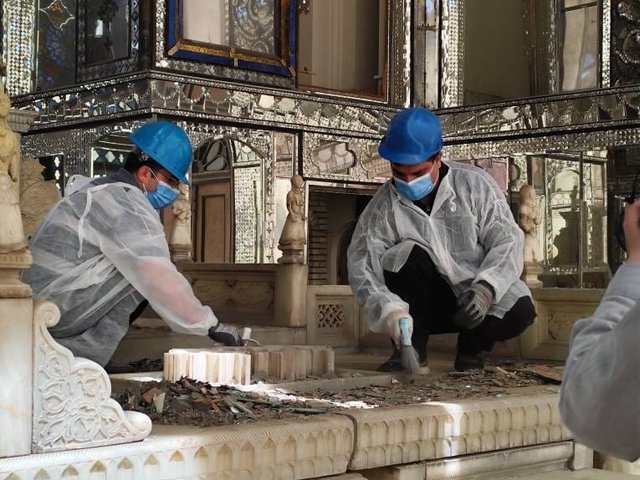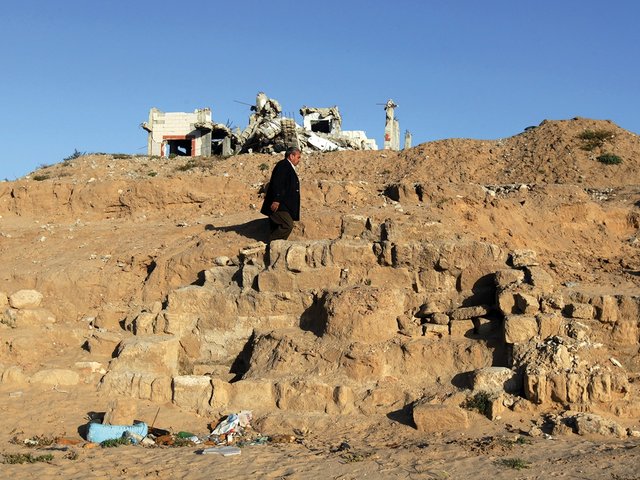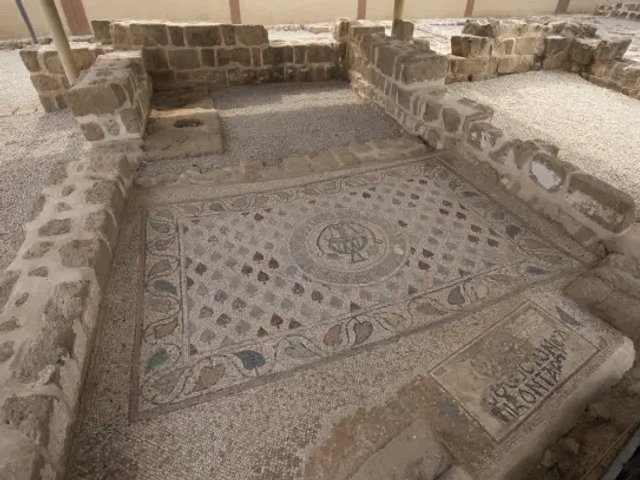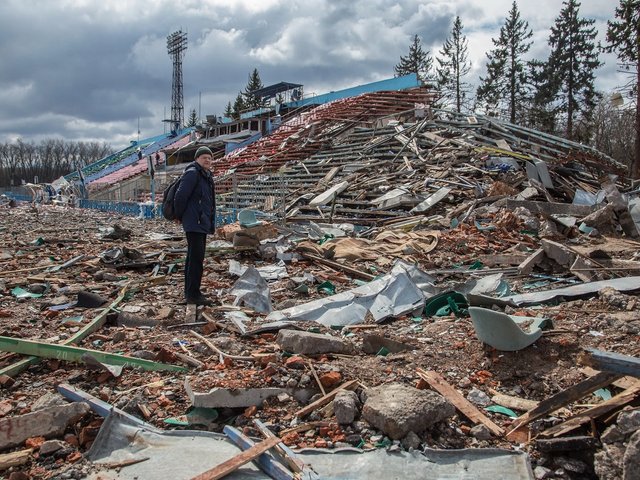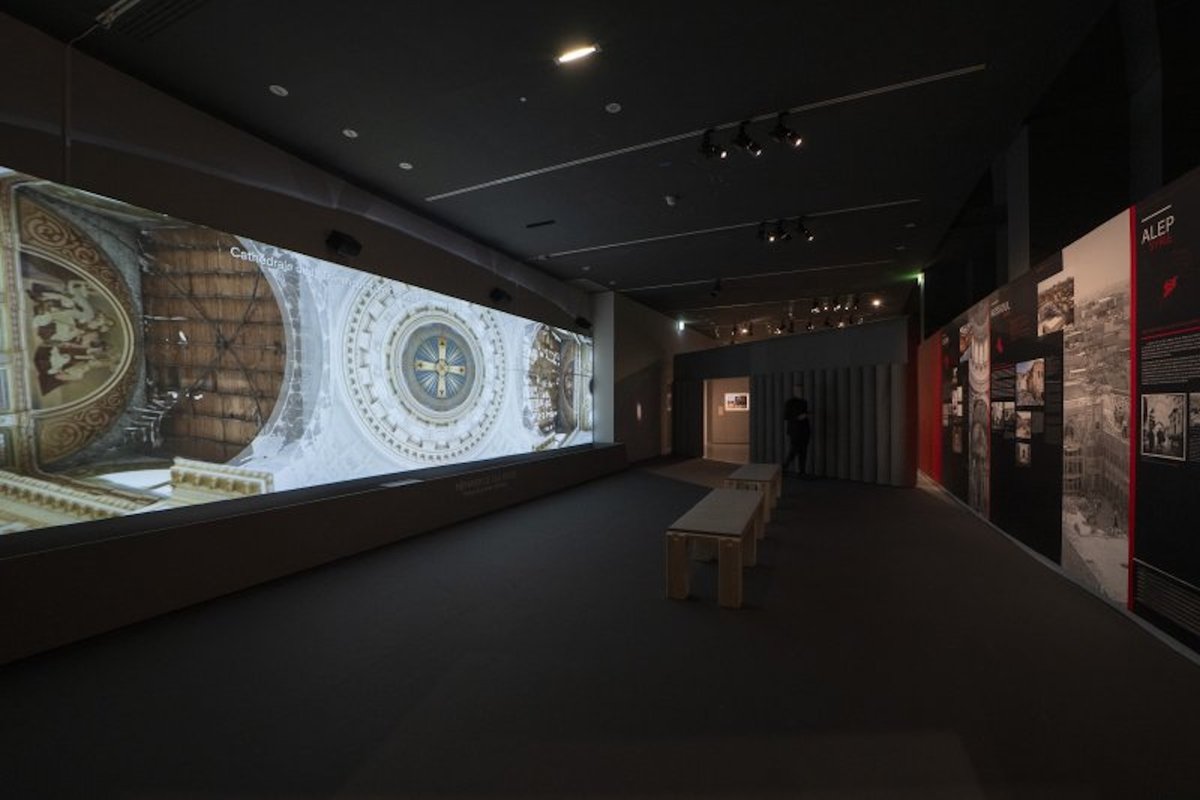
It is always gratifying to see one’s work referenced—especially 20 years after the fact. The exhibition Heritage in Resistance: Timbuktu to Odessa, at the Cité de l’Architecture et du Patrimoine in Paris (until 3 January 2027), traces attacks on material and intangible culture in conflicts beginning with the dynamiting of the Bamiyan Buddhas in 2001 and ending in Ukraine, Sudan and Gaza.
The vast exhibition spans art, digital re-creations, photography and filmed interviews. It is conceived of as an investigative report organised into sections on erasure, resistance and repair.
A wall text references my 2006 book The Destruction of Memory: Architecture at War, which first set out systematically why such targeting happens. The exhibition credits me with coining the term “cultural cleansing” in respect of the Bosnian War to explain the pattern of heritage erasure that can accompany, or presage, ethnic cleansing and the persecution of populations. It notes that Unesco adopted the term from 2012 to describe “the destruction of World Heritage Sites by terrorist groups”.
Except that book says much more than that. It talked about this same process in other places such as the Israel-occupied West Bank. It examined cultural genocide (like cultural cleansing, this still has no definition in international law) witnessed in instances ranging from the Ottoman Empire and Native American populations to the Holocaust and Tibet. I would now add the experiences of the Uyghurs in China, the Rohingya in Myanmar, the Yazidis in Iraq and the Palestinians in Gaza to that dreadful list. I argue that patterns of heritage destruction can evidence genocidal intent. Other genocides, such as that in Rwanda, did not have a pronounced material culture component.
These are matters that the Cité de l’Architecture et du Patrimoine exhibition unacceptably skirts. As in Germany and the UK (where a talk at London’s Building Centre including Architects for Gaza was cancelled following an intervention by Lawyers for Israel this summer), the French state and its institutions are censoring pro-Palestinian voices.The crucial work of Forensic Architecture in documenting destruction, for example, is not present after a dispute over the group’s use of “the G word”. How can you explain what has happened to Gaza’s cultural heritage unless you are at least prepared to discuss possible intent and patterns of destruction?
As an investigative report, the show obfuscates as much as it reveals. Institutions and governments shield themselves behind the argument that it is up to the courts to determine genocide. They forget the Genocide Convention’s duties of prevention—as litigated in the 2007 International Court of Justice (ICJ) case, Bosnia and Herzegovina v. Serbia and Montenegro, or South Africa’s inclusion of attacks on culture when considering Palestinian “conditions of life” at the ICJ.
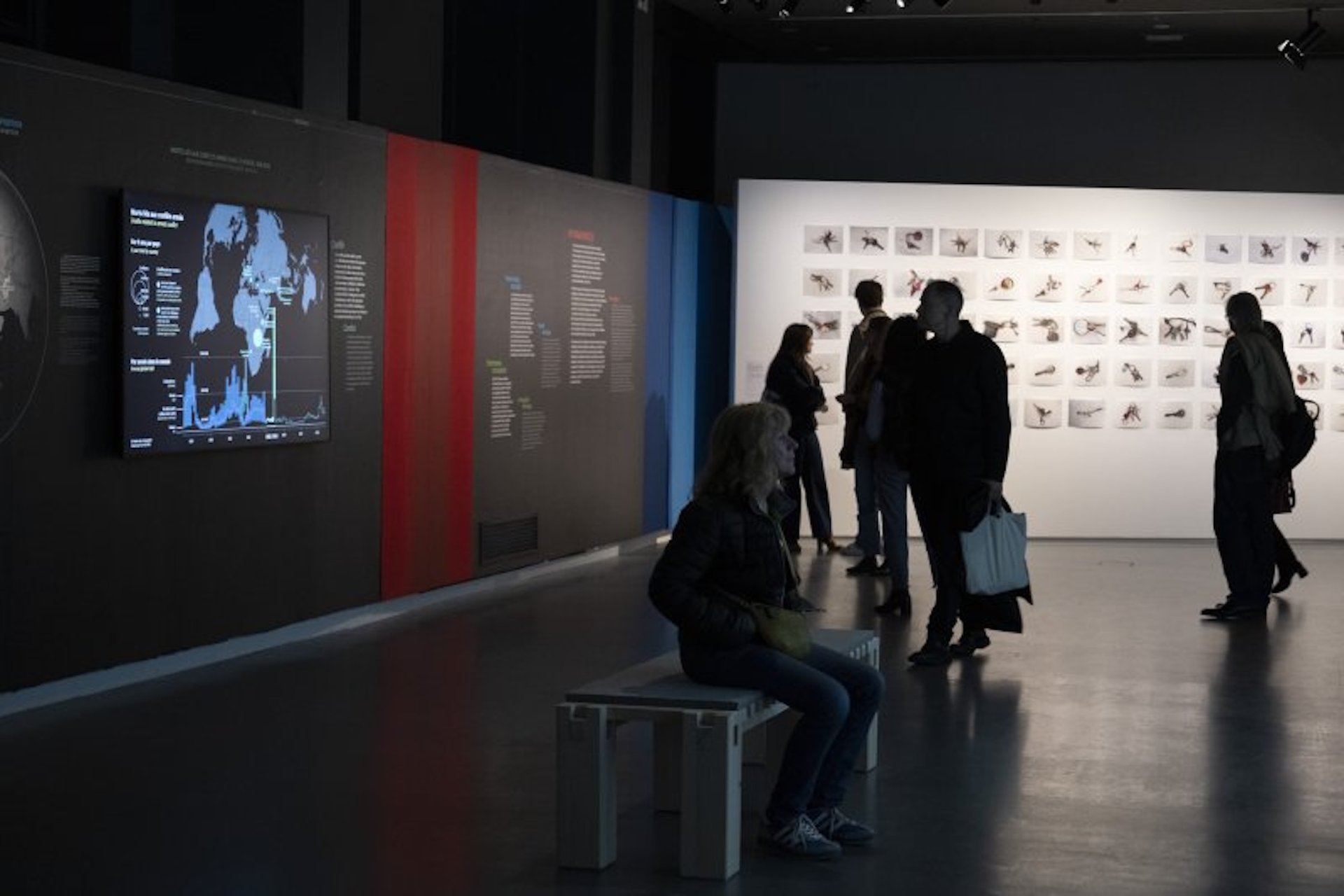
An installation view of Heritage in Resistance: Timbuktu to Odessa, at the Cité de l’Architecture et du Patrimoine in Paris, until 3 January 2027 Photo: © Didier Plowy
There is an impression that heritage destruction in conflicts has got worse over recent decades and that the propaganda impact of destruction is actually exploited by some groups. The jury is out on this. As reflected in the show, however, the international heritage community has had an almost singular focus on actions by terrorist groups, whereas over the past decades (Islamic State and its affiliates aside) it has been the firepower of United Nations State Parties that has been overwhelmingly responsible for the devastation to material history—including but not limited to the United States, Russia, China, Israel and Saudi Arabia. Isis iconoclastically wrecked religious sites in Mosul, but it was the liberating forces that comprehensively flattened the historic city.
Does loot support terrorism?
Looting, too, is problematically covered in the Paris exhibition. This is a serious issue in war zones where security vanishes. But the myth repeated here that the sale of looted artefacts is a meaningful source of terrorist funding “on a par” with resources such as oil is simply unevidenced. (Recovered Isis documents show something quite different.)
The exhibition is sponsored in part by the French office of Unesco. No surprise then that the organisation’s manifest failure to protect heritage in conflicts is absent from the walls. Unesco is celebrated—as it should be in some cases—for its work in Timbuktu, where the International Criminal Court brought the first (and, to date, only) successful prosecution for the targeting of monuments as a war crime. Less convincingly, the show argues that this episode was a turning point after which Unesco formulated a more grassroots approach to preserving culture by working with local people on local priorities.
It was Unesco that disgracefully praised Putin for liberating Palmyra despite the terrible damage Russian forces allied with Assad inflicted on Syria’s people and heritage. Unesco has been just as partial since: while it “strongly condemns” Russian attacks on heritage in Ukraine and Israel’s on Lebanon, it does not offer the same degree of pressure in its statements on heritage destruction in Gaza or Iran. Even then, unlike other UN agencies, Unesco never names Israel. Unesco has not invoked the 1954 Hague Convention in relation to Gaza, despite citing it in virtually all similar instances. Unesco did not seek urgent action by the UN Security Council or the General Assembly to protect cultural sites there as it did in respect of Isis.
The Paris show is more subtle in its understanding of the ways that post-war heritage reconstruction can be problematic and not necessarily healing, but is just as silent on Unesco’s move away from the centrality of authenticity to reconstruction work. Whereas the notion of rebuilding the Bamiyan Buddhas was deemed unacceptable, Unesco promoted building a brand-new Mostar Bridge in Bosnia and Herzegovina as peacebuilding—despite community relations actually deteriorating in the city. And then the agency had the temerity to declare the facsimile bridge a World Heritage Site, undermining its own scientific tenets to bolster a failed symbolic gesture. All this bad-faith is set out in my follow-up book, Monumental Lies (2022).
One is left to read between the lines for hints at the full curatorial mindset. Once through the exhibition doors, the first large-scale works displayed are photographs by the Palestinian artist Taysir Batniji of Gazans’ retrieved housekeys, with their heartbreakingly quotidian fobs—a friendship bracelet, a cheap carabiner clip, a Minnie Mouse figure. The unknown fate of their owners is pencilled in below.
In its silences and voids, Heritage in Resistance at least accurately mirrors failures of international institutions and laws and the partiality and misinformation that surrounds responses to contemporary heritage destruction. Ultimately, the show offers false hope about successful resistance via digital surveying, reconstruction and Unesco work. What we should be feeling is despair.
- Heritage in Resistance: Timbuktu to Odessa, until 3 January 2027, Cité de l’Architecture et du Patrimoine, Paris
- Robert Bevan is a journalist, author and heritage consultant