The Smithsonian’s National Museum of Asian Art (NMAA) in Washington, DC, has voluntarily returned three statues to the Cambodia government after an internal assessment concluded that the objects had been taken out of Cambodia during the country’s civil war (1967-75).
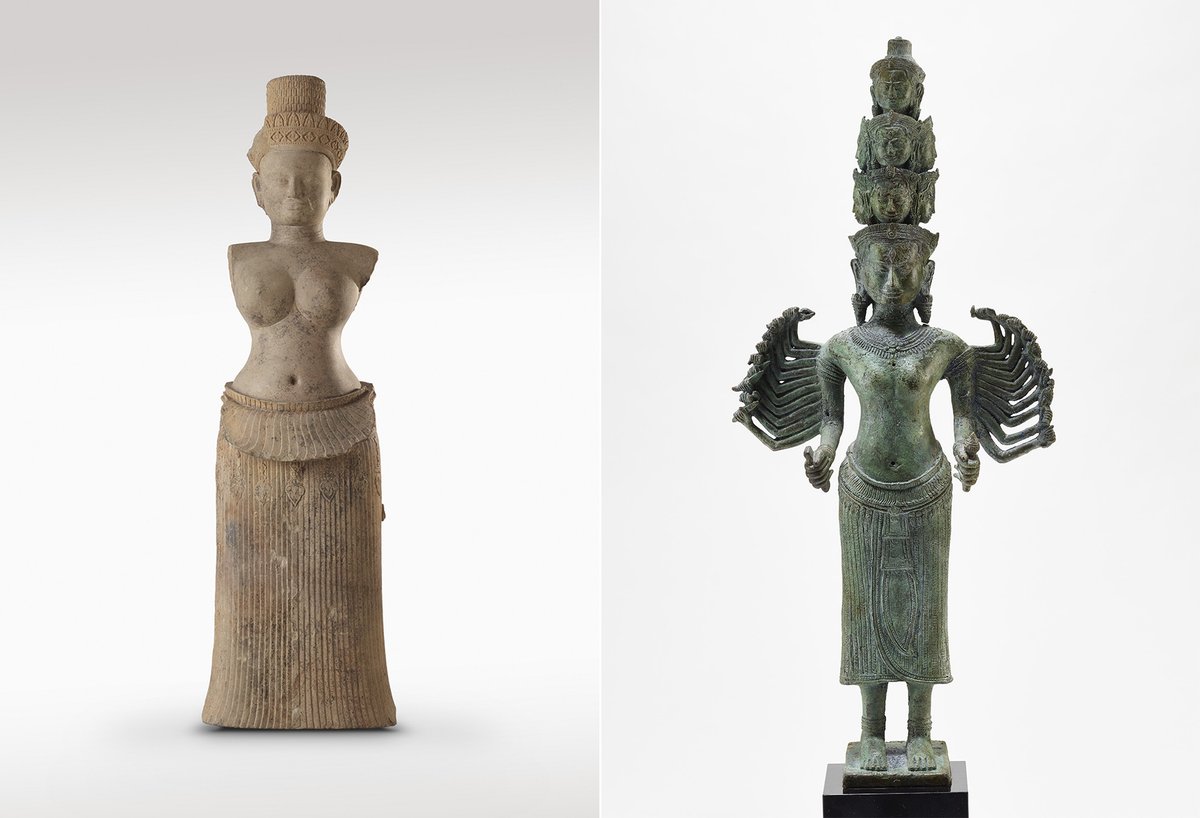
The artefacts being returned are a tenth-century sandstone head of Harihara, a hybrid deity combining elements of Shiva and Vishnu, whose ornate carved designs match others at the temple of Pre Rup; a four-foot-tall sandstone sculpture of the goddess Uma, also from the tenth century, whose detailing ties it to the temple of Phnom Bakheng; and a bronze statue of Prajnaparamita, the goddess of transcendental wisdom, from around 1200.
“There is very strong evidence that all three pieces came out of Cambodia, out of a context of war and violence and the dissolution of order,” Chase F. Robinson, the NMAA’s director, tells The Art Newspaper. “All three can be connected with problematic dealers, and no evidence emerged that gave us any confidence that the pieces came out in anything other than those circumstances. So after a lot of internal research and several visits to Cambodia, we worked closely with both the Ministry of Culture and Fine Arts as well its legal representative Edenbridge, shared the information we had, and came to the conclusion that all three pieces should be returned.”
These are the NMAA’s first returns under the auspices of the Smithsonian’s Shared Stewardship and Ethical Returns policy, which was adopted in April 2022 to supplement its policy on legal returns—that is, restitution of objects that were stolen or illegally exported. In the cases of these three objects, the Cambodian government and its representatives had not made any inquiries. But the museum’s own team of four full-time provenance researchers concluded that the objects had likely left the country unethically, making this an “ethical return” rather than a “legal return”.
“As a result of internal discussions—thinking in part about the nature of how Asian and African collections came together, but also Native American and North American community collections came together—[the policy for legal returns] was thought insufficient, so this policy of shared stewardship and ethical returns” was developed, Robinson says. “What the policy does—and it very much turns on the concept of harm to communities of origin—is empower Smithsonian units such as ours to undertake to explore with recognised partners (such as, in this case, the Ministry of Culture in Cambodia) a return or another modality of shared stewardship.”
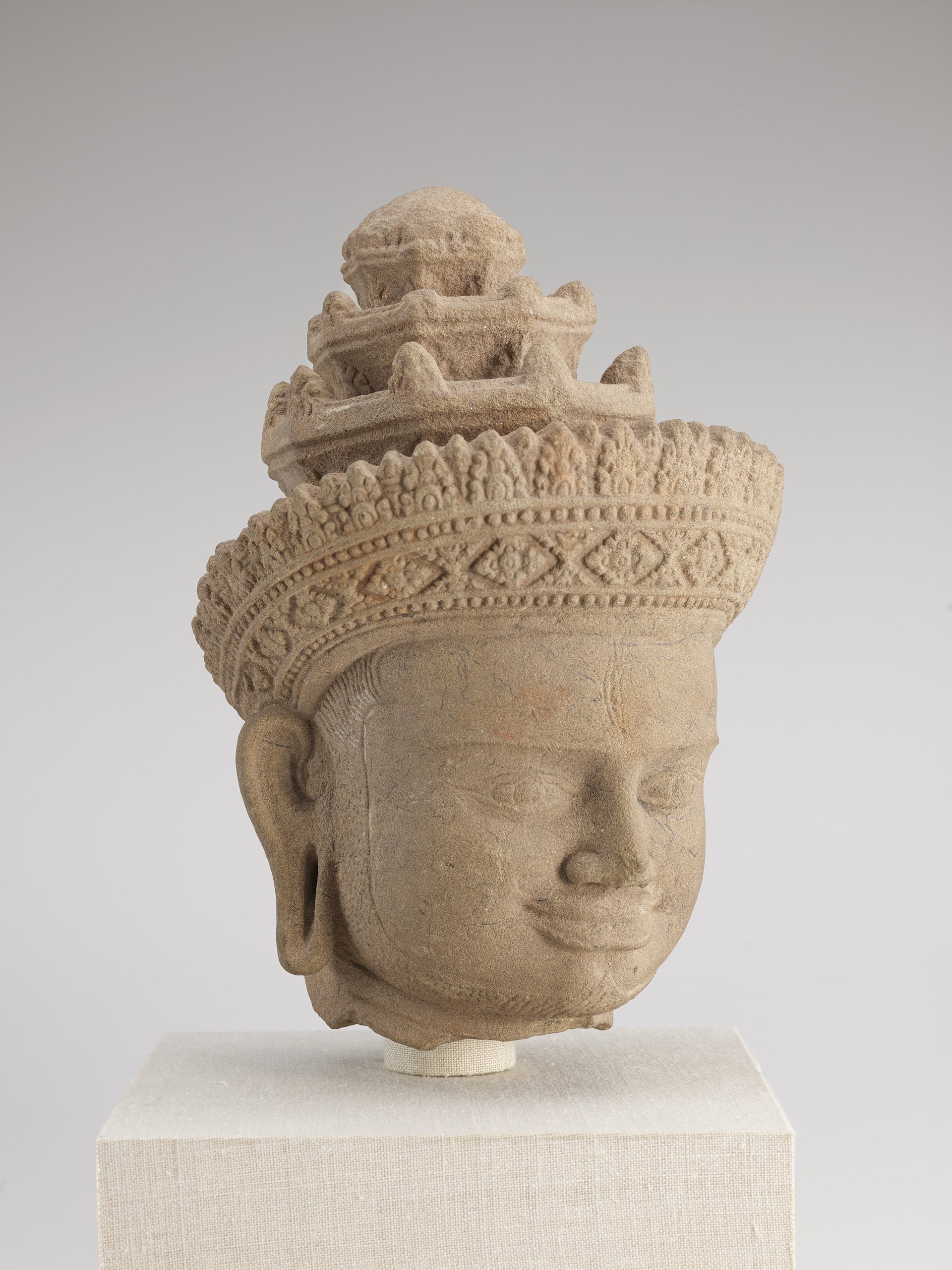
Head of Harihara, mid-tenth century, Cambodia, sandstone Image: National Museum of Asian Art, Smithsonian Institution. Photo by Robert Harrell
All three objects being returned were donated to the NMAA—two by Arthur M. Sackler (for whom the museum’s east building is named) in 1987, the third by Gilbert and Ann Kinney in 2015—and were not accompanied by documents showing their lawful export from Cambodia. Robinson says the museum’s policies on making acquisitions and accepting gifts have evolved by leaps and bounds since 2015, not to mention 1987. That has meant going beyond observing the 1970 Unesco convention on cultural property, to working with the museum’s in-house curators and provenance researchers, as well as governmental and institutional partners around the world.
“When we can’t chase down or can’t find a document we would like to see by way of demonstrating perhaps a missing link in the provenance, we contact ministries, we contact embassies, we try very hard to be as responsible as we possibly can be,” Robinson says. “As a practical matter, what that means is it takes us a lot of time. There are opportunities through gifts that come our way and sometimes it’s a year to a year and a half before we’re in a position to accept a gift. And sometimes, not infrequently, we turn gifts down.”
The NMAA and the Cambodian Ministry of Culture and Fine Arts are currently planning for a repatriation ceremony. In the meantime, the Prajnaparamita statuette remains on display as part of the long-term collection exhibition The Art of Knowing in South Asia, Southeast Asia, and the Himalayas. (The other two works are not currently on display.)
The issue of Cambodian heritage has come under growing scrutiny at museums in the US and beyond over the past decade, as prolific smuggling networks like those linked with the antiquities dealer Douglas Latchford, Subhash Kapoor and others have come to light. Institutions including the Metropolitan Museum of Art in New York, the Cleveland Museum of Art and the Denver Art Museum have repatriated dozens of antiquities to Cambodia that left the country during the civil war and the reign of the Khmer Rouge.