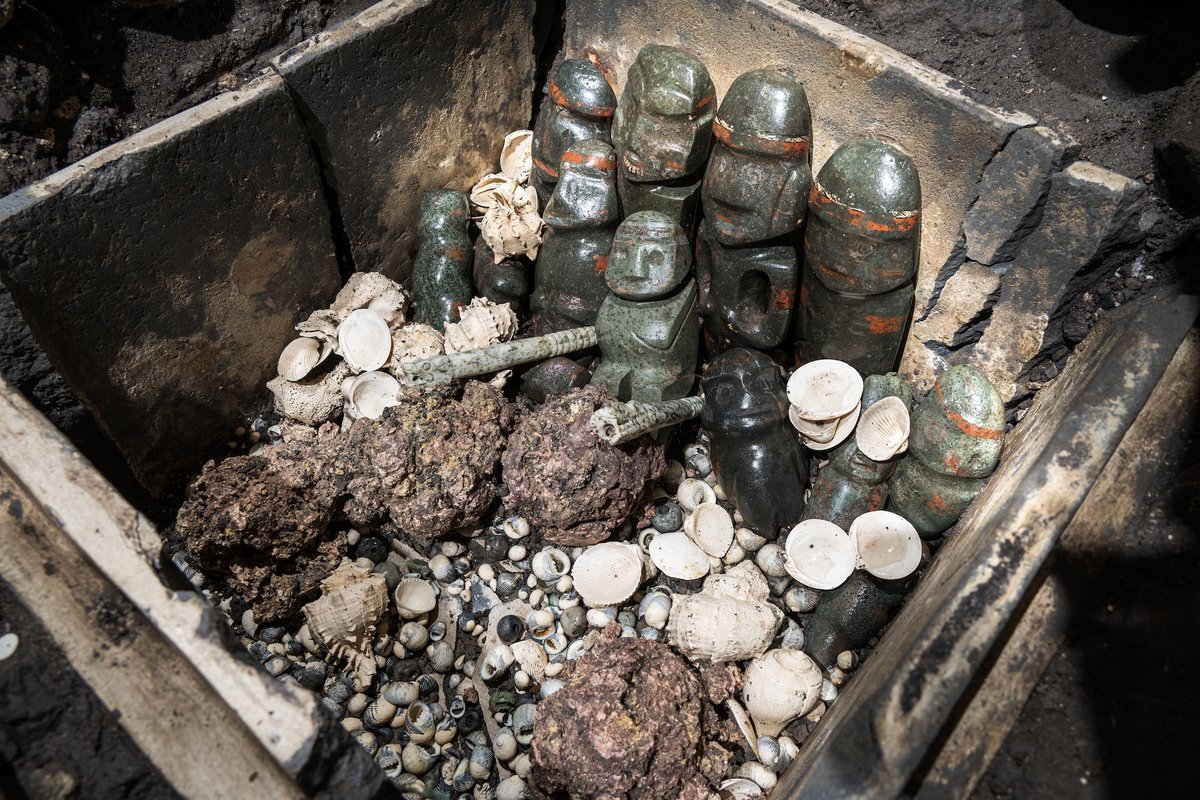
Greenstone sculptures from Guerrero, thousands of marine shells, copal spheres and snake-shaped pendants were part of a 500-year-old Aztec ritual offering uncovered at Templo Mayor in Mexico City.
Experts from the National Institute of Anthropology and History’s Templo Mayor Project (PTM) recently revealed that the six volcanic stone boxes containing the offering—three of them discovered in 2023—formed part of a grand ceremony during the reign of Moctezuma I. (Reigning from 1440 to 1469, the Aztec ruler expanded his empire to span from the Gulf of Mexico to the Pacific Ocean.) The discovery marks the first time a complete offering assemblage associated with a specific ruler has been identified at the site.
Templo Mayor, adjacent to the Metropolitan Cathedral, is one of Mexico’s most complex and longstanding archaeological projects. Started in 1978, it continues to yield discoveries.
“Shifting lacustrine terrain, destruction and earthquakes are among the challenges,” Adriana Sanromán Peyron, PTM’s conservator, tells The Art Newspaper. The recent find was made beneath the once magnificent temple, though others have been uncovered beneath colonial and modern structures nearby. “This is urban archaeology,” she adds.
Offerings were key to Aztec cosmogony, forming part of the ritual calendar or marking the rise of a ruler, a conquest or a disaster. More than 200 offerings have been discovered at the site, yet this latest find provides new clues about the Aztecs.
A ritual of expansion
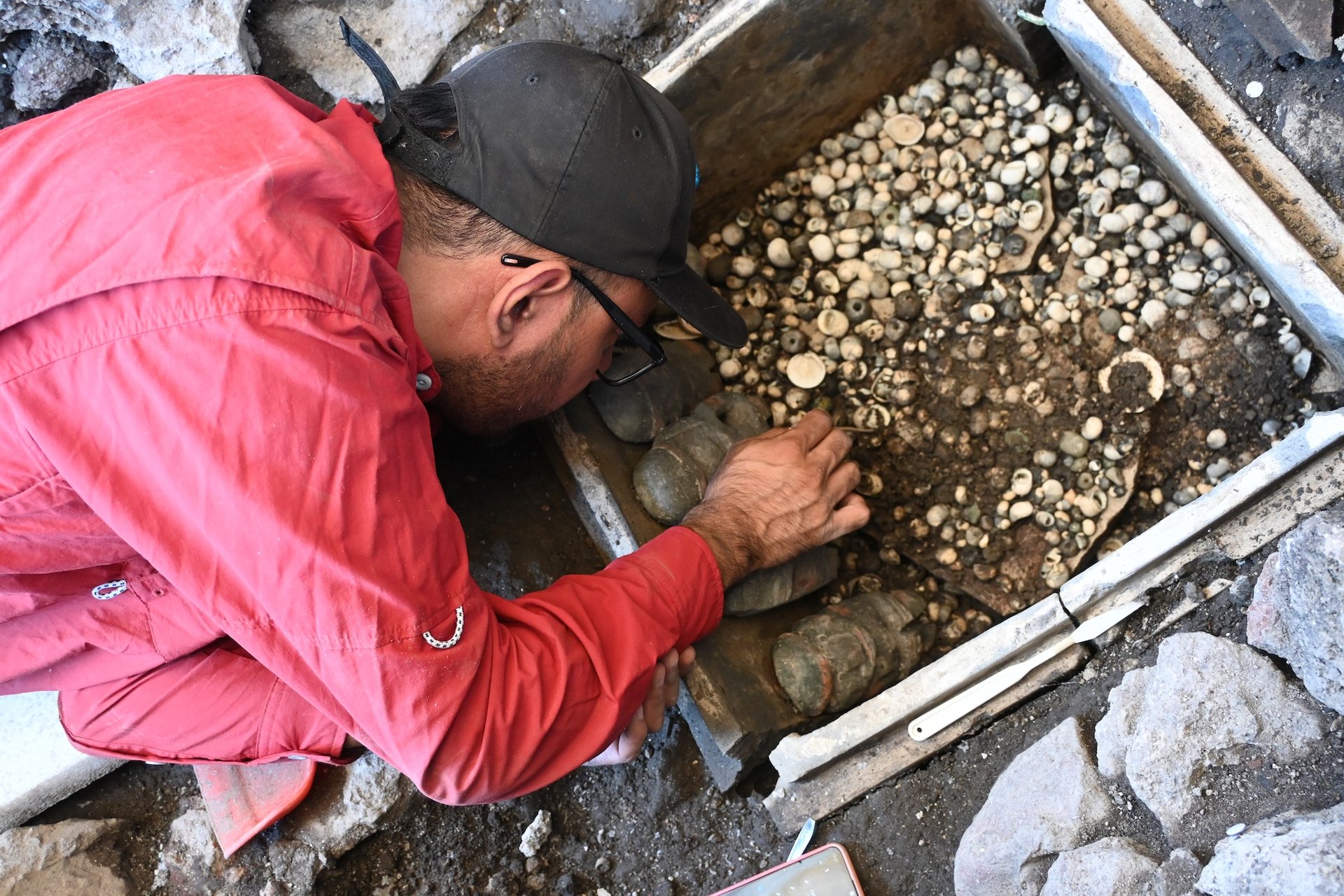
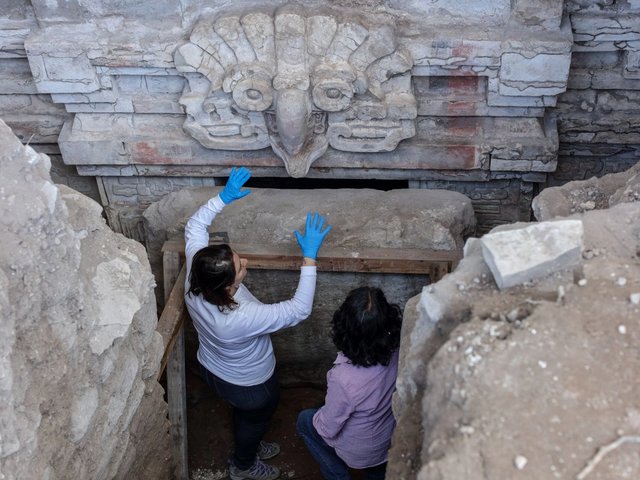
The six volcanic-stone boxes, known as tepetlacalli, are about 50cm square. Two were discovered in the late 1970s (the boxes numbered 18 and 19), another in the 1990s (97) and the last three (186, 187 and 189) during excavations that began in 2023. “All the boxes were found in Construction Phase IV, which is the best preserved, as the most recent phases were destroyed after the Spanish conquest,” says Antonio Marín Calvo, a PTM archaeologist leading the excavations. “They formed part of a larger context with serpent sculptures and incense burners above them. Two were hard to access, as they lay beneath 600kg stone sculptures.”
Courtesy of the Templo Mayor Project, INAH
“The offerings reflect the Aztec Empire’s reach under a ruler who expanded beyond the Basin of Mexico into southern and central Mexico,” Marín explains. These offerings were part of a colossal ritual. “They were accompanied by a complex ceremony, likely involving ritual dances, copal burning, music and other elements,” Sanromán says, noting that the recent discovery helps confirm a decades-long hypothesis.
Conservation and scientific discovery
A key component is the group of 83 Mezcala-style greenstone anthropomorphic sculptures—43 found in the most recent excavation—of various dimensions from present-day Guerrero. Little is known about them because the region, especially the Mezcala sculptures, was heavily looted in the 1930s and 40s.
However, red and white pigments added by the Aztecs as part of the ritual illustrate practices in which deities from defeated communities were sequestered or reinterpreted to display power. “Almost all the sculptures retained their pigments, showing how the Mexica resignified them with attributes such as goggle-like features and fangs associated with Tlaloc, the rain god to whom the site is partly dedicated,” Marín says. The pigments are particularly fragile. “Protecting the sculptures from sunlight and humidity is essential to preserving the pigments, rare among surviving Mexica sculptures,” Sanromán says.
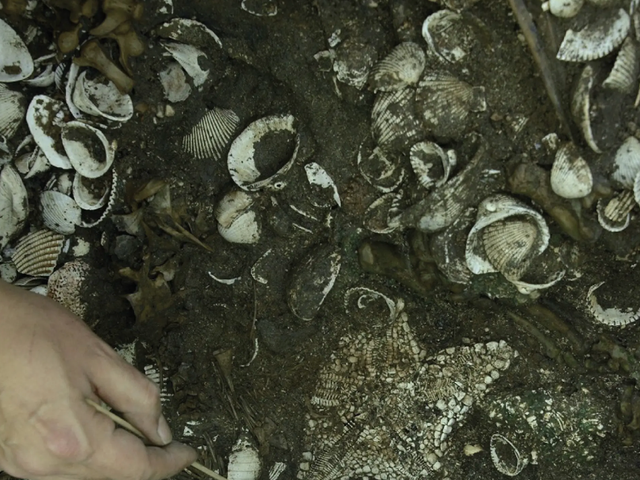
More than 4,000 marine shells and molluscs, symbolising water and fertility, were also found in the recently discovered boxes—many of them from the Atlantic coast. “Shells are the ocean’s time capsules,” the PTM biologist Belem Zúñiga Arellano said during a 26 February conference at El Colegio Nacional, where the findings were presented.
Further research and an exhibition of the offerings at the Templo Mayor Museum are planned. Preparations for PTM’s 50th anniversary in 2028 are also underway. In the meantime, experts continue exploring. “The project currently involves five other excavations,” Sanromán says. “We plan to continue excavating Phase IV in hopes that new findings emerge.”