A museum dedicated to the late Chilean artist Violeta Parra (1917-67)—who created works with burlap textiles, paintings and sculptures in addition to her career as a singer and songwriter—reopened on 24 March, more than six years after it was targeted in arson attacks during countrywide protests. The restoration cost $1m, financed by the museum’s fire-insurance policy.
Located 1.5km east of Santiago’s city centre, the Violeta Parra Museum suffered three fires in February 2020 during social uprisings that damaged churches, universities and historic buildings across Chile. Parra’s works had been evacuated beforehand. The protests ceased when fears of Covid-19 forced people to stay home and the government imposed movement restrictions.
Denise Elphick, who was appointed as the museum’s director in 2023, began the restoration process. Cristián Undurraga, the architect who designed the building—distinctive for its guitar shape, in honour of Parra’s musical legacy—oversaw the work.
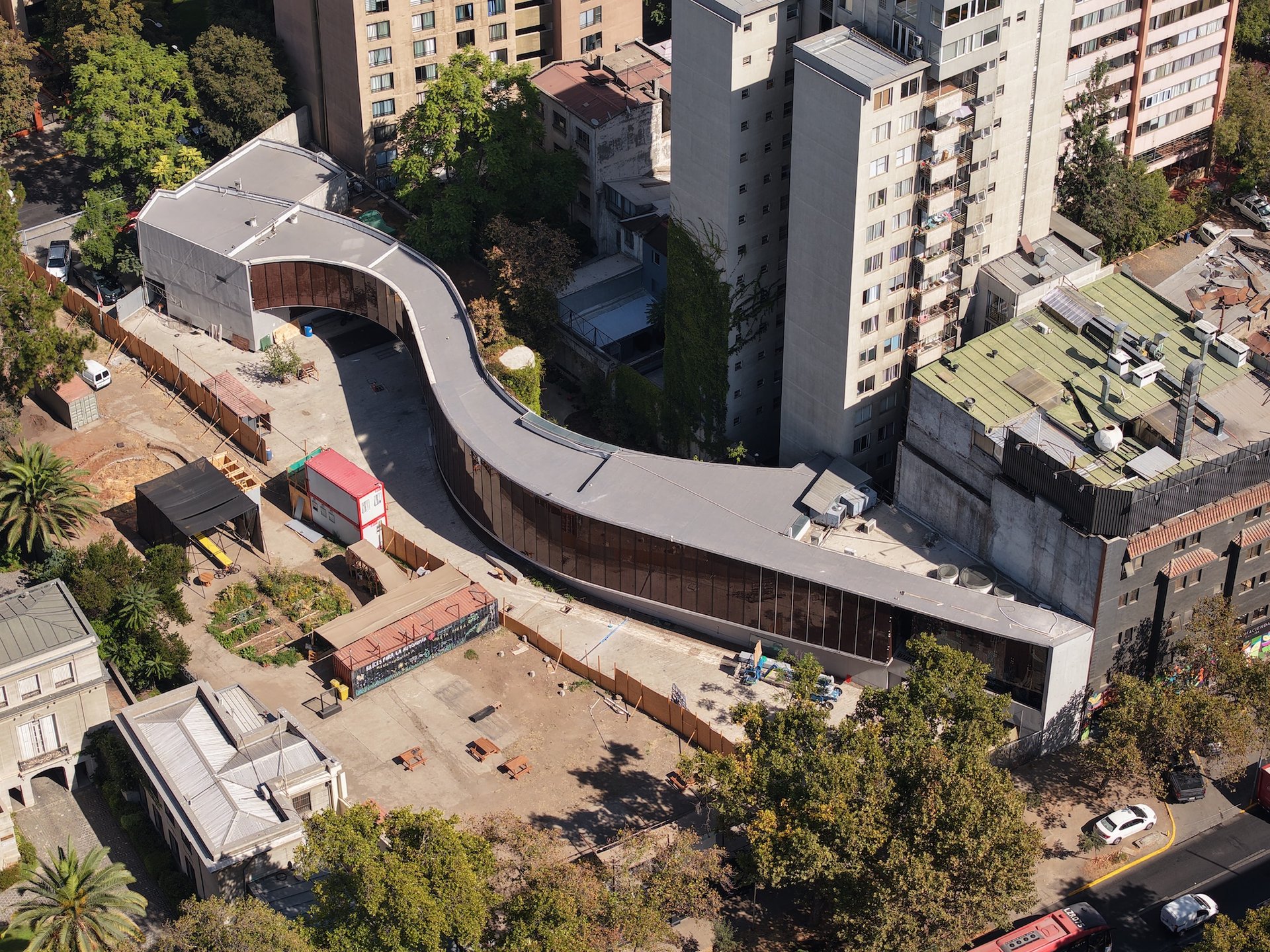
Aerial view of the Violeta Parra Museum in Santiago, Chile Photo by Diego Parraguirre
“The museum didn’t suffer structural damage during the fires, so we didn’t have to make major changes to the infrastructure,” Elphick tells The Art Newspaper. “It wasn't 100% destroyed. And that allowed us to focus on the rehabilitation, which consisted mainly of restoring the concrete to its original state. Eight months ago, the museum was black, covered in soot.”
The museum is located in an area where protests and demonstrations in Santiago often begin or end. To protect itself from future damage, the museum now has windows designed to better withstand extreme heat. It has also heightened its security and strengthened its contact with the police and fire departments.
The museum first opened its doors on 4 October 2015, on what would have been Parra’s 98th birthday. It was inaugurated by Chile’s then-president Michelle Bachelet and continues to receive operational funding from the Ministry of Cultures, Arts and Heritage. The works on display there include pieces from the museum’s collection and loans from the University of Chile. (Some of the museum’s works are now on display at the Catholic University of Santiago, after Parra's daughter severed ties with the museum while it was closed.)
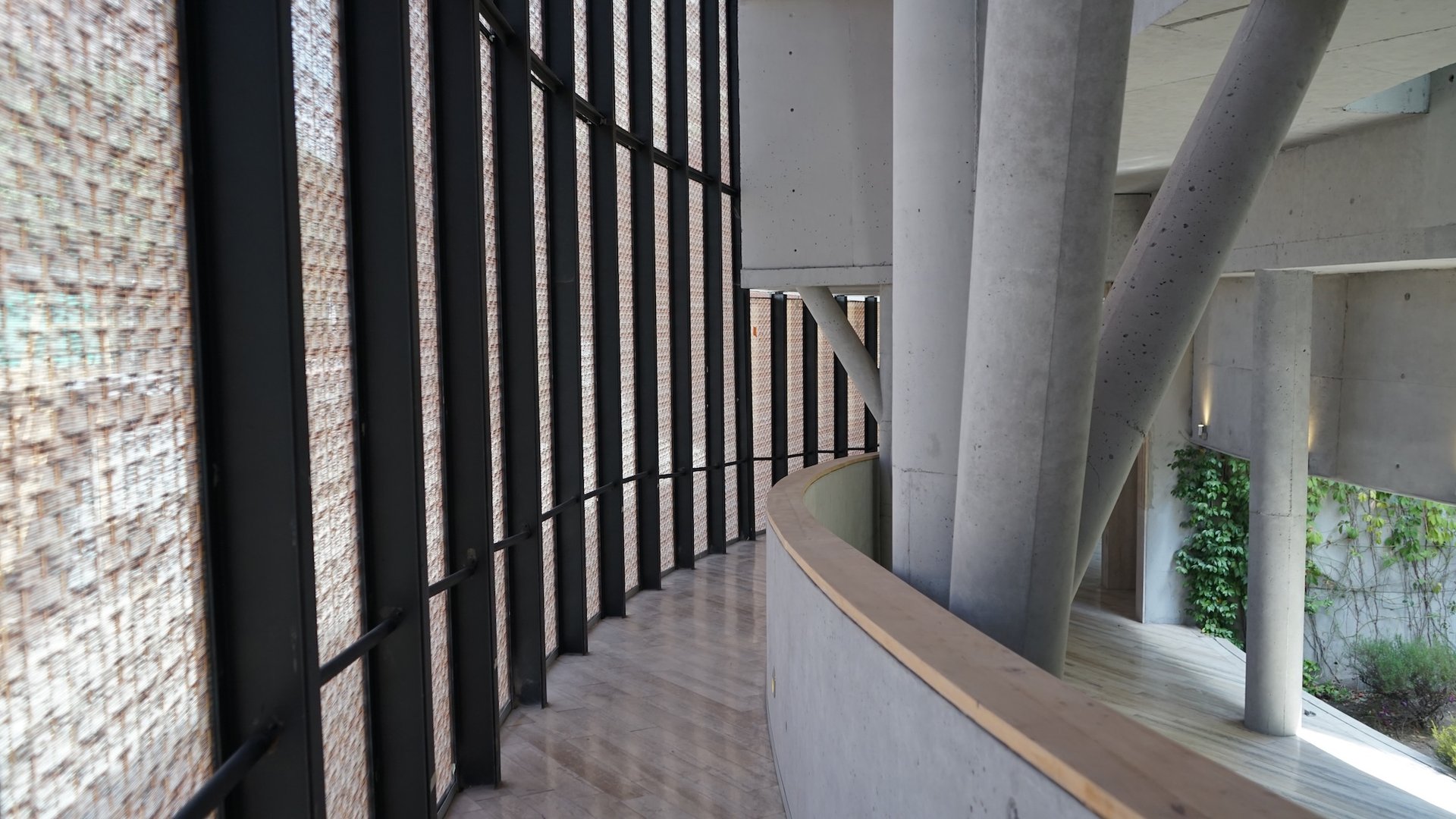
A peek inside the newly remodeled, guitar-shaped Violeta Parra Museum Courtesy the Violeta Parra Museum
Parra belonged to a family of poets, writers and singers from southern Chile. She formed a folk duo with her sister, and the pair became leading figures in Chilean popular music in the late 1940s and early 50s. Parra’s most famous song is Gracias a la vida (Thanks to life), written in 1966—a year before she died by suicide. Singers such as Jennifer Lopez, Joan Baez, Laura Pausini and Mercedes Sosa have performed it.
Parra began her career in the visual arts in the late 1950s. While in bed with hepatitis, she started working with burlap. She also created paintings and ceramics. Her burlap tapestries, oil paintings and sculptures were exhibited in Paris at the Musée des Arts Décoratifs in 1964. Part of the Violeta Parra Museum’s collection travelled to Mexico last year, where it was exhibited at the Museum of Arts of the University of Guadalajara.
Parra is often compared to Frida Kahlo, as both were champions of folk art. The two also suffered health problems during which they explored new forms of artmaking. “They are two very strong women in terms of their stance on the avant-garde, on the art scene,” says Bruno Salas, who worked on the museography of the restored Violeta Parra Museum. “They weren’t afraid—quite the opposite, they were very brave.”