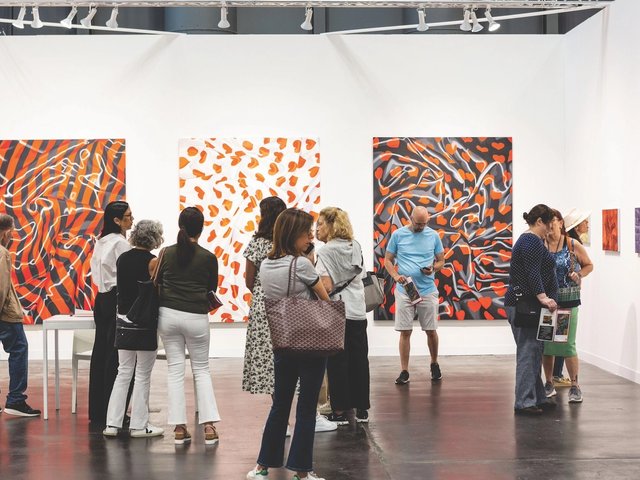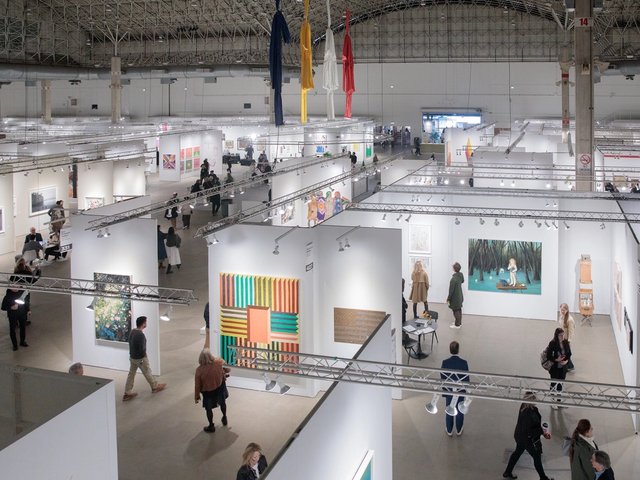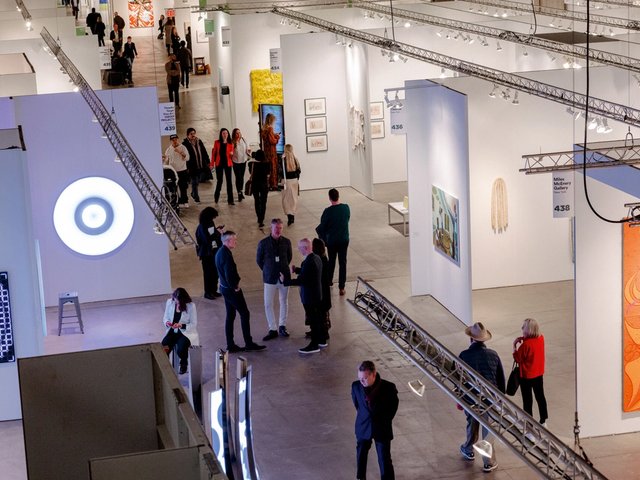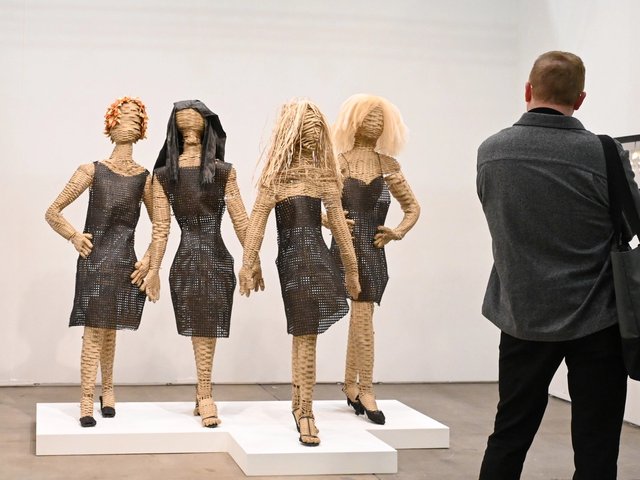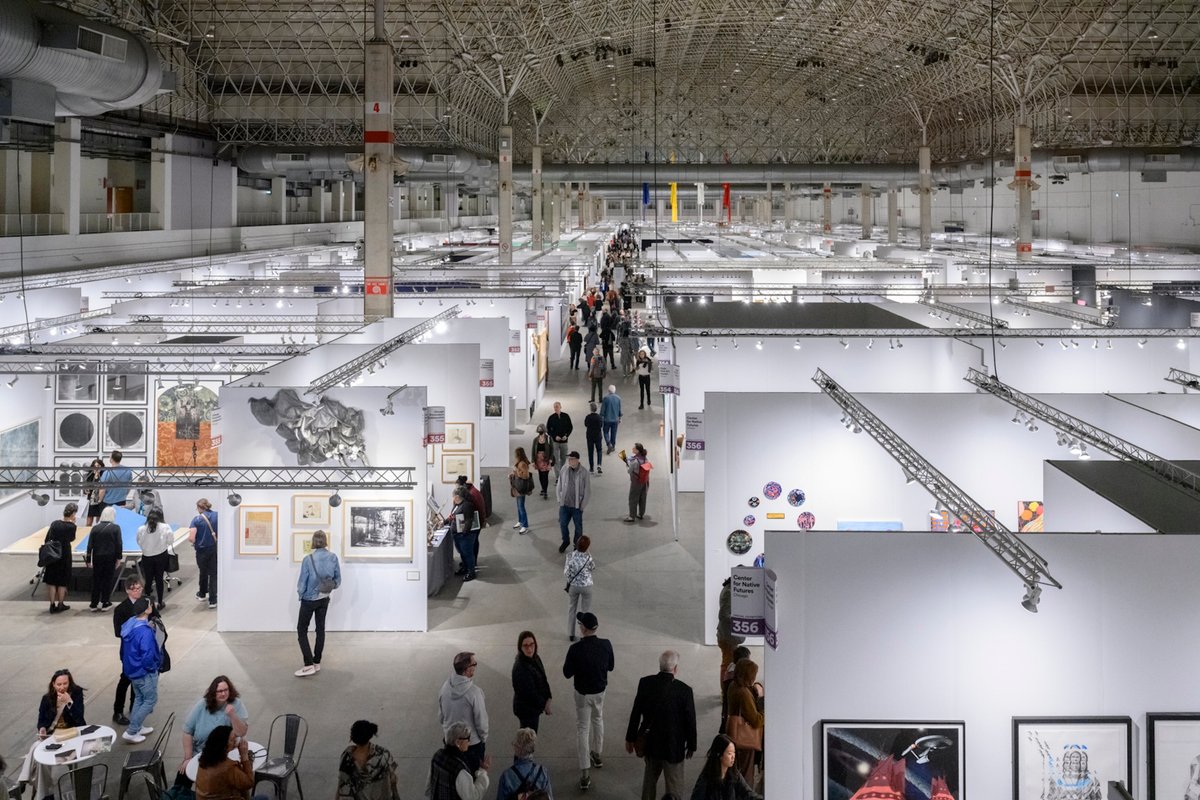
The 2026 edition of Expo Chicago, the Midwestern art fair’s first outing under its new director Kate Sierzputowski, brings around 130 galleries to Navy Pier’s Festival Hall. With around 40 fewer participating galleries than in recent years, the organisers were able to reconfigure the fair’s layout and cultivate a roomier atmosphere.
Aside from the “more focused” exhibitor lineup, Sierzputowski says her primary move in her new role was to strengthen Expo Chicago’s institutional connections. That included hiring Essence Harden for the fair’s new curatorial role. Harden joins on the heels of co-curating the latest edition of the Made in LA biennial at the Hammer Museum and the Focus section of the Frieze Los Angeles fair. In Chicago, she has curated the fair’s Profile section dedicated to solo and thematic presentations by galleries including 47 Canal from Manhattan, Geary Contemporary from upstate New York, Mindy Solomon Gallery from Miami and four Lagos-based spaces—Adegbola Gallery, Affinity Gallery, Soto Gallery and Yenwa Gallery.
Sierzputowski says her former role as the fair’s artistic director of five years has informed her emphasis on a thematic approach to programming. “I want to make sure the institutional connection is also presented as a deeply engaged part of the fair as well as with the visitors who can experience this on site,” she says. She adds that the decision to create a curatorial role rather than hiring a new artistic director came from a drive to “make sure that we have strong institutional partnerships to talk about the fair”. She praises Harden for her “scholarly approach to her position”, which she says reflects a climate in which “fairs have to continue to adapt what they are to what they’d like to provide to both exhibitors and the public”.
Strong Chicagoan showing
The fair’s general galleries sector features many fixtures of the local scene including Gray (which also has a space in New York), McCormick Gallery, Document (which also has a space in Lisbon), Patron, Secrist Beach and the illuminated manuscript dealership Les Enluminures (with spaces in New York and Paris, too). International exhibitors include Spain’s Galería Artizar; Ebony Curated and Gallery Momo from South Africa; Wizard Gallery from Italy; plus 12 Korean galleries through a partnership with the Galleries Association of Korea. Galleries making their Expo debuts this year include two New York tastemakers, Karma and Magenta Plains. The broader Midwestern presence across the fair’s sectors is significant, with Bockley Gallery and Weinstein Hammons Gallery from Minneapolis, plus Matéria, Buffalo Prescott and What Pipeline from Detroit.
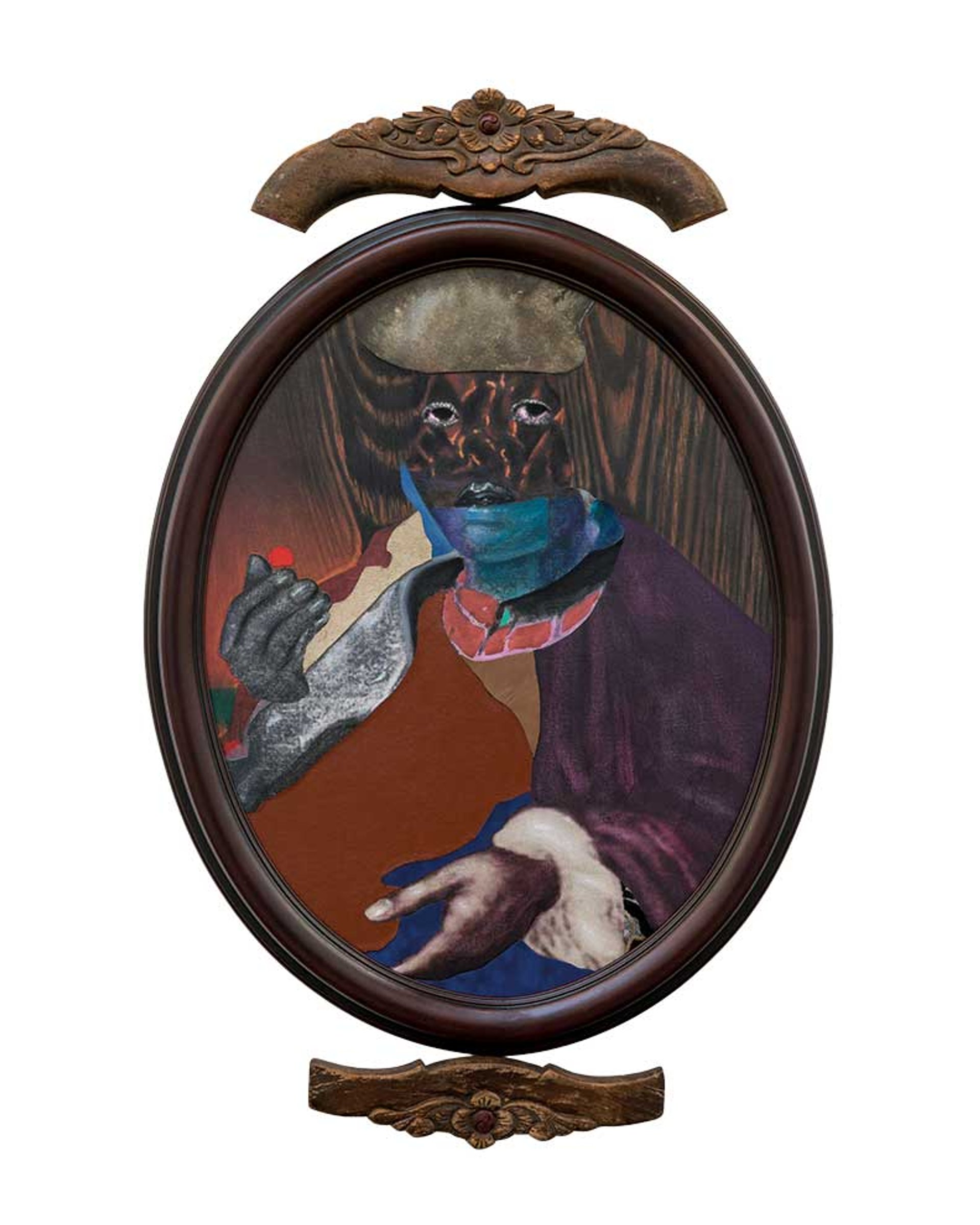
David Shrobe’s Gesture of Faith (2025), on show with Monique Meloche Gallery in the main section of Expo Chicago Courtesy the artist and Monique Meloche Gallery; © Robert Chase Heishman
Among the main section’s local exhibitors is Monique Meloche Gallery, whose eponymous founder frames Expo Chicago’s “reinvigoration as the premier fair staged in the Midwest but catering to a national audience” as a testament to its former director, Tony Karman. Meloche also credits the local collector base for being tirelessly “savvy and supportive”. Her gallery’s stand includes several artists who will figure prominently during the upcoming Venice Biennale: Ebony G. Patterson, who is featured in the central exhibition, plus Lavar Munroe, who is representing the Bahamas in Venice. The gallery is also showing works by three artists featured in the Buffalo AKG Art Museum’s new survey of paintings by Latinx artists, Let Us Gather in a Flourishing Way: Yvette Mayorga, Candida Alvarez and David Antonio Cruz.
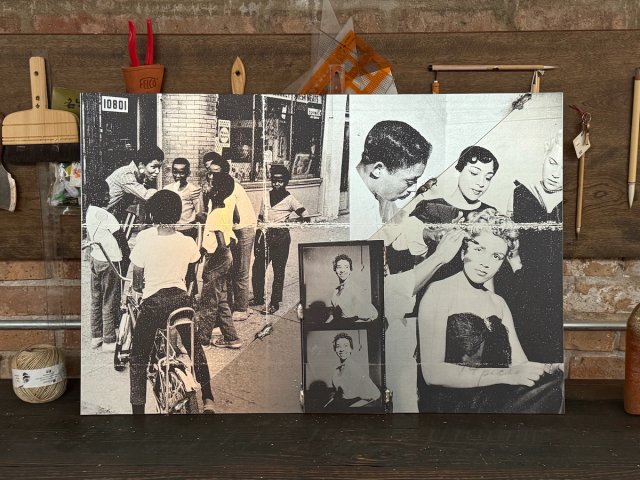
The Obama Presidential Center (OPC), which opens on Chicago’s South Side in June, is a prominent fixture at the fair. The director of the centre’s museum, Louise Bernard, organised a presentation at Expo titled Embodiment that features works by some of the artists who were commissioned to create works for the OPC campus (more commissions will be announced during the fair’s VIP day). Other artists featured in Embodiment have thematic ties to the commissioned artists.
Lauren Kelly, a partner in the New York-based gallery Sean Kelly, says the decision to return to the fair after almost a decade was partly due to the strong Windy City ties of many artists on its roster. The gallery’s stand will include a photograph from the Chicago-based artist Dawoud Bey’s The Birmingham Project.
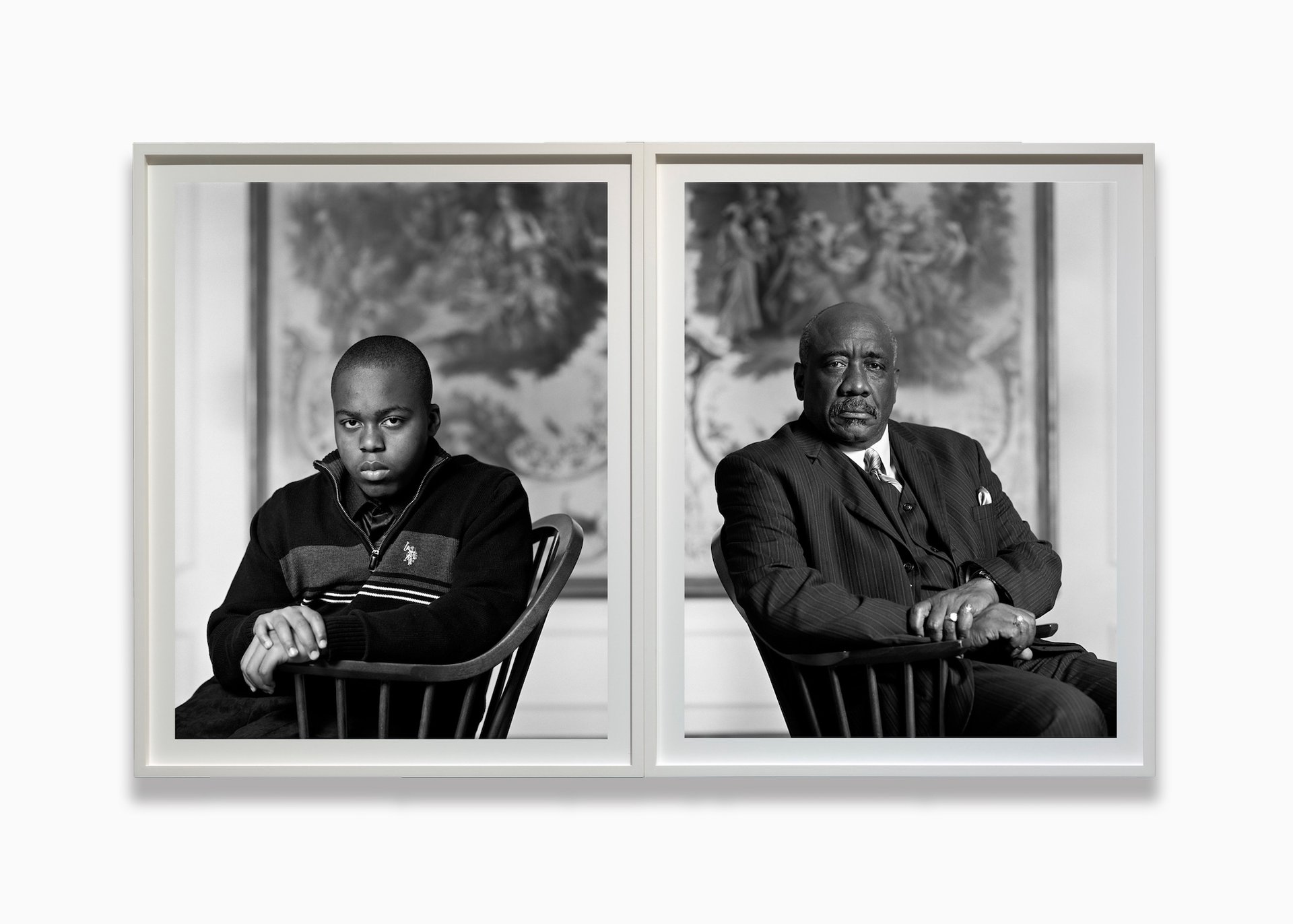
Dawoud Bey, Timothy Huffman and Ira Sims, 2012 © Dawoud Bey. Courtesy Sean Kelly, New York
“That regional connection gives us a wonderful opportunity to present a booth that ranges from abstraction to figuration while still feeling very grounded in the local cultural context,” she says. Kelly adds that the fair fosters an ideal atmosphere for networking and deep conversations: “There’s a real opportunity to spend time with collectors, curators and institutions in the region, and to deepen those relationships.”
Captive audience of curators
The fair’s annual curatorial forum offers still more opportunities to deepen connections. It boasts free panels and discussions featuring institutional and independent curators from across the globe, with more than 60 participants this year. A former forum participant, Katie Pfohl from the Detroit Institute of Arts, has organised the fair’s Focus section of galleries that have been in business for no more than 12 years.
“We want to give galleries a bit more time to cultivate their programme before they shift to a larger section,” Sierzputowski says. Titled Gathering of Waters, the thematic grouping of emerging galleries foregrounds works dealing with landscape and migration through the lens of craft, with an emphasis on artists and galleries from the Mississippi River Basin.
The solo stand of the New York-based gallery Marinaro in the Focus section is devoted to a suite of visceral paintings by Justin Liam O’Brien. The gallery’s founder Lauren Marinaro sees Expo Chicago as a valuable opportunity to catch up with Midwestern collectors who are already clients and meet new ones.
“With regional fairs, you get to speak with people a bit longer and might see them a few times over the week at events, rather than just once quickly at the preview like some larger fairs,” Marinaro says, adding that the large contingent of curators that attends Expo is another selling point for her gallery.
Another Focus sector participant, the Los Angeles gallery Megan Mulrooney, is showing at the fair for the second time. Its stand features a dual presentation of the Paris-based artist Maria Szakats’s mohair compositions and the Texan painter Kate Zimmerman Turpin’s floral canvases. The gallery’s namesake founder says she has “always been in awe of the city’s museums and the artists who have come out of the School of the Art Institute”.
The São Paulo-based gallery Yehudi Hollander-Pappi, which opened last year, is among the youngest spaces participating in the Focus section this year. The gallery’s co-founder Matheus Yehudi says the Brazil- and Netherlands-based artist Daniel de Paula’s featured project, for which the artist brought a thousand litres of water from a tidal estuary in the San Francisco Bay, has a “specific dialogue with Chicago”. He cites the city’s “markets, intellectual legacy and the ideas built here” that “travelled the world” as points of connection for De Paula’s work, adding: “The city isn’t context, it’s content.”
Yehudi says he and co-founder Sofia Pappi were attracted to Expo Chicago for the opportunity to connect with collectors “who are curious about work that takes this city’s history seriously and ask real questions about it”.
- Expo Chicago, Navy Pier, Chicago, 9-12 April