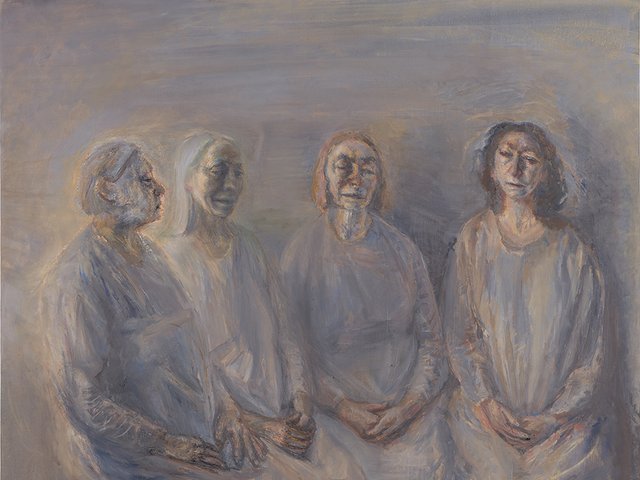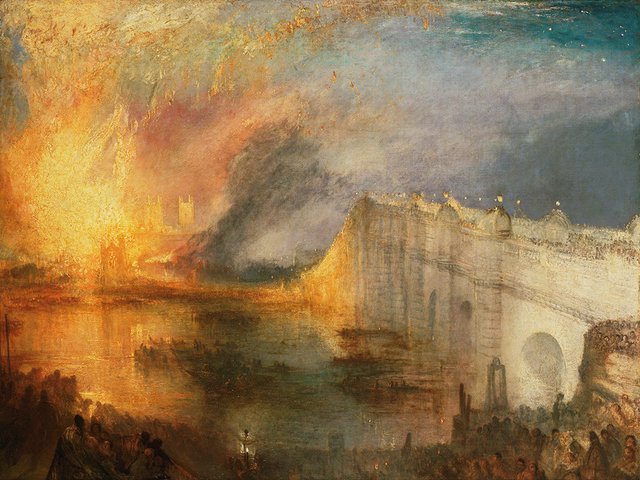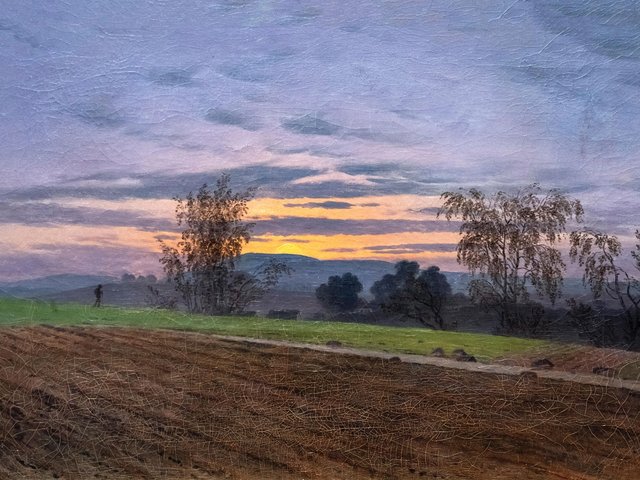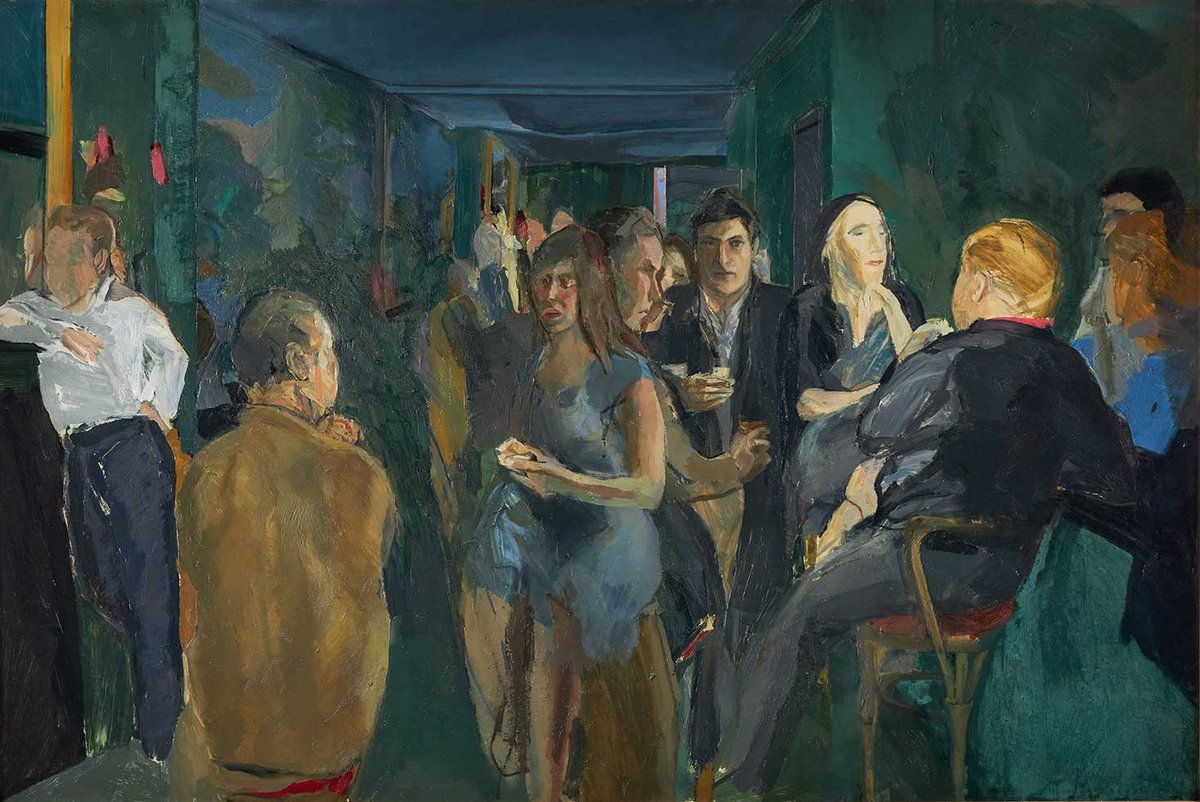
Michael Andrews (1928-95) is the least known of the School of London painters that included Francis Bacon, Frank Auerbach, Lucian Freud and Leon Kossoff. It was the artist and curator Lawrence Gowing who, in 1980, said of Andrews: “He paints hardly anything but masterpieces”, hence the title of Christopher Lloyd’s new publication.
Here Lloyd, the curator, art historian and former surveyor of the Queen’s pictures, discusses the life and work of one of the most private of painters, whose reputation, initially at least, was frustrated by his relatively slow output. This book, in a series of thematic chapters presented within a loose chronology, looks beyond that reputation to reveal an innovative approach predicated on place. The backmatter provides a list of further reading and an index of works by Andrews, especially useful given there is currently no catalogue raisonné.
Norwich-born Andrews attended the City of Norwich School (1939-47). Following his National Service in the late 1940s, he took up a place at the Slade School of Fine Art in London (1949-53). Norwich and Norfolk more broadly remained important to Andrews. He based himself there in the late 1950s largely for financial reasons before returning to London. This was followed by two extended periods in Norfolk from 1977-81 and 1981-92.
The Family in the Garden (1960-62), set in the garden of his parents’ family home in Park Lane, on the west side of Norwich, is, as Lloyd notes, remarkable for its scale and ambition at this early stage in his career. Later, Andrews’s watercolours and acrylics of the Norfolk landscape and rivers treated surface and depth with equal attention.
When Andrews arrived at the Slade in 1949, it was under the leadership of William Coldstream. By all accounts, Andrews enjoyed life in post-war London as his paintings from that time reveal. London Jazz Club (100 Oxford Street) (1951-52), August for the People (1951) and A Man Who Suddenly Fell Over (1952) all attracted the praise of his tutors at the Slade. The mood of architectural scenes such as the Shell Chemicals plant in Cheshire in 1953 and London flats in 1959 is captivating as Andrews balances exactitude and atmosphere.
In 1960s London, innovation was in the air. Andrews became part of Soho society and the Colony Room. He changed his approach and rapidly increased his speed of working: The Deer Park (1962) was completed in just three weeks. Good and Bad at Games (1964-68), however, took four years to complete. As Lloyd explains, Andrews was looking for new ways to tackle the contemporary moment.
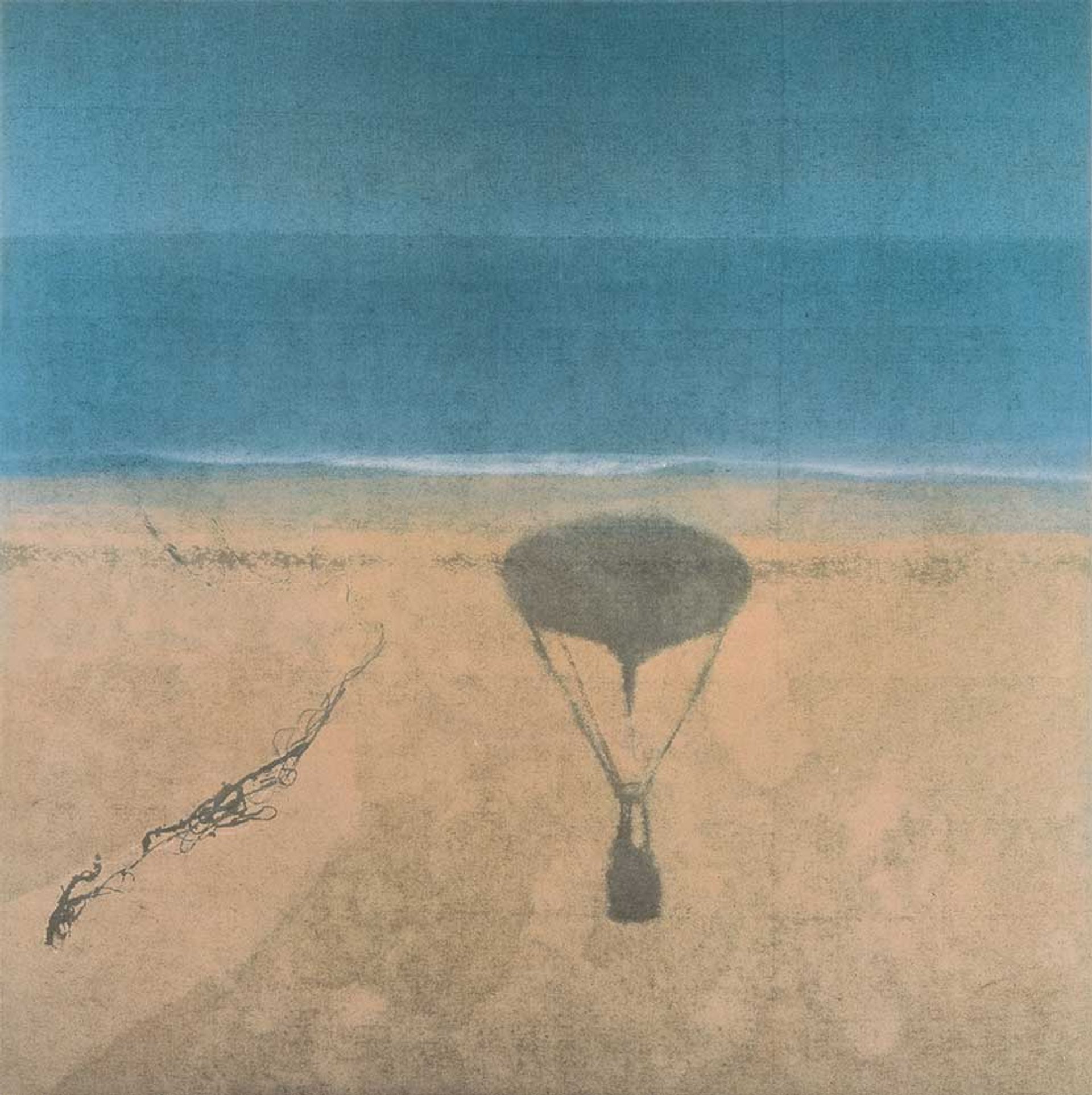
Lights VII: A Shadow (1974) is from a series the artist created using a spray gun © the estate of Michael Andrews/Tate
The seven paintings in Andrews’s Lights series (1970-74) are a remarkable achievement. Using a spray gun and stencils, he achieved subtle effects that belie his technique. Lloyd suggests religious parallels—not an isolated proposition in this book—which seem difficult to justify, although there is a philosophical element to them, certainly.
Summers in Scotland
In the second half of the 1970s Andrews widened his scope. In four paintings of fish titled School I-IV he explored what he regarded as a connection between children in school and fish in water. From 1975 until the 1990s Andrews and his family spent summers on the estate of the Baroness Willoughby de Eresby at Drummond Castle in Perthshire. He was captivated by deer stalking and examining human behaviour and its links with nature. An especially tender picture from this time is Melanie and Me Swimming (1978-79), located in the Water of Ruchill near Glenartney Lodge on the estate.
When Andrews visited Australia in the autumn of 1983, the resulting paintings of Uluru (Ayers Rock) and Kata Tjuta (Mount Olga) exude light, colour and heat. There are no figures, save for a few kangaroos. The paintings received a mixed reception when exhibited in London, Paris, Edinburgh and New York.
Lloyd proposes that Andrews had a circumspect approach to portraiture, employing a sort of detachment from his sitter when he painted musicians such as Mick Jagger, Eric Clapton and Roger Daltrey. Yet, when it came to society and art world figures, his portrait of Colin St John Wilson notably took more than 80 sittings. Andrews declared: “I like to get to the point where it feels like I’m touching flesh.”
When Andrews moved back to London in 1992 the Thames became his principal subject. From its source to its estuary, the river fascinated him and through it he explored a range of approaches from figuration to abstraction right up to the end of his life.
The irritation of this book is its overuse of Latin and French phrases sprinkled throughout the text. It is unnecessary and spoils the flow of ideas considerably. There are many moments, such as the discussion of the Scottish paintings, where there is room for further research. Still, Lloyd is clear that this book is not intended to be a definitive account of Andrews’s life and work. Rather, its objective is to promote discussion, or even reassessment, and will certainly achieve that.
- Christopher Lloyd, Michael Andrews: Painter of Masterpieces, Modern Art Press, 320pp, 230 col. & b/w illus., £30 (hb), published 26 May
- Beth Williamson is the author of A Cultural Biography of William Johnstone (Edinburgh University Press)