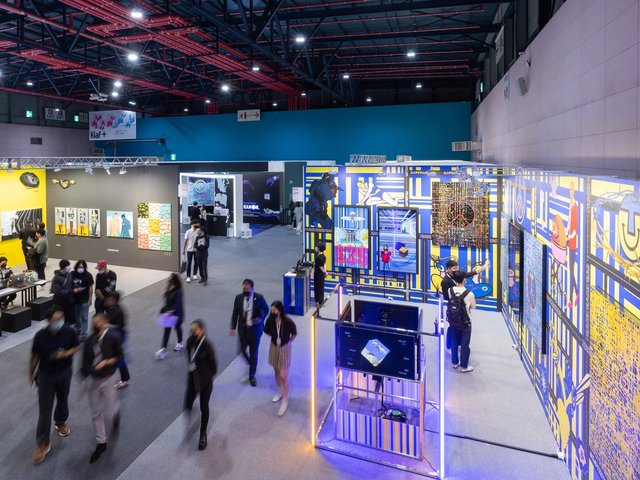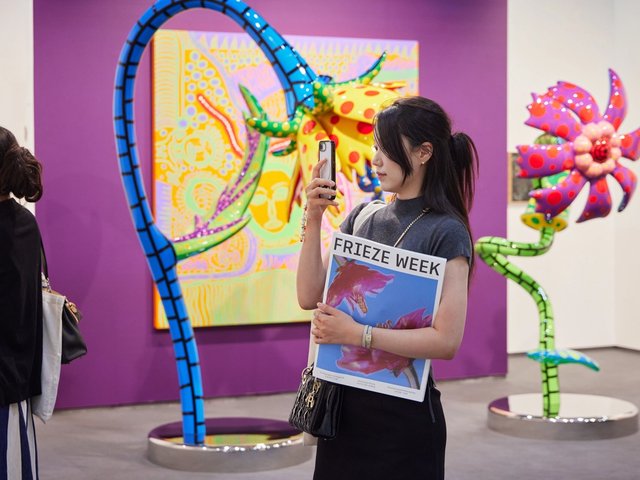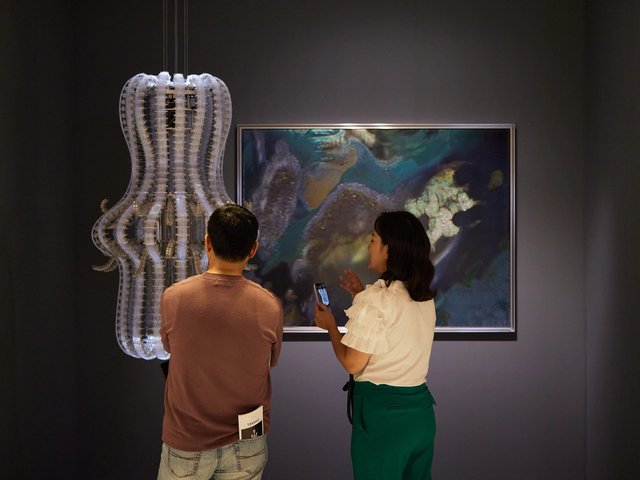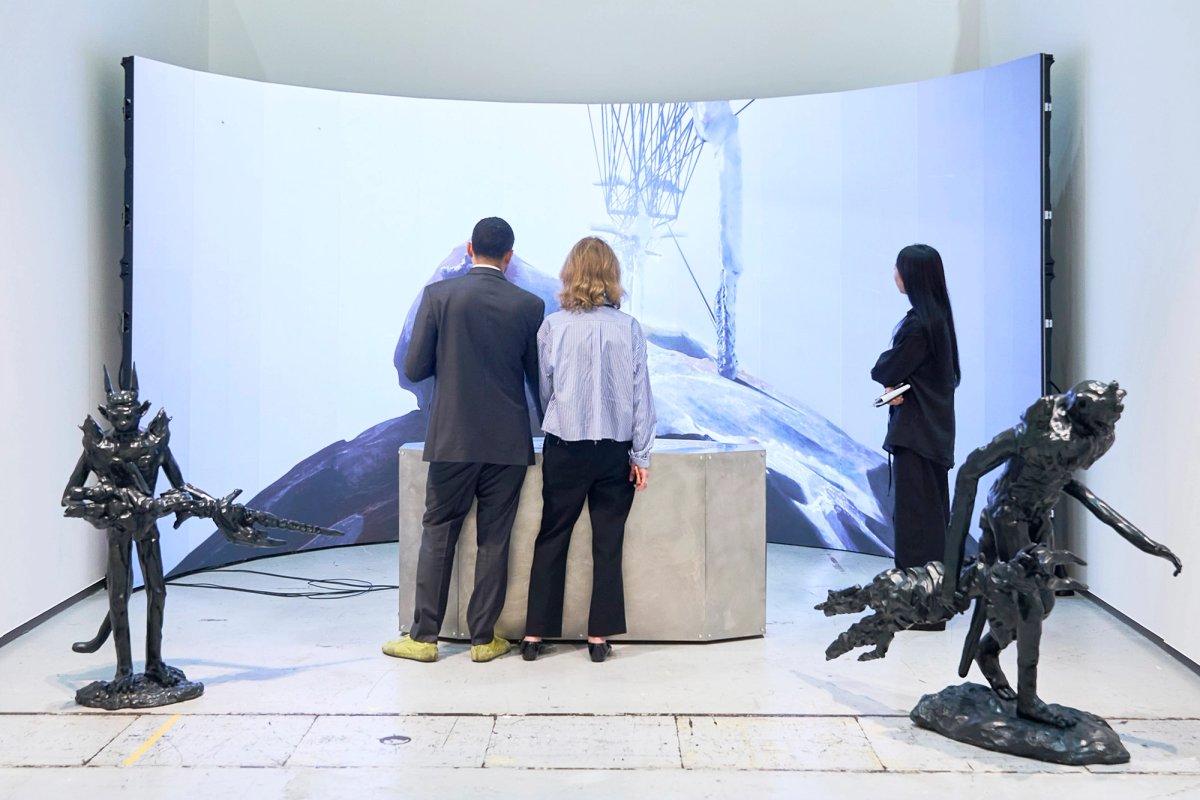
Frieze Seoul and the surrounding Seoul Art Week kicked off its fifth year yesterday amid a backdrop of stock-market volatility and an upcoming venue shake-up for Frieze.
Early sales suggest that galleries at Frieze (until 5 September) and the long-running Korea International Art Fair (Kiaf, until 6 September) are embracing a more cautious approach to pricing, with greater emphasis on younger artists and works at more accessible price points.
While a few galleries still claim top sales, the market seems to have largely entered a more mature, if less ebullient, phase. Of the overall market, says Frieze Seoul director Patrick Lee, “It's improving. I think if you talk to most of the galleries-it's been steady.” A stable presence of global gallery locations in Seoul are “a positive sign” along with “the long term quality of shows you're seeing, the audience that's coming this year too…When it comes to the market, I think there's still a lot of potential here".
Lee says the recent frenzy of the Korean stock market may impact the luxury goods market, but does not think the “types of collectors that we've worked with are as sensitive to short-term swings of the stock market. It might be that younger people who are investing in the auctions could be more effected.” For galleries, recent currency fluctuations hit harder. “Those are real, especially for anyone paying dollars. The flip side, it's also cheaper for many people coming here now.”
The cautious mood comes despite strong activity at the top end of South Korea’s auction market in the first half of 2026. According to a report by the Korea Art Authentication and Appraisal Institute, auction sales in the country nearly doubled year on year, driven in part by a small number of exceptionally high-value transactions. At the fairs, demand for higher-priced works was more selective, but sales at the top end continued.
Among the standout sales was a 1971 painting by Yoo Youngkuk brought by Kukje Gallery, one of South Korea’s leading galleries, which sold for KRW 2.2-2.5bn (around $1.6m-1.8m), standing for the highest-priced sale reported at Frieze Seoul 2026 to date, as well as the highest price achieved for a work by a Korean artist at the fair since its launch in 2022.
A smaller work by the same artist sold at Kiaf for between KRW 600m and KRW 720m. By the second day of the fairs, Kukje had sold over 30 pieces across its Frieze Seoul and Kiaf booths.
Thaddaeus Ropac sold two works by Adrian Ghenie, an oil on canvas Figure with Funerary Stele for €1.1m ($1.28m) and Study for "The Roman Road" 2, in charcoal on paper, for €110,000 ($127,000); and Antony Gormley’s cast-iron sculpture HOLD (2024) for £750,000 ($1m).
Gallery Hyundai sold multiple works from their dual presentation at Frieze by Kim Tschang-yeul priced between $180,000 and $1.1m, and Seung-taek Lee, priced between $170,000 and $700,000.
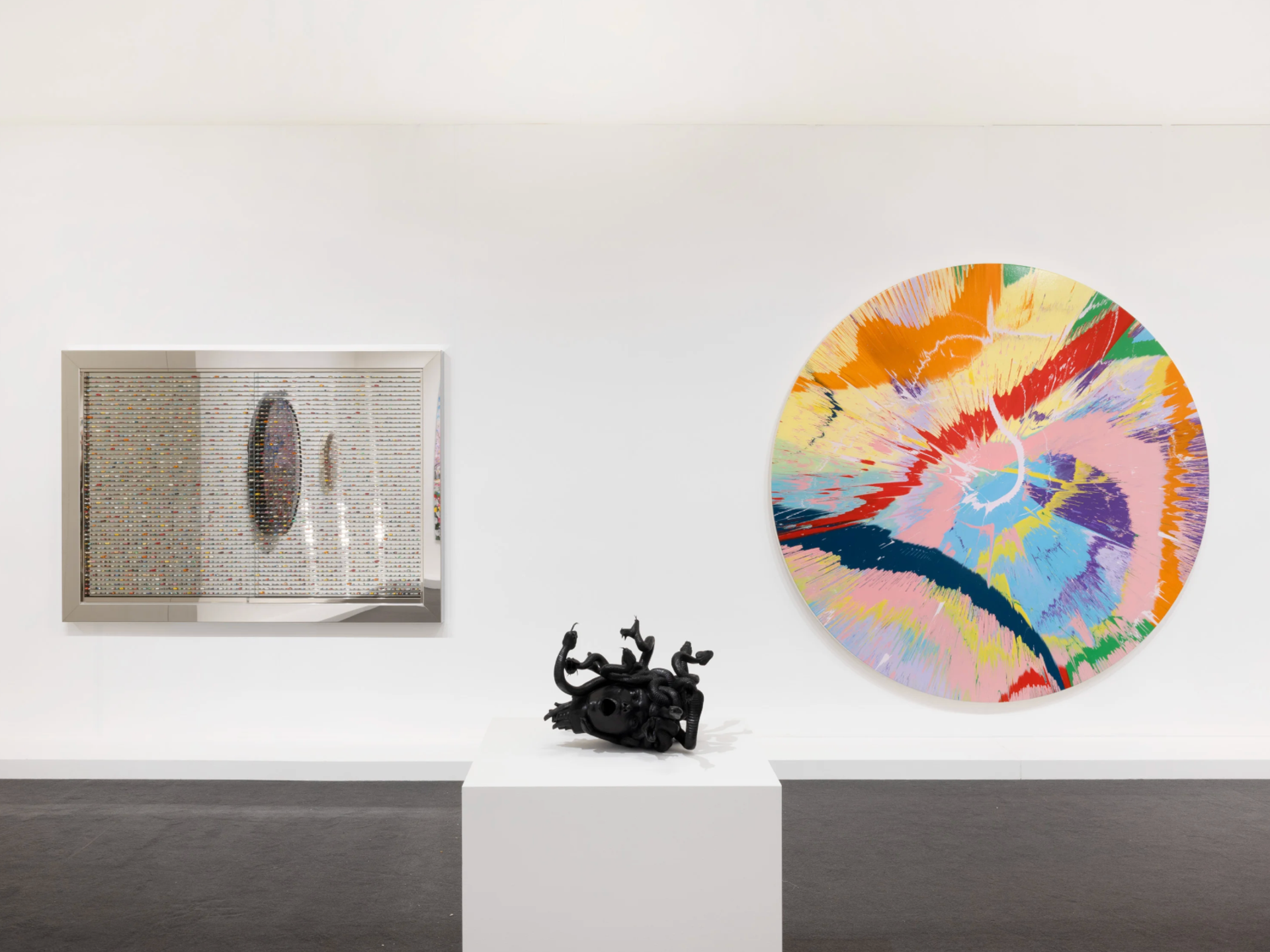
Gagosian's stand at Frieze Seoul 2026
Also attracting attention was Gagosian’s solo presentation of Damien Hirst, following the artist’s exhibition at MMCA Seoul earlier this year, with significant works placed, including one to an important Asian museum.
Local dealers though espoused the more cautious approach. “Sales appear to be quite challenging overall,” says Juyeon Lee, a representative of the 38-year-old Seoul gallery Hakgojae, which has participated in Kiaf since its inaugural edition. On the opening day, its booth sold multiple small works by Chung Sooyoung and Kim Jaeyong, primarily priced between KRW 700,000 and KRW 1m (around $51,000-$73,000).
A positive development, however, is that “we are seeing a younger generation of collectors becoming more active,” Lee adds. “Naturally, these younger collectors tend to have more limited budgets, which is influencing the types and price ranges of works receiving attention.”
Kuho Jung, the new creative director of Kiaf Seoul, points out that the diverging trends in the primary and secondary markets are partly driven by economic uncertainty, which has prompted many local collectors to reorganise their collections—selling some long-held, high-value works to generate liquidity, while redirecting some of their buying power towards emerging artists.
He adds that “Korea’s culture is very active and always changing”, but that the art market had not reflected this dynamism for a long time, with capital concentrated around a small number of established artists. Jung hopes that embracing a younger generation can make Seoul’s art market more vibrant, diverse and dynamic, while giving the fair “more character and personality”.
Several galleries offered similar feedback. Among them is Berlin-based Kornfeld Galerie, which placed a work by Korean artist Wonhae Hwang with the OCI Museum of Art in Seoul, and sold three works by a Japanese artist during the preview, priced between $8,700 and $35,000, including one to a German collector.
Works at its Kiaf booth range from approximately $1,000 to $40,000. “We continue to see a younger generation of collectors who are internationally informed, curious and willing to discover new artists, as well as stronger demand for smaller and more accessible works in the current market,” says gallery owner Alfred Kornfeld, who sees the trend as “a healthy development.”
Yang Jian, director of Hive Center for Contemporary Art, noted that "the market has become more conservative". The Chinese gallery, presenting works by 23 artists, including Song Kun, Wang Xinyan and Zhu Xiaohe, sold nearly 20 works during the presale and first two days of the fair, priced at approximately RMB 100,000 to RMB 1 million (around $14,800 to $148,800). “Our core sales here still come from the presale, particularly from collectors from mainland China, Hong Kong and Taiwan,” Yang says. “We have some local clients in Korea, but the number hasn’t changed much this year.”

Linseed Projects' stand at Frieze Seoul 2026
Frieze is likewise seeing a younger turn. At the same time, a number of Western galleries said they were placing greater emphasis on building relationships with collectors in Korea and elsewhere in Asia, including Belgium-based Axel Vervoordt. “A big change this year is that we see fewer historical works and more contemporary works,” says Boris Vervoordt, the gallery’s founder and a member of the Frieze Seoul Committee. He sees the shift as a positive development for the fair.
Los Angeles-based David Kordansky Gallery, meanwhile, said most of the works it brought to Frieze were sold to Korean private collectors. The gallery is presenting the first Asian solo exhibition of American artist Chase Hall.
Against a backdrop of more cautious capital flows, some local galleries are shifting their focus from immediate market success towards more curatorial ambitions.
“With the Busan and Gwangju Biennales taking place this year, many international museum and curatorial representatives are visiting Korea,” says Sojung Kang, executive director of Arario Gallery. “For us, one important aspect is to use the fair as an opportunity to present them with a diversified Asia.” The Seoul-based gallery with spaces in Shanghai and Cheonan, is participating in both fairs. At Frieze, it is presenting artists from across the region, including Nawa Kohei, Aokizy, and Leslie de Chavez. More than one-third of the works had sold by the end of the opening day, with prices ranging from around $20,000 to more than $50,000.
“Korean visitors remain enthusiastic about art", but their attention seems a bit scattered, "so they are taking more time to make purchasing decisions,” says Zhuang Lingzhi, the owner of the Shanghai-based gallery Linseed Projects. The gallery is presenting a solo stand of Shumu's work at Frieze. “We’ve also seen some overseas Chinese collectors, but there seem to be fewer collectors from Beijing and Shanghai than last year,” Zhuang says. In her view, the overall contingent of international travellers is smaller than last year.