As the influence of US President Donald Trump grows in Latin America and more countries in the region elect right-wing governments—with Brazil potentially next, as Luiz Inácio Lula da Silva and Flávio Bolsonaro face each other in a 25 October presidential run-off—the policies and funding priorities of their culture ministries reflect the broader political direction these administrations are taking. From country to country, the same terms are invoked: “austerity”, “efficiency”, “values” and, perhaps most frequently, batalla cultural—culture war.
“In every election across Latin America, we are now seeing direct US interference and open support for right-wing candidates,” says Pablo Stefanoni, an Argentine historian and essayist whose work examines the ideological rise of the new right. “This has gone hand in hand with the revival of the Monroe Doctrine, which views Latin America as the US’s backyard. The aim is clearly to bring about a geopolitical realignment and push China as far out of the region as possible, although that is difficult given China’s economic role.”
Culture has become one of the areas hit hardest by these governments. “Some sectors of the right have placed great emphasis on the need to wage a ‘culture war’,” Stefanoni says. “There is a belief that Marxism has infiltrated culture, a generally more progressive sphere, and that it must therefore be attacked on that terrain.”
The latest example is Bolivia, where culture has been swept up in a transformation of the government. Rodrigo Paz, a centre-right president who took office last November following nearly two decades of left-wing leadership, is trying to open up the economy amid the country’s worst crisis in 40 years. With foreign exchange reserves nearly depleted, the economy stagnant and protests spilling into the streets, Paz cut the number of ministries from 14 to 12. One of the two ministries eliminated was the Ministry of Sustainable Tourism, Cultures, Folklore and Gastronomy. Culture was downgraded to a vice-ministry under the Ministry of Foreign Affairs, which also assumed oversight of the National Symphony Orchestra, the institution responsible for the Unesco World Heritage Site of Tiwanaku and the Bolivian Film and Audiovisual Development Agency.
The move drew condemnation from Articulados Culturales, a platform that brings together organisations including the Siart International Art Biennial and the Bolivia Design and Poster Biennial. In a statement, the group denounced what it called the “complete exclusion of culture” from the new state structure and warned that the arts are “not an ornament” or “an appendage of tourism”.
In Colombia, Abelardo de la Espriella took office on 7 August in a ceremony marked by religious invocations, hymns and an image of the Virgin Mary. Large screens displayed the words “Bienvenidos a la Patria Milagro” (welcome to the miracle homeland), a slogan that has come to define the new president’s vision for the country. Three days later, a 7.4-magnitude earthquake forced the government to reorder its priorities.
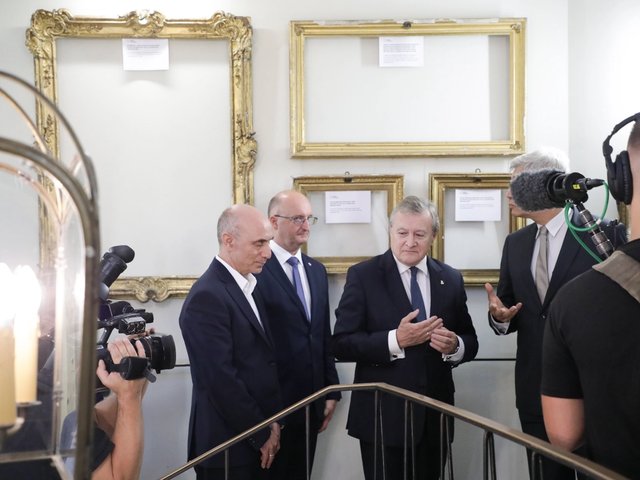
But even in that short span, De la Espriella made his administration’s ideological mandate clear. Announcing Paola Holguín as the new culture minister, the president introduced her as “the warrior who is ready” to wage a “culture war”. Before taking office, Holguín, a Catholic conservative who says she prays the rosary every day, posted an image of the Bible on social media plus a quotation attributed to George Washington: “It is impossible to govern the world rightly without God and without the Bible.”
In Argentina, Javier Milei has invoked the culture war as one of the pillars of his political platform. The expression is part of his “anti-woke” agenda, which has found in Trump’s second administration an ally and a powerful amplifier.
“That culture war includes opposition to abortion, feminism, so-called ‘gender ideology’, wokeism and the ‘LGBTI lobby’,” Stefanoni says. “But it goes further, extending to the very vision of society itself. Milei, for example, says that ‘social justice is shit’, a way of ‘robbing successful people to give resources to those who have failed’. That amounts to an open defence of inequality as a value.”
During his campaign, Milei made a chainsaw the symbol of his promise to shrink the state, and he brought that logic to the cultural sector with particular force. One of his first decisions after taking office in December 2023 was to reduce the federal ministry of culture to a secretariat. Budget cuts made by his government have affected institutions involved in film, libraries, preservation, contemporary art and more. Recently, associations representing independent theatres across the country denounced the “near paralysis” of the National Theatre Institute and criticised the elimination of a long-standing funding programme that helped keep venues operating. State support for the Venice Biennale was reduced to cover the pavilion and logistics only, and not the costs associated with the actual art.
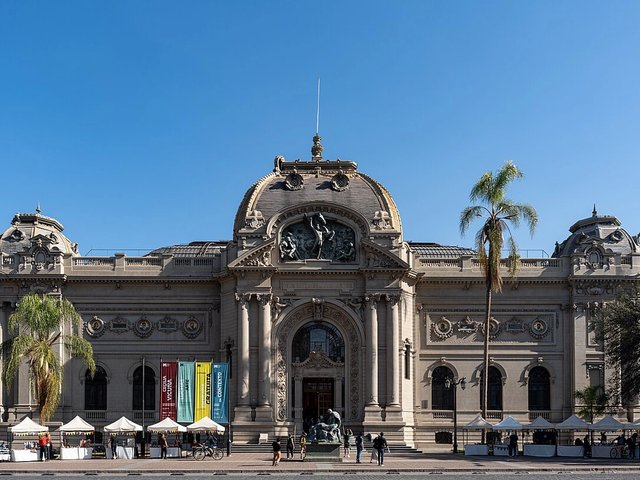
In Chile, José Antonio Kast took office last March with austerity as a guiding principle. Chile’s ministry of finance subsequently ordered a 3% cut in government spending across all areas. The ministry of culture ultimately lost around 9.8% of its budget—funding for museums, libraries, heritage programmes, memorial sites and more were all affected. In July, the Museo Nacional de Bellas Artes de Santiago cancelled a retrospective of the Argentine artist León Ferrari after nearly three years of preparation, citing a lack of funds. The museum’s director, Varinia Brodsky, who had publicly announced the exhibition’s cancellation in June, was dismissed from her post in mid-September, the culture ministry announced.
Remembrance rescinded
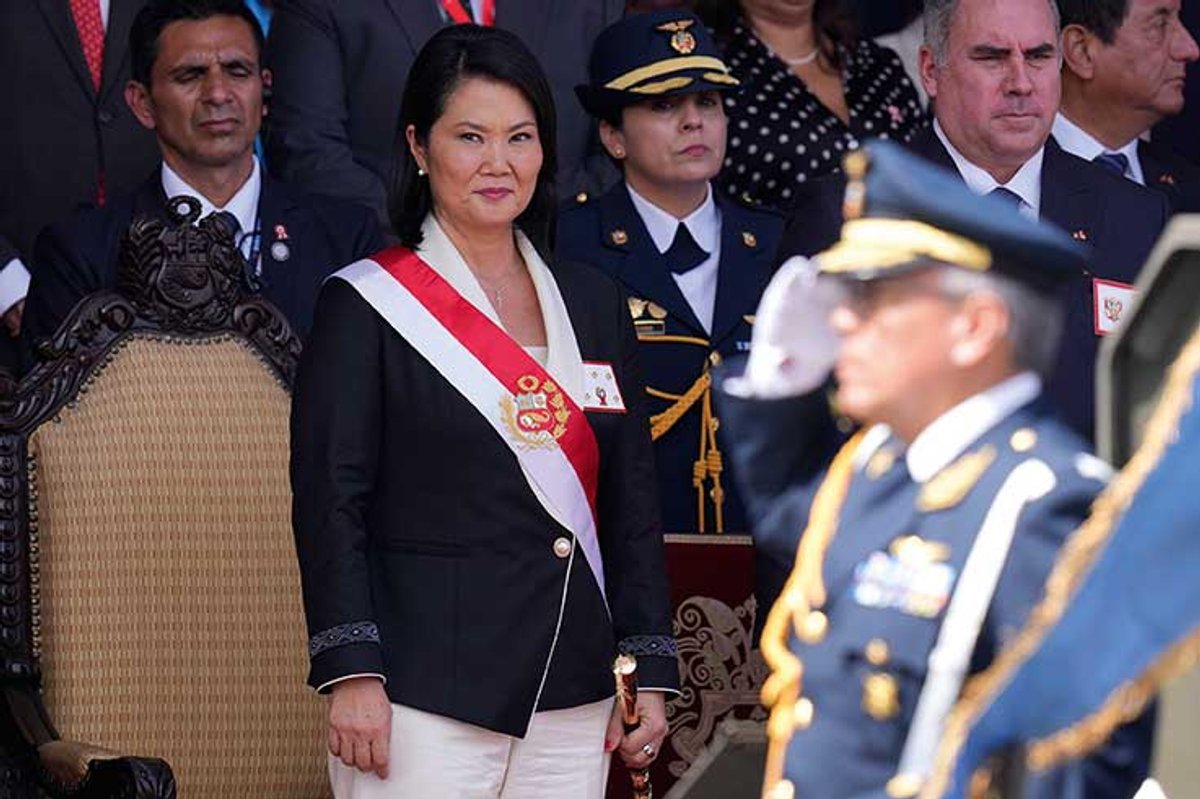
In Peru, where Keiko Fujimori took office in late July, culture war disputes quickly reached one of the most sensitive subjects in Peruvian politics: historical memory. The Lugar de la Memoria, la Tolerancia y la Inclusión Social (LUM), a museum addressing the two decades of violence Peru endured between 1980 and 2000, saw visitor numbers surge amid fears that a return of the right-wing Fujimorismo political movement could put its future at risk.
The museum addresses the crimes of Sendero Luminoso, Peru’s far-left guerrilla group and political party, and the human rights violations committed by the state, including those carried out during the presidency of Alberto Fujimori, the new president’s father. Peru’s new culture minister, Alberto Beingolea, says he had no plans to close the museum. But he has also accused political factions of having “captured” it, and claimed the LUM had become a “source of division” and “constant conflict among Peruvians”.
In El Salvador, at the start of his second term in 2024, President Nayib Bukele appointed Raúl Castillo, a former pro-government congressman and information technology specialist, as culture minister. Castillo was directed to “promote family and patriotic values”, which the president’s office described as a top priority. A week later, Bukele announced the dismissal of more than 300 culture ministry employees, explaining on X that they had been promoting “agendas that are not compatible with this government’s vision”. He added that the cuts would also save public funds.
Bukele’s government also dismantled the Monument to Reconciliation, a large sculpture in San Salvador inaugurated in 2017 to commemorate the 1992 peace accords that ended 12 years of civil war. Bukele had called it a monument “to corruption”. This is perhaps the most literal example of the movement to dismantle cultural infrastructure that has swept across Latin America.
Until earlier this year, Venezuela had been an exception to this trend. But after the Trump administration’s violent extradition of president Nicolás Maduro and his wife Cilia Flores last January, Delcy Rodríguez’s interim government aligned itself with Washington and reshuffled the cabinet, including the ministry of culture. Ernesto Villegas, who had served as culture minister for nearly nine years, stepped down in March. His replacement, Raúl Cazal, remained in the post for just five months.
In August, Rodríguez reassigned Cazal to lead the Rómulo Gallegos Center for Latin American and Caribbean Studies in Caracas and appointed the historian Alejandro López Rodríguez as the new culture minister. Rodríguez tasked López with “strengthening national identity”, preserving the country’s “historical legacy” and promoting Venezuelan cultural heritage, even as her government moved to rebuild political and economic ties with the US.