In her 2013 book Culture Class, Martha Rosler critiqued the relationship between art, creativity and urban development. As she warned in one of her essays, artists can become “unwitting assistants to upper-class rule”, their political efforts to improve public life absorbed into the machinery of urban development.
In St Louis, Missouri, more than a decade later, Counterpublic’s third public-art triennial raises related questions, such as: what burden do artists bear in the face of failing civic infrastructure and nationwide defunding for public programmes? And who does public art really serve?
These queries take on a particular weight in the post-industrial river city still reckoning with the consequences of disinvestment and, more recently, a massive tornado. Under the title Coyote Time, this year’s triennial was organised by the curatorial team of Wanda Nanibush, Raphael Fonseca, Stefanie Hessler, Jordan Carter and Nora N. Khan. The group’s nearly 50 commissions occupy permanent and temporary sites across the city and beyond.
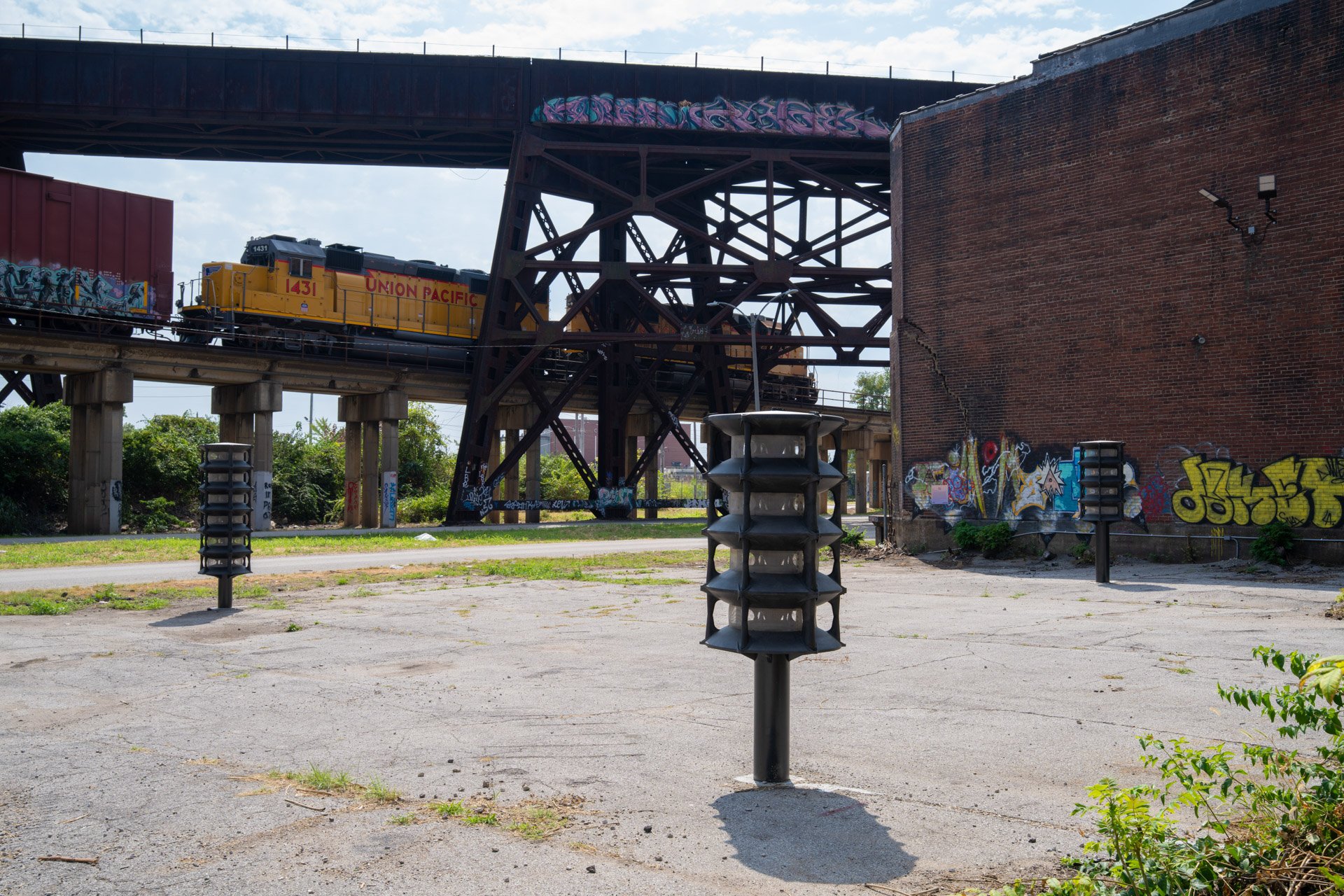
Anika Todd’s Siren Song (2026) Photo: Jon Gitchoff, courtesy Counterpublic
In one project, the sounds of watery field recordings of the Mississippi River haunt the exterior space of Chouteau's Landing—an industrial warehouse south of the city’s iconic Gateway Arch—in Anika Todd's sculpture series, Siren Song (2026). Four municipal tornado sirens installed across an extant concrete foundation call to mind the tornado that tore across the city in May 2025, when the alarm system failed and left thousands in the path of the storm stranded. The city is still awaiting more than $1bn in federal grants for long-term housing.
Meanwhile, Timmy Simonds's pendant flags made from parachutes, Miss Othmar and Othmar Sumner Stowe Teachers Lounge (2026), fly over the yards at four school campuses. One of these is Sumner High School, still closed for repairs after the tornado destroyed part of its roof and several classrooms, in the historic Black neighbourhood of The Ville.
And on the Mississippi Waterfront, Glenn Ligon's serpentine brick wall sculpture, Who Builds Anything in This Country? (2026), traces a line from the former enslaved brickmakers' factory to the river itself.

Glenn Ligon’s Who Builds Anything in This Country? (2026) Photo: Izaiah Johnson, courtesy Counterpublic
Across Counterpublic’s sites, artists have worked in landscapes shaped as much by public investment as by its absence. "It was hard to tell what was existing rubble and what was tornado destruction," Ligon said in a talk at the riverfront as part of the triennial’s opening weekend last month. Ligon invited local high-school students to imprint their fingers on the bricks in his sculpture, echoing the prints that enslaved workers often left while turning wet bricks and honouring their labour.
Working with the community
Between 2024 and 2025, Counterpublic approached local organisations and asked what their communities needed most. It then used anecdotal data and direct engagement to drive its curatorial programming.
At the International Institute, an organisation dedicated to helping recent immigrants acclimate, the artists Inès Kivimäki and Rirkrit Tiravanija made practical contributions. Tiravanija offers a collaborative food project with local chefs for a series of pop-up meals in the cafeteria, while Kivimäki plumbed the organisation’s archives to produce Third Space, a series of architectural maquettes and models that resulted in furniture for shared spaces like a nursery and playroom. These projects make legible a particular kind of civic role for the artist: working alongside an organisation that has already identified the needs of the people it serves.
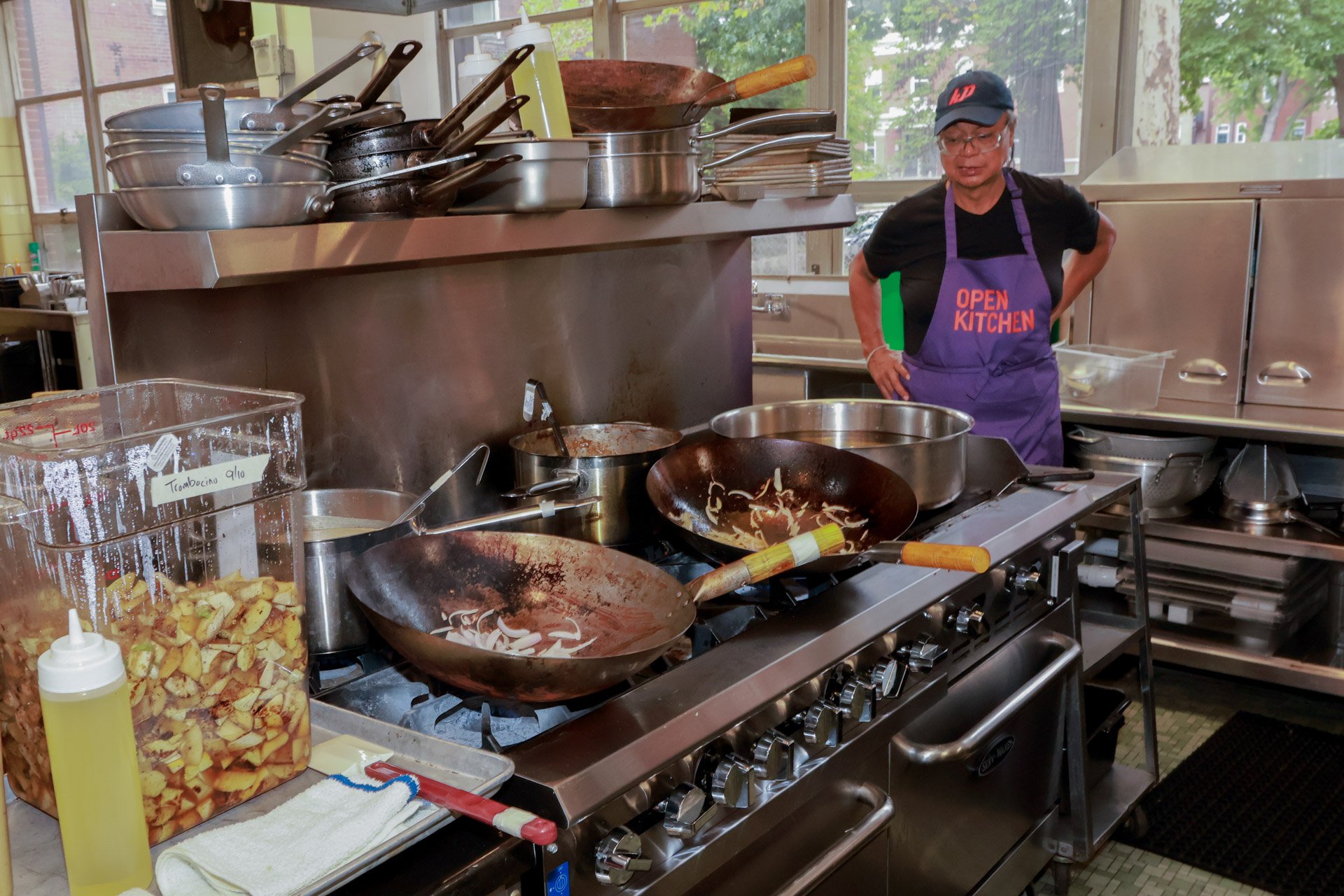
Rirkrit Tiravanija cooks as part of his project (open kitchen) (2026) Photo: Maggie Beadle, courtesy Counterpublic
Elsewhere, the relationship between artist, institution and site is less straightforward. Across the river is the National Building Arts Center—an archive of architectural elements by the eccentric historic preservationist Larry Giles, who housed his massive collection in the former Sterling Steel Casting Company foundry.
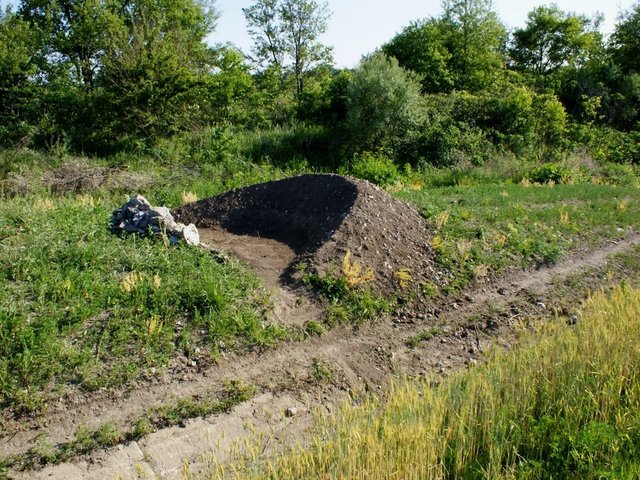
Here, the artist Lynne Smith took up residence for months as she produced The Unloading Dock (receiving, holding) (2026). Smith transformed a recessed loading dock into a pond with collected rainwater, whose surface is replete with the green leafy pads of American Lotus blossoms. Toxins from the former industrial plant might continue to leach into the water, but what about the skin and lungs of the artist?
This points to a larger question about the increasingly expansive role assigned to community within contemporary arts institutions. “Community” itself has become a buzzword, tacked onto press releases and projects, sometimes without any concrete accounting of what it might be or need—and what artists can reasonably be expected to provide.
The scale and dispersal of Coyote Time places its artists in contact with a broad range of civic spaces, organisations and environmental histories, expanding the question of what public art is being asked to do. The work in Coyote Time attempts to tackle issues like environmental impact, municipal neglect, structural racism and class disparity—to varying degrees of success.
- Counterpublic 2026: Coyote Time, various locations in and near St Louis, Missouri, until 12 December